 Pin It
 I'll never forget the summer my neighbor Marcus first threw open his back gates and declared he was hosting a proper backyard gathering—the kind where everyone showed up expecting hot dogs and potato salad, but instead found themselves standing around a groaning wooden board piled high with grilled meats, charred vegetables, and enough dips to make everyone's eyes light up. That day, watching friends reach for thick strips of beef ribeye and perfectly charred corn, I realized that the best meals aren't about being fancy or complicated. They're about abundance, choice, and the simple pleasure of eating outside with people you love.
I remember my sister showing up to help and immediately taking charge of vegetable prep, her hands moving so naturally through the zucchini and peppers that I realized this was the kind of dish that invites people into the cooking. By the time everything hit the grill, we weren't just making dinner—we were building something communal, something meant to be shared and lingered over.
Ingredients
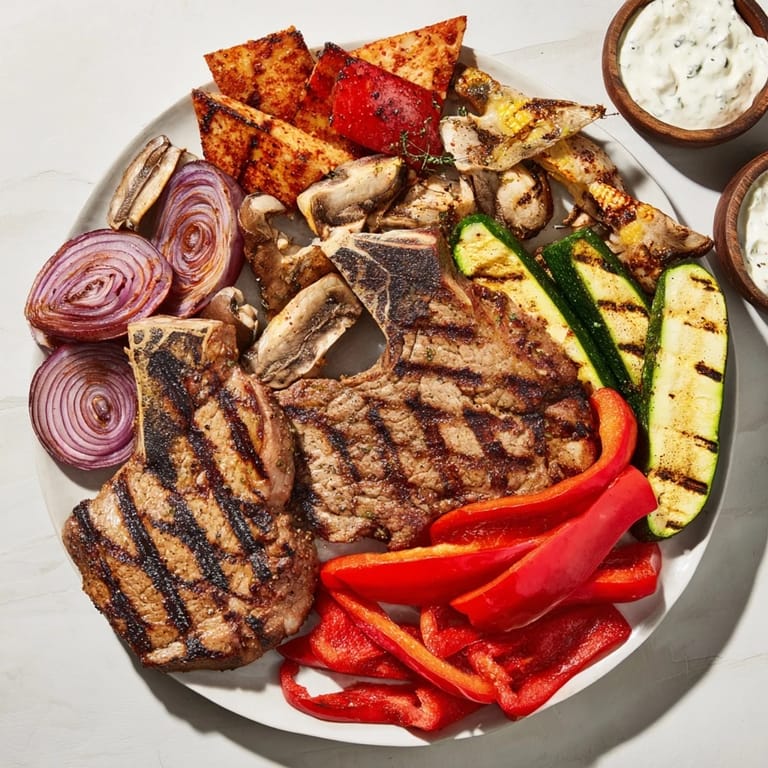
- Beef ribeye steaks, cut into thick strips: Ribeye has enough marbling that it stays juicy even over high heat, and cutting into strips means more charred edges, which is where the flavor lives
- Bone-in pork chops, thick-cut: The bone adds flavor and the thickness means you can get a gorgeous crust without the center drying out—this is the detail that separates good from memorable
- Chicken thighs, boneless, skinless: Thighs are forgiving on the grill and stay moist, making them the secret to getting everyone at the table including the chicken skeptics
- Smoked paprika: This transforms the meat from simply grilled to something with actual character and depth—it whispers rather than shouts
- Garlic powder: A small amount goes a long way and creates an even coating that caramelizes beautifully on the grill
- Zucchini, thickly sliced diagonally: The diagonal cut creates more surface area for charring and looks intentional on the board
- Red bell peppers and red onion: Color matters when you're building a board meant to draw people in—bright red brings the whole thing alive
- Corn, cut into thirds: Shorter pieces are easier to handle while eating and the cut surfaces caramelize wonderfully
- Cremini mushrooms: Grilled mushrooms develop an almost meaty texture that rounds out the board and satisfies vegetable preferences
- Ranch, barbecue sauce, and blue cheese dips: These aren't fancy—they're familiar anchors that let people enjoy grilled food the way they've always wanted to
Tired of Takeout? 🥡
Get 10 meals you can make faster than delivery arrives. Seriously.
One email. No spam. Unsubscribe anytime.
Instructions
- Get your grill ready:
- Preheat to medium-high heat until you can hold your hand above the grates for only about 3 seconds. This temperature is where the magic happens—hot enough to create that gorgeous sear without burning the outside before the inside cooks through.
- Season the meats properly:
- In a large bowl, toss the beef, pork, and chicken with olive oil, smoked paprika, garlic powder, salt, and pepper. Make sure every piece is evenly coated—this is your foundation layer of flavor. Don't be shy with the seasoning.
- Prepare the vegetables:
- In a separate bowl, toss zucchini, bell peppers, onion, corn, and mushrooms with olive oil, salt, and pepper. The oil creates those beautiful grill marks and helps everything release easily from the grates.
- Grill the beef:
- Place the ribeye strips on the hottest part of the grill for 3–4 minutes per side for medium-rare. You'll know they're ready when you can move them without resistance—they'll release when they want to. Transfer to a resting spot.
- Grill the pork:
- Pork chops need a bit longer: 5–6 minutes per side. Listen for the sizzle to settle from an aggressive roar to a gentle crackle—that's when you flip. This patience is what keeps them juicy.
- Grill the chicken:
- Chicken thighs should cook 6–7 minutes per side over medium-high heat, moving them around so they get heat from different parts of the grill. When a thermometer reads 165°F at the thickest part, they're done.
- Rest everything under foil:
- This isn't optional—it's where the carryover cooking finishes the job and the juices settle back into the meat. Five minutes of rest is five minutes of flavor insurance.
- Grill the vegetables in batches:
- Zucchini and bell peppers need 2–3 minutes per side for those charred edges while staying tender. Onions and corn take a bit longer—3–4 minutes per side—until you see actual char marks. Mushrooms are quickest at 2 minutes per side and will go from raw to perfect if you're paying attention.
- Toast the bread:
- Grill thick bread slices for 1–2 minutes per side until they're golden with char but still have some give. Grilled bread is the unsung hero of a board like this.
- Build the board:
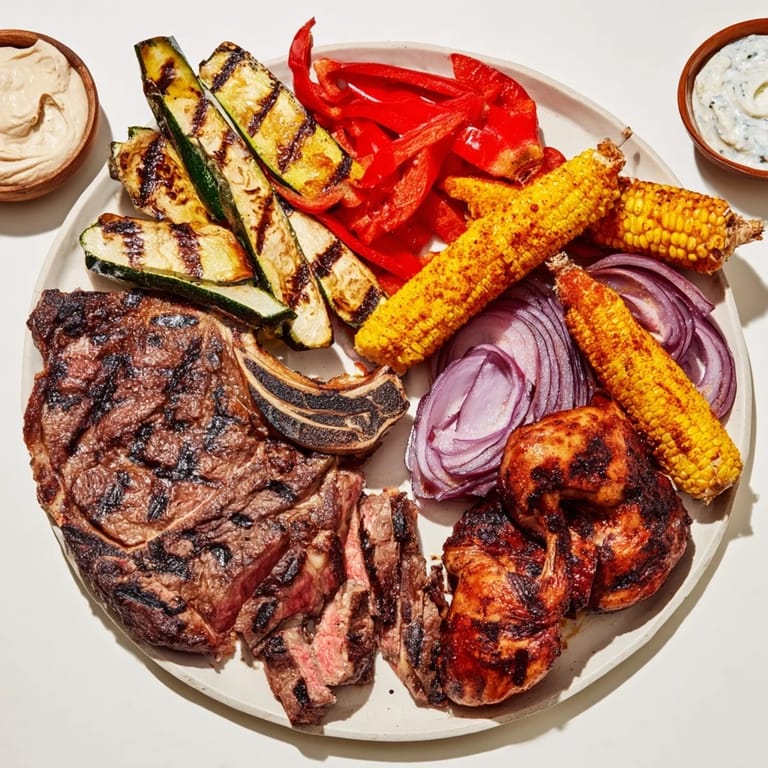
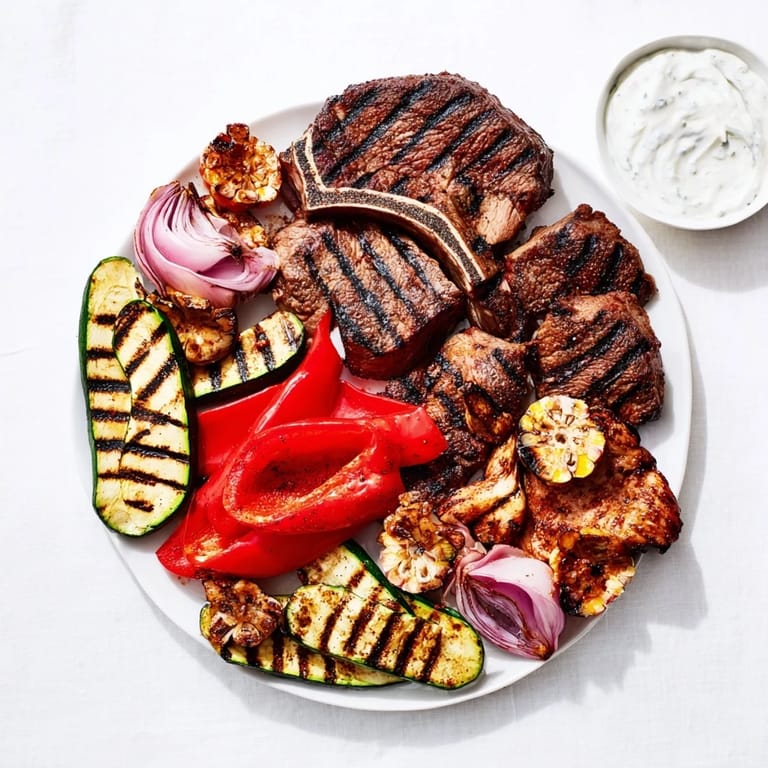
- Arrange meats and vegetables in generous, abundant piles—not neat, not symmetrical, just inviting. Scatter bread around the edges, place dips in small bowls, and toss some baby greens over everything for color. The goal is abundance that makes people want to reach in.
- Serve and step back:
- Bring it to the table and let people build their own combinations. This is where it becomes theirs, not yours, and that's the whole point.
 Pin It
 What stays with me most about that first gathering isn't the recipes or the technique—it's the moment when someone stood up from eating and said, 'You know, this is perfect. No pretense, just good food,' and everyone nodded. That's when I understood that a board like this isn't trying to impress anyone. It's offering something bigger: a way to eat that brings people together.
Building Your Perfect Board
The beauty of this recipe is that it's not about following rules—it's about understanding principles and then trusting yourself to improvise. I've learned that a great sharing board needs three elements: protein variety so everyone has at least one thing that excites them, vegetables with enough character that they're not an afterthought, and something to dip the bread into. Beyond that, it's about abundance and permission to be loose. Some of my best iterations have come from watching what disappears first and building on that—if the grilled peppers are gone before the onions, that tells you something about your crowd.
Making It Your Own
Every time I make this, I see it as a template rather than a prescription. I've done versions with grilled sausages instead of ribeye, added grilled pineapple because someone mentioned once that they loved the contrast of sweet and smoky, swapped blue cheese for a whipped feta. The point is that once you understand how to grill meat and vegetables properly—once you know the temperatures and the timing—you're free to follow whatever direction your ingredients or your guests suggest. The best boards come from listening to what people want and then delivering it with genuine generosity.
The Grill as Community
What I've discovered over years of doing this is that standing over a grill with friends isn't work—it's conversation that happens to produce dinner. People gather around it naturally, drawn to the smoke and the sizzle and the promise of something good coming. Someone will pick up tongs and help. Someone will taste something and wander off to get more dip. Someone will suggest next time you should add this or try that. Before you know it, the meal isn't something you made for people—it's something you made with them, which is infinitely better.
- Season generously and early so flavors have time to develop, especially the smoked paprika and garlic powder on meats
- Don't flip meat more than once per side unless it's sticking—every flip interrupts the browning process
- If you're cooking for strict vegetarians or vegans, plan a simple separate board with grilled vegetables, bread, hummus, and a fresh herb oil
 Pin It
 This is the kind of recipe that gets better the more casually you approach it and the more you're willing to let guests become part of the experience. Make it, share it, let people help themselves, and watch what happens.
Recipe Questions & Answers
- → What meats are best for grilling this platter?
Beef ribeye strips, bone-in pork chops, and boneless chicken thighs are ideal for balanced flavor and texture.
- → How should vegetables be prepared for grilling?
Slice zucchini diagonally, cut bell peppers into large strips, and keep onions in thick rings to retain moisture and develop char.
- → What type of dips pair well with this spread?
Classic ranch, smoky barbecue sauce, and creamy blue cheese dips enhance the smoky and savory grilled flavors.
- → How is the bread prepared for serving?
Thick slices of rustic country bread are grilled briefly until lightly toasted to add crunch and soak up dips.
- → Can this platter be adapted for dietary preferences?
Yes, meats can be substituted with sausages or plant-based options; gluten-free bread can be used for gluten sensitivities.
- → What drinks complement this grilled spread?
Cold lagers or a zinfandel wine pair superbly with the smoky, hearty flavors presented.