 Pin It
 One chaotic Tuesday night, I had leftover cauliflower, a bottle of buffalo sauce gathering dust, and a sudden craving for ramen that wouldn't quit. Instead of playing it safe with a standard bowl, I thought: why not throw caution to the wind and fry up the cauliflower with that hot sauce? The result was spicy, creamy, wildly unexpected, and somehow exactly what I needed. That bowl taught me that the best dishes often come from reckless kitchen decisions made on a whim.
I made this for friends who were skeptical about vegetarian ramen, and watching them taste the first spoonful—eyes widening at the heat, then softening as the coconut milk cooled the burn—felt like a small victory. One of them asked for the recipe before she'd even finished her bowl, and I realized this wasn't just good for a meatless dish; it was genuinely delicious on its own terms.
Ingredients
- Cauliflower florets: A medium head gives you enough texture to make each bite count; don't use pre-cut pieces, as they'll shrink too much and become mushy instead of crispy.
- All-purpose flour and water: This simple batter clings to every surface and crisps beautifully in the oven without being heavy or greasy.
- Garlic powder, paprika, and salt: These season the batter itself, so every floret is seasoned from the inside out, not just coated on top.
- Buffalo hot sauce and melted butter: The butter mellows the heat slightly and helps the sauce cling evenly; use a good-quality sauce you'd actually want to eat on wings.
- Vegetable oil, garlic, and fresh ginger: These three are the foundation of your broth, so don't skip the fresh ginger—it adds brightness that dried ginger can't match.
- Vegetable broth and coconut milk: The broth keeps things light while the coconut milk adds richness without dairy heaviness; unsweetened is crucial here.
- White miso paste: A tablespoon dissolves into the broth and adds umami depth that transforms the whole bowl into something complex and satisfying.
- Soy sauce, rice vinegar, and sriracha: These balance each other—salty, tangy, and hot—creating layers of flavor that keep your palate interested from first spoonful to last.
- Ramen noodles: Fresh ones cook in minutes and have better texture, but dried work fine; just don't overcook them or they'll turn to mush in the hot broth.
- Green onions, carrots, cabbage, sesame seeds, and cilantro: These toppings add crunch, freshness, and color; they're not optional garnishes but essential parts of the eating experience.
Tired of Takeout? 🥡
Get 10 meals you can make faster than delivery arrives. Seriously.
One email. No spam. Unsubscribe anytime.
Instructions
- Heat your oven and prep your stage:
- Set the oven to 425°F and line a baking sheet with parchment paper; this prevents sticking and makes cleanup almost effortless. A hot oven is your friend here because it crisps the cauliflower quickly before the insides turn mushy.
- Make a silky batter:
- Whisk flour, water, garlic powder, paprika, and salt in a large bowl until completely smooth with no lumps. The consistency should coat a floret like paint, not drip off like water.
- Coat every piece:
- Toss the cauliflower florets in the batter, making sure each one gets a full, even coating; use your hands if a spoon isn't getting the job done. This is tedious but worth it because uncoated patches will never crisp up properly.
- Spread and roast:
- Arrange coated florets in a single layer on the baking sheet, leaving space between them so they roast instead of steam.
- Bake for 20 minutes, then flip each piece halfway through using tongs or your fingers.
- Toss with buffalo magic:
- Mix the buffalo sauce and melted butter in a small bowl, then brush this mixture generously over each floret when you remove it from the oven after the first 20 minutes. Return to the oven for another 10 minutes until the edges are crispy and the sauce darkens slightly.
- Build your broth foundation:
- Heat oil in a large pot over medium heat, then sauté minced garlic and grated ginger for 1–2 minutes until the kitchen smells incredible and your mouth starts watering. This step builds flavor that no shortcut can replicate.
- Combine and simmer:
- Pour in vegetable broth, coconut milk, miso paste, soy sauce, rice vinegar, and sriracha if you want extra heat. Whisk well to dissolve the miso completely, then bring to a gentle simmer and cook for 10 minutes; taste and adjust seasoning because this broth is your canvas.
- Cook noodles:
- Follow package instructions precisely; undercooked noodles are gritty, overcooked ones are mush. Drain immediately and set aside separately so they don't turn into a clump.
- Assemble with intention:
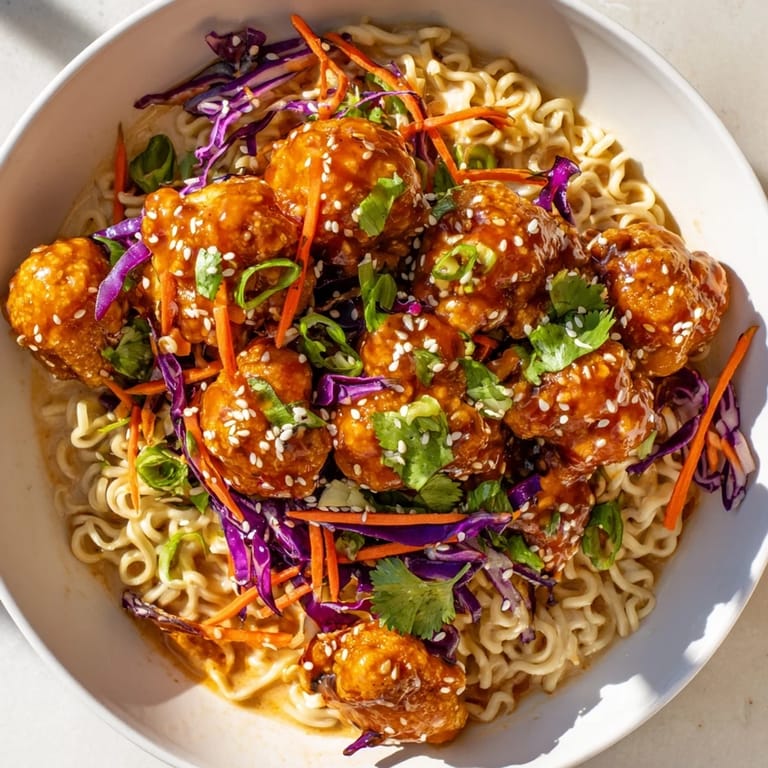
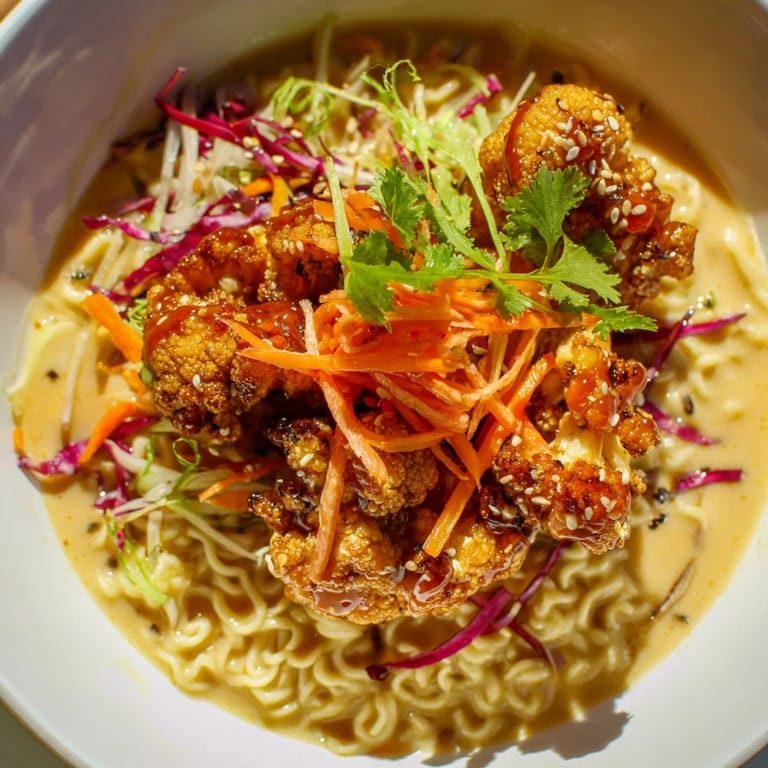
- Divide cooked noodles among four bowls, ladle hot broth over them, then arrange the buffalo cauliflower on top like you're plating at a restaurant. Add shredded carrots, sliced cabbage, green onions, sesame seeds, and fresh cilantro, then serve with lime wedges on the side.
 Pin It
 What I love most about this bowl is how it brings people together in a way that feels casual and warm. There's something about a spicy, comforting ramen that makes everyone at the table relax and dig in without hesitation.
The Buffalo-Ramen Marriage
Buffalo sauce feels like an American sports bar staple, and ramen feels distinctly Japanese, but somehow when you put them together, they don't fight—they dance. The heat from the buffalo cuts through the richness of the creamy broth, while the umami from the miso paste and soy sauce rounds out the sharp spice. This is fusion cooking at its best, where neither cuisine overpowers the other.
Spice Control Without Apology
I've learned that heat tolerance is deeply personal, and there's no shame in adjusting it to your taste. Some people come to my kitchen asking for less spice, and I dial back the buffalo sauce or skip the sriracha entirely. Others want to turn the dial up past eleven, so I give them a bottle of hot sauce on the side and let them make it their own. The beauty of this recipe is that you're never locked into one version.
Toppings: The Texture Revolution
A bowl of ramen without crunchy toppings is like a song without percussion—technically complete but missing something essential. The raw vegetables add brightness and snap that contrast beautifully against the soft noodles and creamy broth. Don't treat the toppings as optional flourishes; they're what transform a warm soup into an experience that engages all your senses at once.
- Toast your sesame seeds in a dry pan for 2–3 minutes to deepen their nutty flavor before sprinkling them over the bowl.
- Shred your cabbage and carrots fresh right before serving so they stay crisp instead of wilting from the steam.
- A squeeze of lime juice over everything at the last moment brightens every spoonful and cuts through the richness like nothing else can.
 Pin It
 This bowl started as a kitchen experiment and became proof that the best meals often come from listening to what you're craving and being brave enough to try something that doesn't exist yet. Make it tonight and see where it takes you.
Recipe Questions & Answers
- → What substitutes can I use to make this dish vegan?
Use vegan butter in place of regular butter for the buffalo cauliflower sauce and ensure the broth and noodles are free from animal products.
- → How can I adjust the spice level in this dish?
Reduce or omit the buffalo sauce and sriracha in the broth to make the dish milder, or add more for extra heat.
- → Can I prepare the cauliflower without baking?
While baking gives the cauliflower a crispy texture, air-frying or pan-frying are good alternatives to achieve similar crispness.
- → What are some good beverage pairings with this dish?
A crisp lager or a dry Riesling pairs well, balancing the spicy heat with refreshing notes.
- → How should I store leftovers to maintain freshness?
Store components separately in airtight containers in the refrigerator and reheat gently to preserve textures, especially for the cauliflower.