 Pin It
 There's this moment when you bite into a falafel pocket and the tahini sauce hits your tongue—creamy, lemony, grounding—and suddenly you're not in your kitchen anymore but somewhere warmer, busier, more alive. I learned to make falafel properly from my neighbor who'd grown up eating it every other week, and she laughed when I first tried to blend everything into a paste instead of leaving it rough and textured. That coarse mixture, she explained, is what gives you those crispy exteriors and that almost-creamy center. Now I make it exactly that way, and it tastes like I finally got the secret right.
I made this for a dinner party once when I was trying to impress someone, and I got so nervous about the frying temperature that I let the oil get too hot and the first batch burned on the outside while staying raw inside. My friend gently suggested I lower the heat and trust the process, and by the fourth batch I'd found the rhythm—that gentle sizzle, the way they float when they're done, the smell that fills your entire apartment and announces dinner before you even set the table.
Ingredients
- Dried chickpeas, soaked overnight: Don't use canned here—dried chickpeas have a better texture and won't turn to mush when you pulse them.
- Fresh parsley and cilantro: These are non-negotiable and keep the falafel tasting bright and alive instead of heavy and fried.
- Cumin and coriander: The spices that make falafel taste like itself, warm and grounding.
- Baking powder and flour: The baking powder helps them get impossibly fluffy inside, and the flour binds everything just enough.
- Tahini: Sesame paste that becomes silky sauce when you add lemon and water—it's the soul of the whole thing.
- Pita bread: Warm pita is essential; cold or stale pita will disappoint you and waste good falafel.
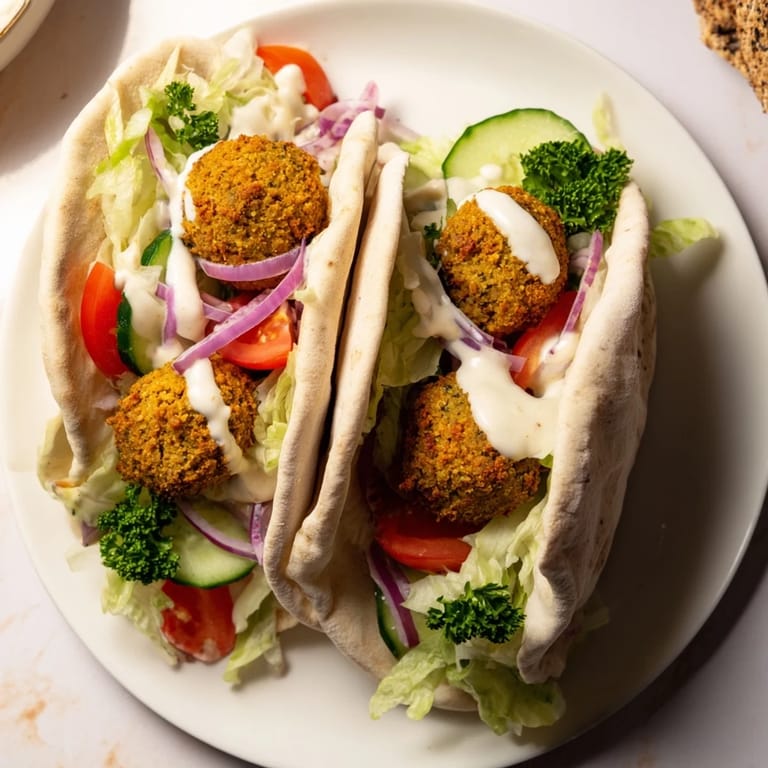
- Fresh vegetables: Crisp lettuce, ripe tomatoes, and cool cucumber create contrast with the warm, fried falafel.
Tired of Takeout? 🥡
Get 10 meals you can make faster than delivery arrives. Seriously.
One email. No spam. Unsubscribe anytime.
Instructions
- Drain and dry your chickpeas:
- Pat them completely dry with a kitchen towel after soaking—any excess moisture makes the mixture harder to work with and creates steam when frying.
- Pulse into a coarse mixture:
- Use a food processor and stop before it becomes a paste; you want visible bits of chickpea and herb so everything stays textured and interesting.
- Chill the mixture if you have time:
- Thirty minutes in the fridge makes the falafel easier to shape and helps it hold together during frying, but you can skip this if you're hungry now.
- Get your oil to the right temperature:
- Aim for that gentle, steady sizzle around 350°F—test with a tiny piece of mixture before committing your whole batch.
- Form and fry in batches:
- Wet hands help prevent sticking; fry until golden and crispy on all sides, about 2–3 minutes total, then drain on paper towels immediately.
- Whisk your tahini sauce:
- Start with tahini, lemon juice, and garlic, then add water slowly until it reaches that perfect pourable consistency—think yogurt, not soup.
- Warm your pita and assemble:
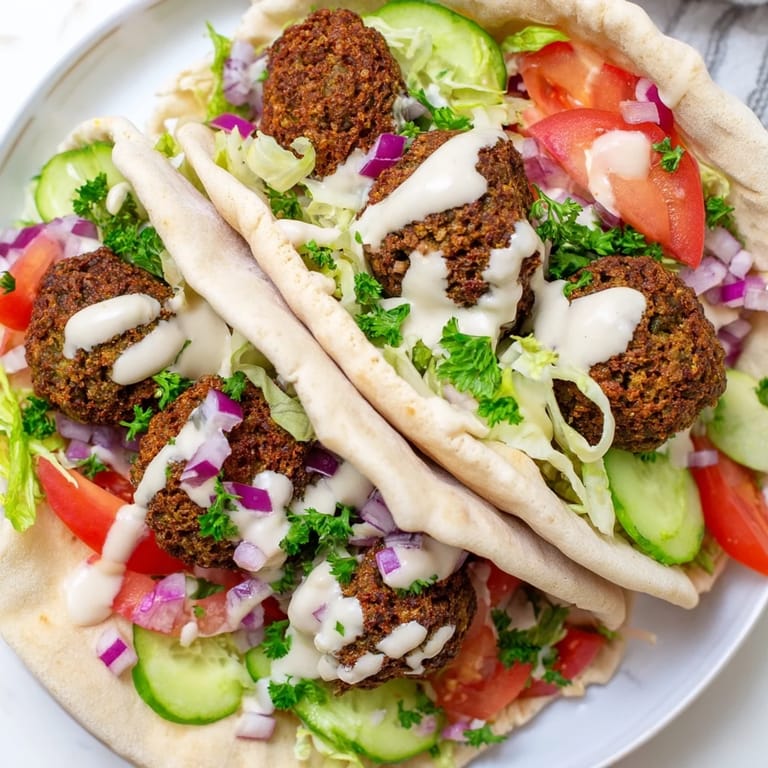
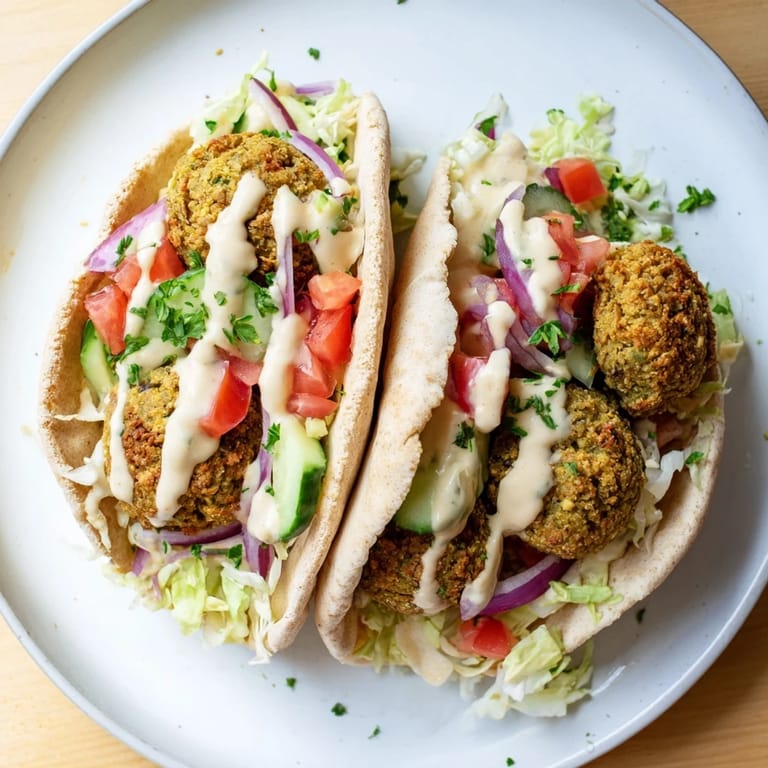
- Cut pita in half, stuff with crisp vegetables, add 3–4 hot falafel, drizzle with sauce, and eat immediately while everything is still warm and contrasting.
 Pin It
 The best part of this dish isn't really about technique or ingredient ratios—it's about how it transforms a quiet Wednesday night into something that feels intentional and warm. I realized this the first time someone closed their eyes while eating it and told me it tasted like home, and I understood that I'd made something that mattered.
The Secret to Crispy Falafel
Crispiness comes from two things: dry chickpeas and dry hands. Moisture is the enemy of texture, which is why soaking overnight and patting dry isn't extra—it's essential. I also learned that the moment they turn golden is exactly when you should pull them out, not a second later, because they keep cooking as they cool and brown even after leaving the oil.
Why Tahini Sauce Is Worth Making Fresh
Store-bought versions often taste bitter or too thick, but when you make tahini sauce yourself you control the balance—more water makes it lighter, more lemon makes it brighter, and you can adjust the garlic to your preference. I once added twice the garlic by accident and ended up with the best batch I've ever made, which taught me that tahini is actually pretty forgiving if you're bold about your flavors.
Building Your Perfect Pocket
Assembly is where things get personal—some people like their pockets stuffed full and messy, others prefer a careful balance of crisp and sauce and warmth. The only non-negotiable rule is that everything needs to be fresh and the pita needs to be warm, or else the whole thing loses its magic.
- Layer your lettuce first to create a barrier that keeps the bread from getting soggy.
- Add falafel while it's still warm so it stays crispy and doesn't steam the pocket.
- Drizzle tahini right before eating so it doesn't sit and separate.
 Pin It
 This is the kind of meal that asks very little of you but gives everything back—satisfaction, memories, the knowledge that you made something real with your hands. Make it for yourself on a regular night, make it for people you care about, or make it just because the smell alone is worth every minute.
Recipe Questions & Answers
- → What is the best way to soak chickpeas for falafel?
Soak dried chickpeas in plenty of water overnight (8-12 hours) to soften them for blending without cooking.
- → Can I bake falafel instead of frying?
Yes, baking at 400°F (200°C) for 20-25 minutes, turning halfway, gives a lighter, crisp result.
- → How to make tahini sauce smooth and pourable?
Whisk tahini with lemon juice, garlic, and salt, then slowly add cold water until the desired consistency is reached.
- → What vegetables work well inside the pita pocket?
Shredded lettuce, diced tomatoes, sliced cucumber, and red onion add fresh crunch and balance.
- → Are there alternatives for gluten-containing ingredients?
Gluten-free pita and flour can replace regular versions to accommodate dietary needs.