 Pin It
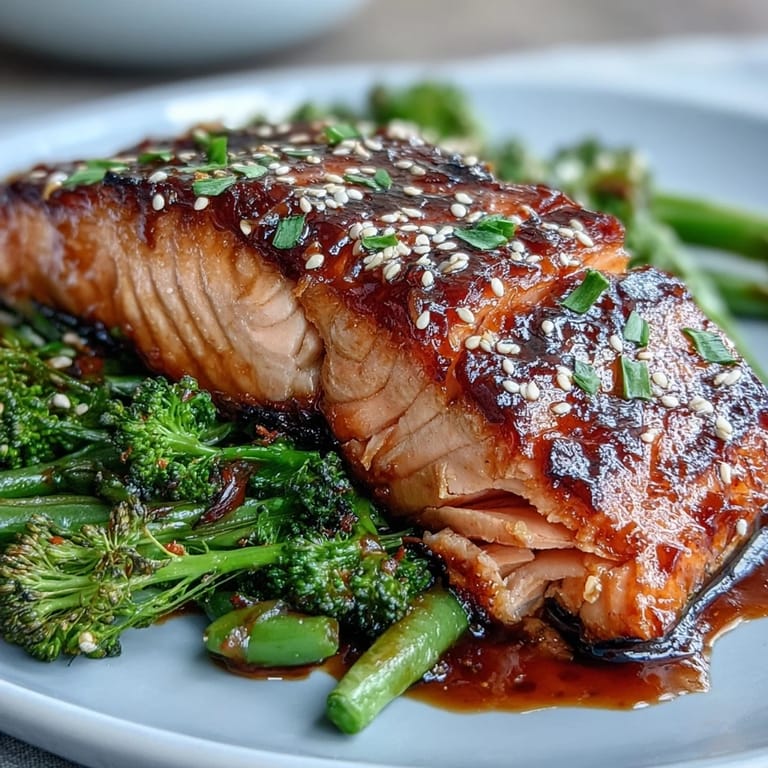
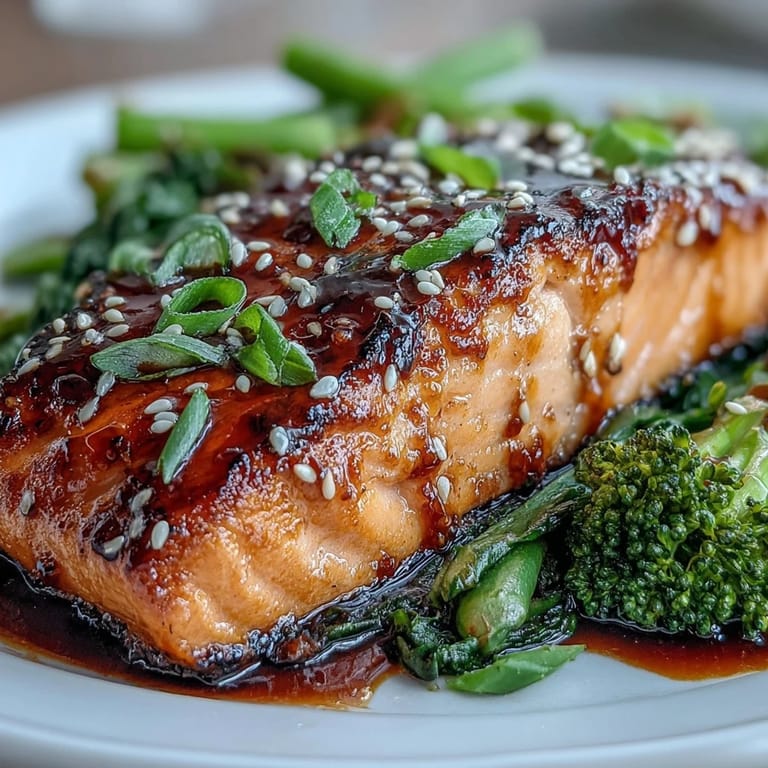
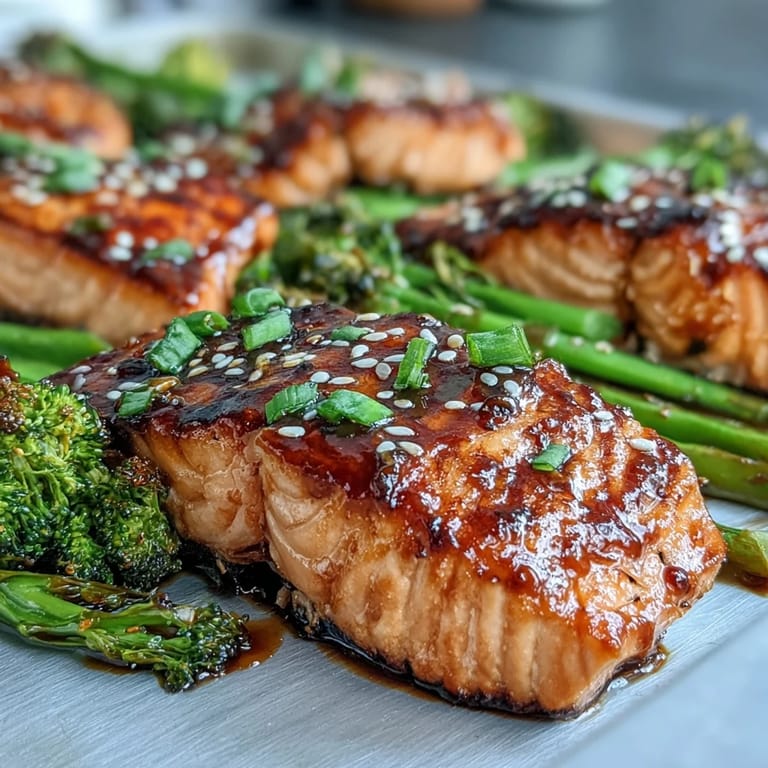
 There's something almost meditative about watching salmon turn glossy under a brush of homemade teriyaki sauce while vegetables roast alongside it on a single pan. I discovered this recipe on a Tuesday evening when I had exactly 35 minutes before my sister arrived for dinner, armed with nothing but curiosity and a slightly wilted bunch of snap peas from the farmers market. The kitchen filled with the most incredible aroma—toasted sesame mingling with garlic and ginger—and by the time she walked through the door, I was already plating golden, caramelized salmon that flaked at the gentlest pressure of a fork. It became the dish I make when I want to feel like I've accomplished something without spending hours at the stove.
I'll never forget making this for my friend Marcus, who's perpetually skeptical about fish but somehow ended up eating two fillets and asking for the recipe with his mouth still full. He'd arrived stressed about work, and within 20 minutes of the oven humming away, he was sitting at my counter with a smile, commenting on how the broccoli had somehow become crispy at the edges without drying out. That's when I realized this dish has a quiet power—it nourishes both body and mood in equal measure.
Ingredients
- Salmon fillets (4 skin-on, 5–6 oz each): Skin-on fillets stay moist and the skin gets wonderfully crispy if you give it a little space on the pan; buy the freshest you can find and pat them dry before cooking so the sauce adheres properly.
- Broccoli florets (2 cups): Cut them roughly the same size so they roast evenly, and don't crowd the pan or they'll steam instead of caramelize.
- Sugar snap peas (2 cups, trimmed): These add sweetness and a gentle crunch that balances the richness of the salmon and sauce.
- Red bell pepper, sliced (optional): Adds brightness and color, but honestly the dish is beautiful without it if you're in a rush.
- Low-sodium soy sauce (1/4 cup): Low-sodium lets you control the salt and prevents the sauce from becoming overwhelming.
- Honey or maple syrup (3 tbsp): Honey creates a silkier glaze while maple syrup brings earthiness; either one works beautifully.
- Rice vinegar (1 tbsp): This brightens everything and prevents the sauce from tasting one-dimensional.
- Sesame oil (1 tbsp): Use toasted sesame oil for maximum flavor, and never cook with it directly—always add it at the end or in a finished sauce.
- Garlic and ginger (2 cloves and 1 tsp): Fresh is non-negotiable here; the minced garlic and grated ginger are what give this sauce its soul.
- Cornstarch slurry (1 tsp cornstarch mixed with 2 tsp water): This thickens the sauce to a glaze that clings to everything rather than pooling at the bottom of the pan.
- Sesame seeds and scallions (for garnish): These aren't just decoration; they add texture and a fresh, oniony bite that cuts through the richness.
Tired of Takeout? 🥡
Get 10 meals you can make faster than delivery arrives. Seriously.
One email. No spam. Unsubscribe anytime.
Instructions
- Get your oven ready and line your pan:
- Preheat to 400°F and line a large sheet pan with parchment paper or foil. This one step eliminates cleanup dread and prevents sticking, which means prettier plating at the end.
- Build your sauce while everything else waits:
- In a small saucepan over medium heat, combine the soy sauce, honey, rice vinegar, sesame oil, minced garlic, and grated ginger, letting them come to a gentle simmer. The kitchen will smell incredible almost immediately; when the mixture is steaming gently, whisk in your cornstarch slurry and cook for another minute or two until it thickens and turns glossy and translucent.
- Arrange and brush your salmon:
- Place salmon fillets skin-side down on one side of the prepared sheet pan, leaving room for vegetables. Brush each fillet generously with the teriyaki sauce, being generous because some will cook off and the salmon needs that protection to stay juicy.
- Prep and position the vegetables:
- Toss your broccoli, snap peas, and optional bell pepper in a bowl with a light drizzle of olive oil and a tablespoon of the remaining teriyaki sauce, then spread them in a single layer beside the salmon, making sure nothing overlaps. This spacing is what gives you crispy-edged vegetables instead of steamed ones.
- Roast everything together:
- Slide the pan into the oven for 15–18 minutes, checking around the 15-minute mark to see if the salmon flakes easily at its thickest part and the vegetables have softened with caramelized edges. Every oven runs a little different, so trust what you see and feel rather than the clock.
- Optional broil for extra caramelization:
- If you're craving more color and caramelization, crank the broiler on high for 1–2 minutes once the salmon and vegetables are cooked through, watching it the entire time so nothing burns.
- Finish and serve immediately:
- Remove from the oven, drizzle the remaining sauce over the salmon and vegetables, scatter sesame seeds and sliced scallions on top, add a squeeze of fresh lime juice, and serve right away while everything is still warm and the vegetables still have their crispness.
 Pin It
 The first time I made this for a dinner party, I served it family-style straight from the sheet pan, and something magical happened—people slowed down, talked less with their mouths full, and somehow everyone felt like they'd been given something thoughtful. That's when I understood that a one-pan meal cooked with attention to flavor and texture is just as elegant as anything fancier.
The Magic of the Teriyaki Sauce
Making teriyaki from scratch rather than reaching for a bottle changes everything about this dish. The homemade version is brighter, less cloying, and has this perfect balance of sweet and savory that lets the salmon shine instead of masking it. I learned this by accident when a friend mentioned she always made her own, and suddenly all those years of bottled sauce felt like I'd been missing the point entirely. The cornstarch is the secret that transforms it from a marinade into a glaze—that tiny amount of thickener catches the heat and turns silky, coating every piece of salmon and vegetable with shiny perfection.
Vegetable Variations and Swaps
The beauty of a sheet pan situation is flexibility without fussiness. I've made this with asparagus in spring, with green beans when snap peas disappeared from the market, and once with a mix of mushrooms and bok choy when I found myself at the Asian market with wandering eyes. The key is respecting cooking times—hardier vegetables like broccoli and asparagus need those full 15–18 minutes, while delicate things like baby bok choy should go in halfway through so they don't collapse into mush. Red bell pepper is lovely for color but honestly optional; the real stars are the salmon and whatever vegetables feel right to you in that moment.
Serving and Storage Wisdom
This dish is best served immediately while the salmon is still warm and the vegetables still have their gentle crunch, but life isn't always perfectly timed. I've made this for meal prep, portioning leftovers into airtight containers, and it keeps beautifully in the fridge for up to two days, though the vegetables will soften slightly. The salmon tastes even better the next day as the flavors meld, which is honestly a gift when you're juggling work and meals and everything else.
- Serve alongside steamed jasmine rice or brown rice if you want something heartier than vegetables alone.
- A squeeze of lime juice just before eating brings everything into focus and adds brightness that rounds out the rich sauce.
- Leftovers reheat gently in a low oven or even eaten cold straight from the fridge make for a stellar lunch the next day.
 Pin It
 This recipe has become my go-to when I want to feel capable in the kitchen without stress or endless cleanup. It's proof that simple ingredients, a little homemade sauce, and a hot sheet pan can create something that tastes restaurant-quality and feels like genuine care.
Recipe Questions & Answers
- → How do I prevent the salmon from drying out?
Brush the salmon generously with the teriyaki glaze to keep it moist while roasting. Avoid overcooking by checking that it flakes easily at 15-18 minutes.
- → Can I substitute the vegetables?
Yes, green beans or asparagus work well as alternatives to snap peas and broccoli for similar textures and flavors.
- → What can I use to make this gluten-free?
Replace regular soy sauce with tamari or a gluten-free soy sauce variant to keep the dish gluten-free without sacrificing flavor.
- → Is it necessary to broil at the end?
Broiling briefly adds extra caramelization and a slight crisp to the glaze, enhancing both appearance and taste, but you can skip it if preferred.
- → How should leftovers be stored?
Portion into airtight containers and refrigerate for up to two days. Reheat gently to maintain texture and flavor.