 Pin It
 There's something about the smell of tahini hitting a hot food processor that makes me feel like I'm in someone's warm Mediterranean kitchen, even if I'm standing in my tiny apartment in winter. I discovered this hummus and roasted veggie combo when a friend casually mentioned she'd stopped buying appetizers altogether and started making this instead, and honestly, it changed how I thought about entertaining. The first time I made it, I burned the pine nuts terribly, but the charred vegetables somehow saved the day with their own smoky depth. Now it's become this beautiful accident that I actually plan for.
I made this for a potluck once where everyone else brought casseroles, and watching people's faces light up when they tasted the contrast of creamy hummus against those charred vegetable edges felt like a small victory. My neighbor, who claims she doesn't cook, stood by the platter asking questions for twenty minutes straight. That's when I realized this recipe works because it feels generous and thoughtful without being fussy.
Ingredients
- Canned chickpeas: Drain and rinse them really well—this step matters more than people think because it removes the starchy liquid that makes hummus gluey instead of silky.
- Tahini: Get the good stuff if you can; I've learned that cheaper versions sometimes separate oddly and taste slightly bitter, which no amount of lemon can fix.
- Fresh lemon juice: Never use bottled—the brightness you need actually comes from fresh lemons, and the difference is honestly shocking.
- Garlic clove: Just one, minced fine, because too much makes this taste like a vampire deterrent instead of food.
- Extra-virgin olive oil: This is your flavor base, so pick one you actually like tasting on its own.
- Ground cumin: A whisper of this, really; it's the background note that makes people say this tastes like something they can't quite name.
- Sea salt: Better for hummus than table salt because it dissolves smoother and tastes cleaner.
- Red bell pepper: The sweetness matters here; it caramelizes under heat and balances the earthiness of the eggplant.
- Zucchini: Cut into half-moons so they caramelize on the flat side instead of just steaming in their own moisture.
- Red onion: Gets soft and almost jammy when roasted, adding a gentle sweetness that surprises people.
- Eggplant: Cut into smaller cubes so they actually get creamy inside instead of staying firm; I learned this the hard way.
- Smoked paprika: This is where the magic happens—it gives everything that campfire quality without actual smoke.
- Pine nuts: Toast them yourself because the pre-toasted ones taste dusty, and they're honestly the difference between nice and memorable.
- Fresh parsley: Scattered on top for brightness and because the green makes the whole dish look alive.
- Sumac or zaatar: Optional but worth seeking out; sumac gives this a tart, almost lemony edge that makes you want another bite.
Tired of Takeout? 🥡
Get 10 meals you can make faster than delivery arrives. Seriously.
One email. No spam. Unsubscribe anytime.
Instructions
- Heat your oven with intention:
- Set it to 425°F and let it come all the way up while you prep your vegetables. This matters because a properly hot oven is what creates those charred edges that make everything taste restaurant-quality.
- Prepare your vegetables like you're building a painting:
- Cut everything into pieces roughly the same size so they roast evenly—bell pepper into strips, zucchini into half-moons, red onion into wedges, eggplant into chunks. Toss them all together with that single tablespoon of olive oil, smoked paprika, salt, and pepper.
- Roast until the edges tell you they're done:
- Spread them on a baking sheet and let them sit in the heat for 22 to 25 minutes, stirring once halfway through. You're looking for those dark, caramelized spots—that's where the flavor lives.
- Build your hummus while the oven does its work:
- In a food processor, combine drained chickpeas, tahini, fresh lemon juice, minced garlic, olive oil, cumin, and sea salt. Blend it until it's completely smooth, then add cold water one tablespoon at a time, pulsing between each addition, until you reach that creamy, cloud-like consistency you want. Taste it and adjust the salt or lemon to your preference.
- Toast the pine nuts with your full attention:
- Heat a dry skillet over medium heat and add the pine nuts, stirring them constantly for 2 to 3 minutes until they're golden and smell nutty and toasted. They go from perfect to burned faster than you'd think.
- Compose your platter like a still life:
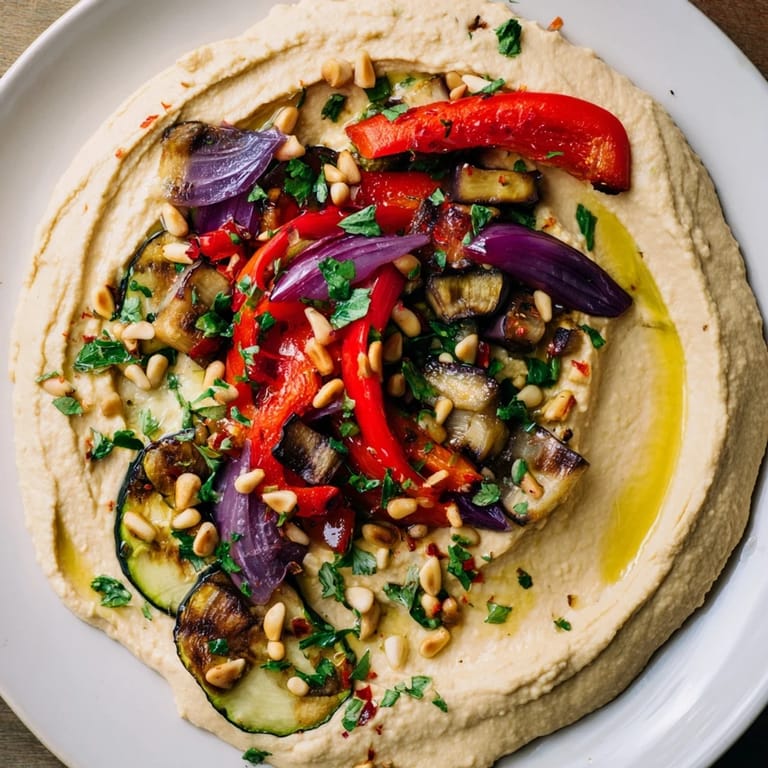
- Spread that silky hummus onto a shallow bowl or platter, using the back of a spoon to create a swoosh that looks intentional. This isn't just function—it's the first thing people see.
- Layer your toppings with care:
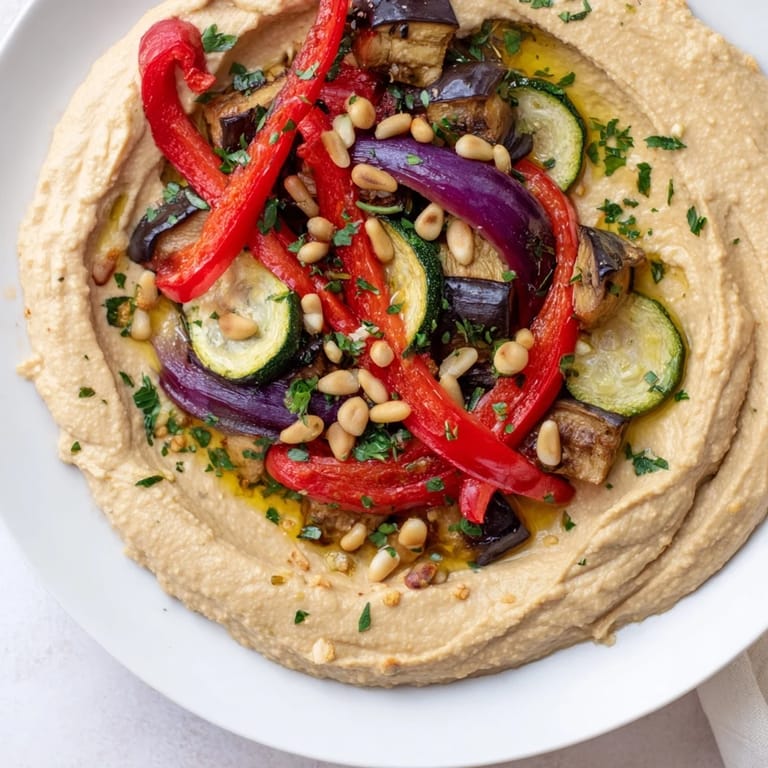
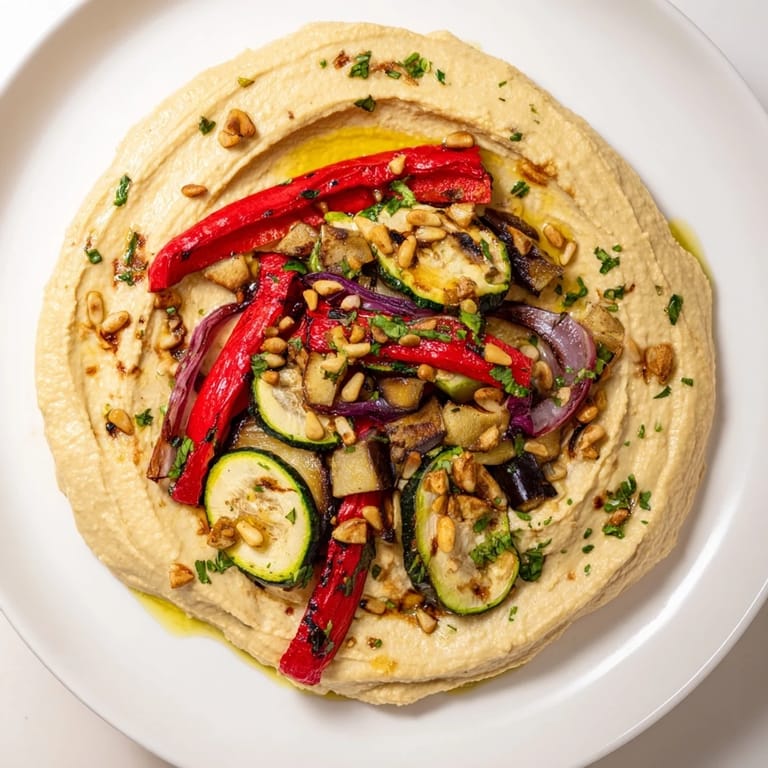
- Scatter the roasted vegetables across the hummus, then sprinkle toasted pine nuts, chopped fresh parsley, and sumac or zaatar if you're using it. Finish with a generous drizzle of olive oil that catches the light.
- Serve it while everything is still warm:
- The warmth of the vegetables against the cool creaminess of the hummus is part of the whole experience. Serve with warm pita or fresh vegetables for dipping.
 Pin It
 There's a moment when everything comes together on the platter—the steam rising off warm vegetables meeting cool, creamy hummus—and you remember why you cook instead of just eating. This dish has become my answer to the question of what to bring when you want to show up for people without exhausting yourself.
Playing with Seasons and Vegetables
The beauty of this recipe is that it works as a canvas for whatever your farmers market is offering. In autumn, I've swapped in charred carrots and cauliflower, which get this almost caramel-like sweetness when roasted. Summer tomatoes work beautifully if you roast them briefly—just long enough for their edges to burst. I once used mushrooms in winter and was shocked at how meaty and satisfying they became, turning this into something more substantial without adding meat. The smoked paprika stays constant, but the vegetables change the story entirely.
Building Flavor Beyond the Basics
This is where the optional ingredients start to matter. If you can find sumac, it's worth it—that citrusy tang makes people pause mid-bite and wonder what they're tasting. Za'atar, if you have it, adds both visual texture and a complexity that makes this feel less like a dip and more like a complete thought. I've also experimented with adding a small spoonful of harissa to the hummus itself for people who like heat, or a pinch of chili flakes scattered across the top for those who want to build their own spice level. These additions aren't necessary, but they're the kind of touches that turn familiar food into something you think about later.
Serving This in Different Moments
I've learned that this recipe has multiple lives depending on your needs. As an appetizer, it sits beautifully on a platter and invites people to gather around it. Torn up with warm pita, it becomes casual dinner on nights when you want something nourishing but light. I've even spooned it into bowls, added some grains like farro or quinoa, topped it with a poached egg, and called it lunch—and honestly, it works.
- Serve warm pita alongside and watch it disappear faster than you'd expect.
- Make it part of a mezze board with olives, feta, and fresh vegetables for a complete experience.
- Leftovers keep in the fridge for a few days, though the vegetables soften and the whole thing tastes more like a warm dip the next day, which is its own kind of good.
 Pin It
 This recipe works because it's generous without being complicated, and it tastes like care without requiring expert technique. It's become my quiet way of saying that I'm glad you're here.
Recipe Questions & Answers
- → How do I get the hummus extra creamy?
Adding cold water gradually while blending helps achieve a smooth, whipped texture. Make sure to blend well after each addition.
- → Can I use other vegetables for roasting?
Yes, carrots, cauliflower, or mushrooms work well as seasonal alternatives and complement the smoky flavors nicely.
- → What is the best way to toast pine nuts?
Toast pine nuts in a dry skillet over medium heat, stirring frequently for 2-3 minutes until golden and fragrant to enhance their nuttiness.
- → How should I store leftovers?
Store in an airtight container in the refrigerator for up to 3 days. Keep toppings separate to maintain texture.
- → Can this be made gluten-free?
Absolutely. Serve with gluten-free bread or fresh vegetables to keep the dish gluten-free.