 Pin It
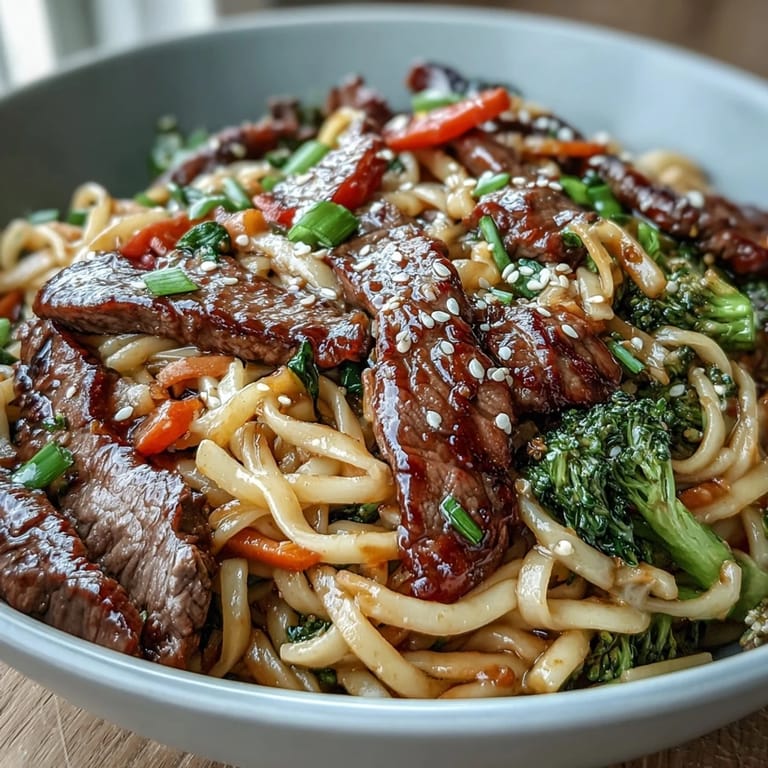
 A roommate once brought home a takeout container of Korean beef noodles after a late shift, and the smell alone woke me from a nap. I convinced her to teach me a home version the next weekend, and we stood side by side at the stove, her correcting my slicing technique while I tried not to overcook the broccoli. That skillet became our Friday night ritual for months. Now, whenever I hear the sizzle of garlic hitting hot oil, I think of her laugh and the way she always double-checked my sauce measurements. This dish tastes like shared kitchens and second chances at getting dinner right.
I made this for a small dinner party once, doubling the recipe and piling it onto a big platter in the center of the table. Everyone reached in with chopsticks, laughing as noodles slipped off and bell peppers tumbled onto the tablecloth. One friend who claimed she hated broccoli went back for thirds. By the end of the night, the platter was scraped clean, and someone had written the recipe name on a napkin to take home.
Ingredients
- Rice noodles: They turn silky and slippery in the sauce, soaking up flavor without getting mushy if you drain them right on time.
- Flank steak: Slicing it thin against the grain keeps it tender, and a quick sear gives it those crispy brown edges that make each bite interesting.
- Broccoli florets: They stay bright green and just crisp enough to snap under your teeth, adding a vegetal sweetness that balances the soy.
- Bell pepper: Red or yellow brings a gentle sweetness and a pop of color that makes the whole bowl look alive.
- Carrot: Julienned strips cook fast and add a slight crunch that plays well against the soft noodles.
- Green onions: Chopped fresh on top, they give a sharp, grassy bite that wakes up every forkful.
- Garlic and ginger: Minced and grated, they bloom in hot oil and fill the kitchen with that unmistakable warm, spicy perfume.
- Soy sauce: The salty backbone of the sauce, it deepens everything it touches and turns the skillet into something savory and dark.
- Brown sugar: Just enough to round out the salt and give the sauce a glossy sheen that clings to the beef.
- Sesame oil: A tablespoon adds that nutty, toasted aroma that makes the dish smell like a restaurant kitchen.
- Vegetable oil: High smoke point and neutral flavor, perfect for searing beef and stir-frying vegetables without burning.
- Sesame seeds: Toasted and sprinkled on top, they add a little crunch and a whisper of nuttiness in every bite.
Tired of Takeout? 🥡
Get 10 meals you can make faster than delivery arrives. Seriously.
One email. No spam. Unsubscribe anytime.
Instructions
- Soften the noodles:
- Cook the rice noodles according to the package directions, then drain them in a colander and give them a quick rinse under cool water to stop the cooking. They should be tender but still have a little chew, not mushy or sticky.
- Sear the beef:
- Heat vegetable oil in a large skillet or wok over medium-high heat until it shimmers, then add the thinly sliced flank steak in a single layer. Let it sear undisturbed for about a minute before flipping, cooking for 2 to 3 minutes total until browned and just cooked through, then transfer it to a plate.
- Bloom the aromatics:
- In the same skillet, toss in the minced garlic and grated ginger, stirring constantly for about 30 seconds until the smell fills your kitchen and the garlic starts to turn golden. Don't walk away or they'll burn and turn bitter.
- Stir-fry the vegetables:
- Add the broccoli florets, sliced bell pepper, and julienned carrot to the skillet, tossing them in the fragrant oil. Stir-fry for about 5 minutes, keeping everything moving so the edges char just a little while the centers stay crisp.
- Mix the sauce:
- In a small bowl, whisk together the soy sauce, brown sugar, and sesame oil, stirring until the sugar dissolves completely into a smooth, glossy liquid. Taste it, it should be salty-sweet with a nutty finish.
- Bring it all together:
- Return the beef to the skillet along with any juices on the plate, then pour the sauce over everything and stir to coat. Add the cooked rice noodles and gently toss with tongs or a spatula until every strand is slicked with sauce and heated through, about 2 minutes.
- Garnish and serve:
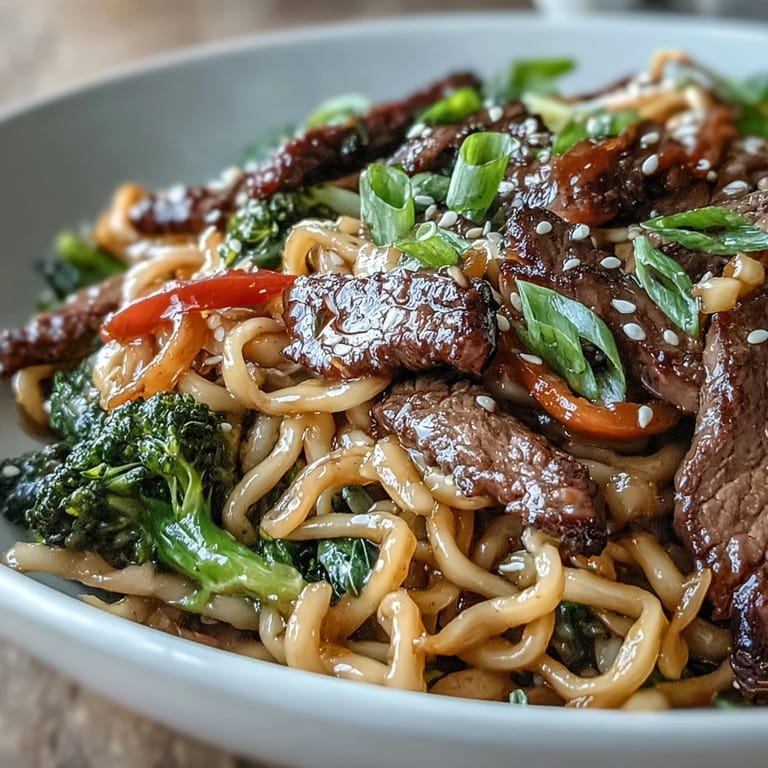
- Transfer the noodles to a serving platter or individual bowls, then scatter chopped green onions and sesame seeds over the top. Serve immediately while everything is still steaming and fragrant.
 Pin It
 One rainy Tuesday, I made this for myself and ate it straight from the skillet while standing at the counter, watching water streak down the window. The noodles were warm and slippery, the beef still had a little char, and the sesame oil smell wrapped around me like a blanket. It wasn't fancy or Instagram-worthy, but it felt like taking care of myself in the smallest, most delicious way. Sometimes a bowl of something savory and hot is all you need to reset the day.
Swapping Proteins and Vegetables
I've made this with chicken thighs, pressed tofu, and even shrimp when I had them thawed in the fridge. Each protein takes the sauce differently, chicken soaks it up, tofu gets crispy on the edges, shrimp turns sweet and tender. For vegetables, snap peas add a juicy crunch, zucchini goes soft and silky, and bok choy wilts into the noodles like it was always meant to be there. Just keep the total volume about the same so the sauce ratio stays balanced.
Making It Spicy
The first time I stirred gochujang into the sauce, I used too much and spent the meal gulping water between bites. Now I start with a teaspoon, taste, and add more if I'm feeling brave. Sriracha works too, and it brings a sharper, more vinegary heat that cuts through the brown sugar. If you want warmth without fire, a pinch of red pepper flakes in the oil when you bloom the garlic does the trick. Everyone's spice tolerance is different, so taste as you go and don't be a hero.
Storing and Reheating
Leftovers keep in an airtight container in the fridge for up to three days, though the noodles will drink up most of the sauce overnight. When you reheat them, add a splash of water or a drizzle of soy sauce and sesame oil to loosen everything back up, either in a skillet over medium heat or in the microwave in short bursts. The vegetables will be a little softer the second day, but the flavors deepen and meld in a way that makes cold noodles at midnight taste like a secret treat.
- If the noodles clump together in the fridge, run a little warm water over them before reheating to separate the strands.
- Reheat only what you plan to eat, noodles don't love being warmed up more than once.
- Fresh green onions and sesame seeds added right before serving make leftovers taste brand new again.
 Pin It
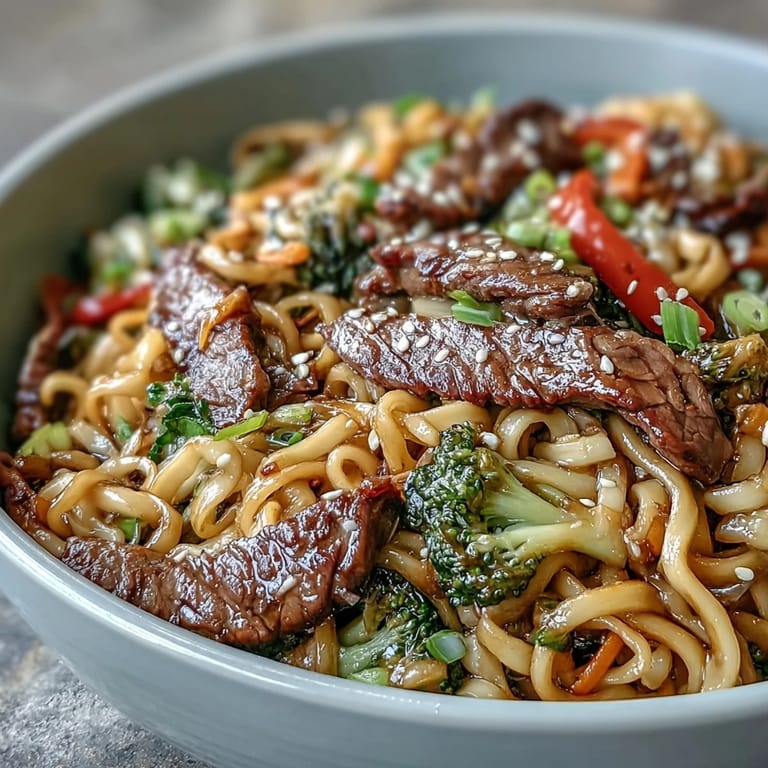
 This recipe has pulled me out of more dinner ruts than I can count, and it never feels like work. I hope it fills your kitchen with good smells and your table with happy, slurping faces.
Recipe Questions & Answers
- → Can I use different types of noodles?
Yes, you can substitute rice noodles with udon, soba, or even spaghetti. Adjust cooking times according to package directions and ensure they're well-drained before tossing with the sauce.
- → How do I slice flank steak properly?
Always slice flank steak thinly against the grain for maximum tenderness. Partially freezing the meat for 15-20 minutes makes slicing easier and more uniform.
- → What can I substitute for flank steak?
Chicken breast, pork tenderloin, shrimp, or firm tofu work wonderfully. Adjust cooking times based on your protein choice to ensure proper doneness.
- → How can I make this spicier?
Add 1-2 tablespoons of gochujang or sriracha to the sauce, or sprinkle red pepper flakes while stir-frying vegetables. Adjust heat level to your preference.
- → Can I prepare components ahead of time?
Absolutely. Slice vegetables and beef up to 24 hours in advance, storing separately in the refrigerator. Mix the sauce and cook noodles just before final assembly for best texture.
- → How do I prevent noodles from sticking?
Rinse cooked rice noodles under cold water and toss with a small amount of sesame oil. This prevents clumping and makes them easier to incorporate into the stir-fry.