 Pin It
 The sizzling sound of rice cakes hitting the spicy broth always takes me back to my first winter in Seoul. Walking through the market with snowflakes landing on my scarf, I stopped at a tteokbokki stall where an elderly woman stirred an enormous red pot. She handed me a paper cup full of steaming rice cakes, and that first chewy, spicy bite changed everything I thought I knew about comfort food.
Last autumn, when my friend Min visited from Busan, I decided to surprise her with homemade tteokbokki. She walked through the door, stopped mid-sentence, and closed her eyes as the aroma filled the apartment. Later, curled up on the couch with steaming bowls, she told me it tasted just like the version her grandmother made during rainy afternoons, and I couldnt have received a higher compliment.
Ingredients
- Korean Rice Cakes: These cylindrical tteok are the stars of the show, and I learned that fresh ones need just a quick soak while refrigerated ones benefit from a full 10-minute bath in warm water.
- Gochujang: This fermented chili paste provides the characteristic deep red color and complex flavor that builds the foundation of authentic tteokbokki.
- Kelp and Anchovies: Creating your own dashi broth elevates this dish from good to memorable, though the anchovies can be omitted for a vegetarian version without losing too much depth.
- Green Onions: Added near the end, they provide a fresh counterpoint to the rich sauce and bring a welcome brightness to each bite.
- Honey: After experimenting with various sweeteners, I discovered honey adds a subtle floral quality that perfectly balances the chili heat.
Tired of Takeout? 🥡
Get 10 meals you can make faster than delivery arrives. Seriously.
One email. No spam. Unsubscribe anytime.
Instructions
- Prepare the rice cakes:
- Give these chewy delights a warm bath for 10 minutes if theyve been chilling in your refrigerator. Youll know theyre ready when they feel slightly soft between your fingers.
- Create your flavor foundation:
- Simmer the kelp and anchovies in water, watching as the liquid transforms into a golden broth infused with umami. The kitchen will begin filling with that distinctive oceanic aroma.
- Craft the signature sauce:
- Whisk the vibrant gochujang into the broth until it dissolves completely, creating a glossy red mixture. This is where the magic starts to happen as sweet, spicy, and savory elements come together.
- Bring it all together:
- Add your rice cakes and vegetables to the bubbling sauce, stirring gently to coat each piece. Watch carefully as they transform from firm to perfectly chewy.
- Add the finishing touches:
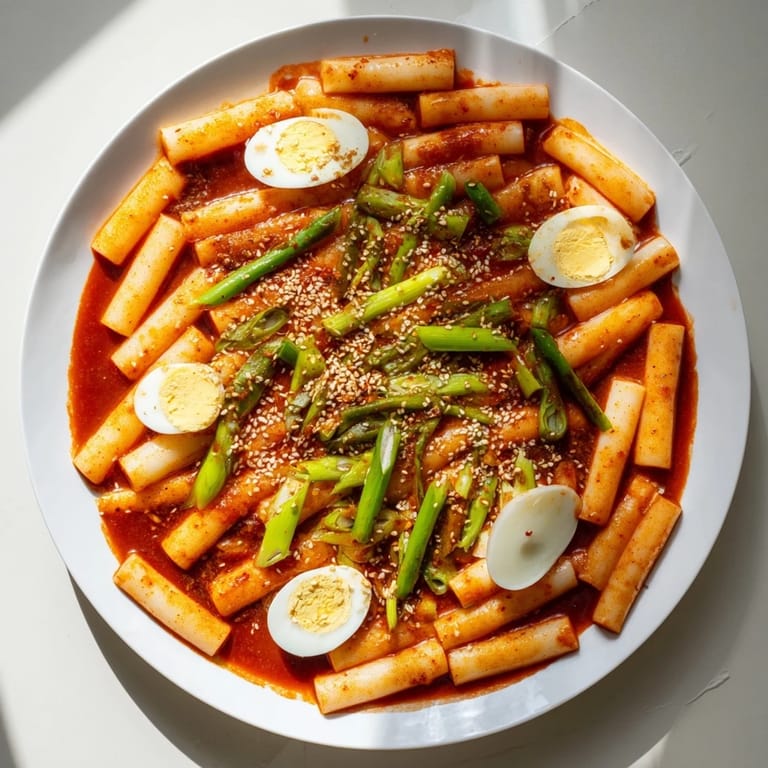
- In the last moments of cooking, scatter in green onions and nestle in boiled eggs if using. The heat will just soften the onions while preserving their bright color.
- Garnish and serve:
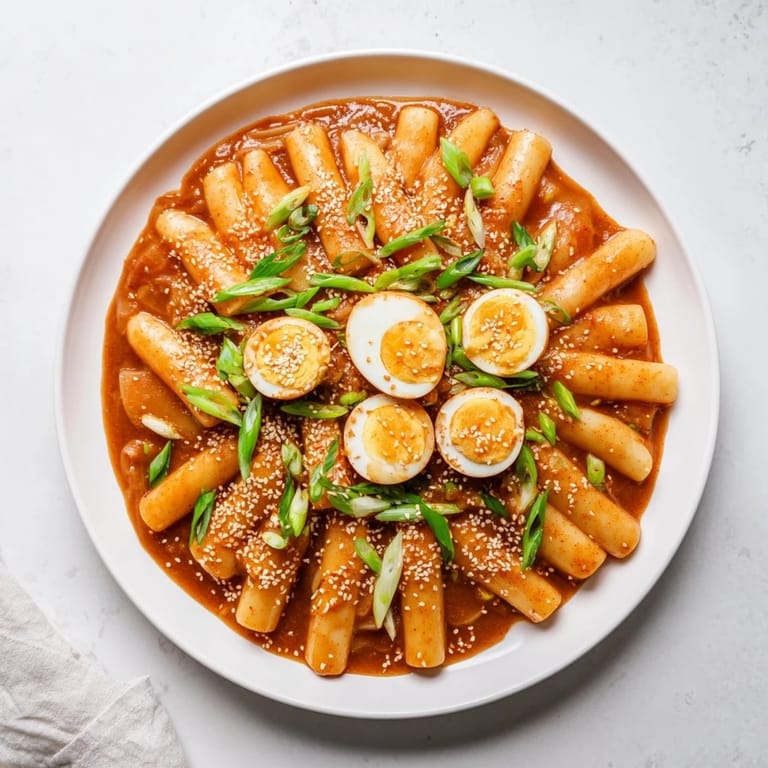
- Sprinkle sesame seeds over the glossy red dish just before serving. The contrast of the tiny white seeds against the vibrant sauce makes for a beautiful presentation.
 Pin It
 One rainy Saturday when my entire plan for a dinner party fell apart, I scrambled to make tteokbokki with what I had in the pantry. My guests gathered around the stove as I stirred, sharing stories and sneaking bites directly from the pot. What started as a backup plan turned into one of those magical evenings where the food became more than sustenance, it became the centerpiece of connection and laughter.
The Rice Cake Selection
Finding the right rice cakes makes all the difference in tteokbokki. After trying various brands, Ive learned that fresher tteok will cook faster and maintain a better texture. If you can find them at a Korean market rather than pre-packaged, grab those. They usually come in a clear plastic bag, slightly soft to the touch, and sometimes still warm if youre lucky enough to find them freshly made.
Spice Level Management
The beauty of making tteokbokki at home is controlling exactly how fiery you want it. I once made the rookie mistake of following a recipe that called for three tablespoons of gochugaru without tasting it first, and my dinner guests were reaching for water glasses all night. Start conservatively with the gochugaru, especially if yours is particularly fresh or potent. You can always add more halfway through cooking if you need that extra kick.
Serving Suggestions
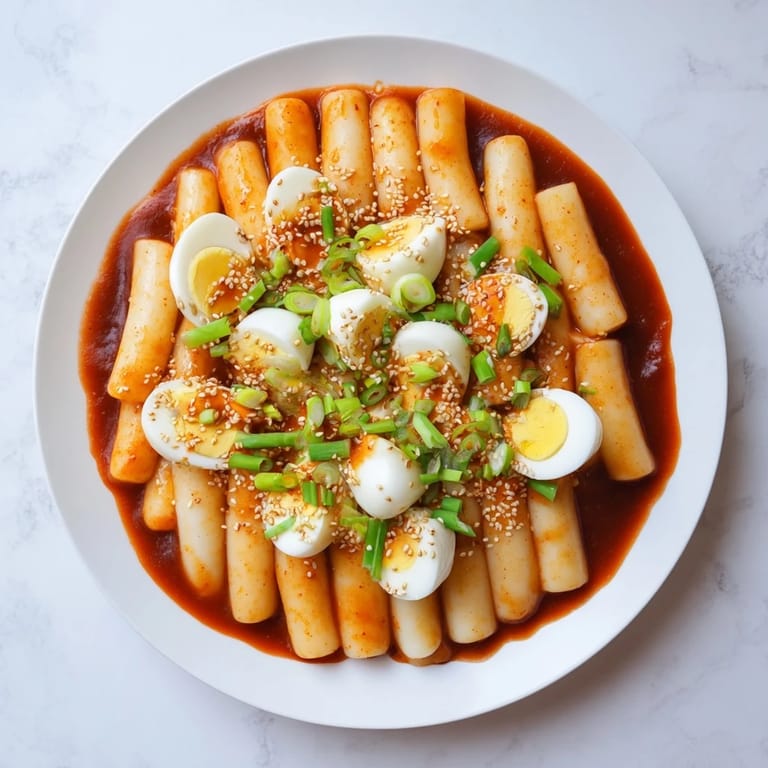
Tteokbokki shines brightest when paired with complementary sides that balance its bold flavors and chewy texture. On cold evenings, I like to serve it alongside crispy Korean pancakes (pajeon) for textural contrast, or with simple steamed dumplings that can be dipped into the extra sauce.
- Pour any leftover sauce over steamed rice for a quick meal the next day, topped with a fried egg for extra richness.
- If serving tteokbokki as part of a larger Korean spread, balance the spice with cooling cucumber kimchi or a simple bean sprout salad.
- For an authentic street food experience, serve in small bowls with toothpicks instead of chopsticks, encouraging casual, communal eating.
 Pin It
 Tteokbokki may have originated as humble street food, but it deserves a place of honor at any table. Each time I make it, Im reminded that sometimes the most satisfying dishes are the ones that combine simplicity with bold flavors.
Recipe Questions & Answers
- → Can I make tteokbokki vegetarian?
Yes, simply omit the anchovies and use vegetable broth or kelp-based dashi instead. The gochujang and other seasonings provide rich, satisfying flavor on their own.
- → How do I prevent the rice cakes from sticking?
Stir occasionally during cooking and ensure you have enough liquid in the pot. If the sauce becomes too thick, add a splash of water or broth to maintain a simmering consistency.
- → What's the difference between gochujang and gochugaru?
Gochujang is a fermented chili paste offering deep, complex heat and umami, while gochugaru is ground chili flakes providing bright, spicy kick. Both contribute distinct flavors to the sauce.
- → Can I prepare the rice cakes ahead of time?
Yes, soak them in water up to 2 hours before cooking. Drain well before adding to the pot to avoid excess liquid diluting your sauce.
- → What are good additions to enhance the dish?
Fish cakes, boiled eggs, cabbage, and sliced onions all complement the sauce beautifully. Serve alongside pickled radish or steamed dumplings for a complete meal.
- → How spicy will this be?
The combination of gochujang and gochugaru creates moderate heat that's balanced by sweetness. Reduce either ingredient for milder flavor or increase for more intensity.