 Pin It
 The scent of toasted pita and the medley of bright colors still transport me to that summer I spent in Beirut with my grandmother. She'd arrange mezze platters almost daily—little bowls of hummus with pools of olive oil, plump olives nestled against chunks of salty feta. Standing in her tiny kitchen, watching her hands move with practiced efficiency, I realized food wasn't just sustenance but connection. Years later, I recreate her platters whenever friends gather, each component a brushstroke in an edible painting.
Last summer, my neighbor Mark stopped by unexpectedly with a bottle of wine just as I was assembling a mezze platter. The kitchen counters were strewn with vegetable peelings and chickpea skins I'd meticulously removed for the smoothest hummus. What began as a casual hello turned into hours on the patio, the platter between us growing emptier as the stars appeared. By midnight, we'd polished off every olive and were scooping the last bits of hummus with our fingers.
Ingredients
- Chickpeas: After years of opening cans, I discovered that cooking dried chickpeas yourself with a bay leaf and half an onion makes hummus that silences a room.
- Tahini: The engine behind great hummus, stir it thoroughly before measuring as the natural oils separate like an unshaken snow globe.
- Mixed Olives: Room temperature olives release their flavors better than cold ones straight from the fridge, something I learned after serving practically tasteless olives at my first dinner party.
- Feta Cheese: Buy it as a block in brine rather than pre-crumbled for a world of difference in moisture and flavor—the pre-crumbled stuff is like comparing a handwritten letter to a text message.
- Pita Bread: If you can find a Middle Eastern bakery, the difference is like comparing garden tomatoes to supermarket ones—but even store-bought warmed in the oven works wonderfully.
Tired of Takeout? 🥡
Get 10 meals you can make faster than delivery arrives. Seriously.
One email. No spam. Unsubscribe anytime.
Instructions
- Whip the hummus to life:
- In your food processor, combine chickpeas, tahini, lemon juice, olive oil, garlic, cumin, and salt. Listen for the moment when the motor sound changes from struggling to smooth—that's when you know it's reaching silky perfection.
- Create your canvas:
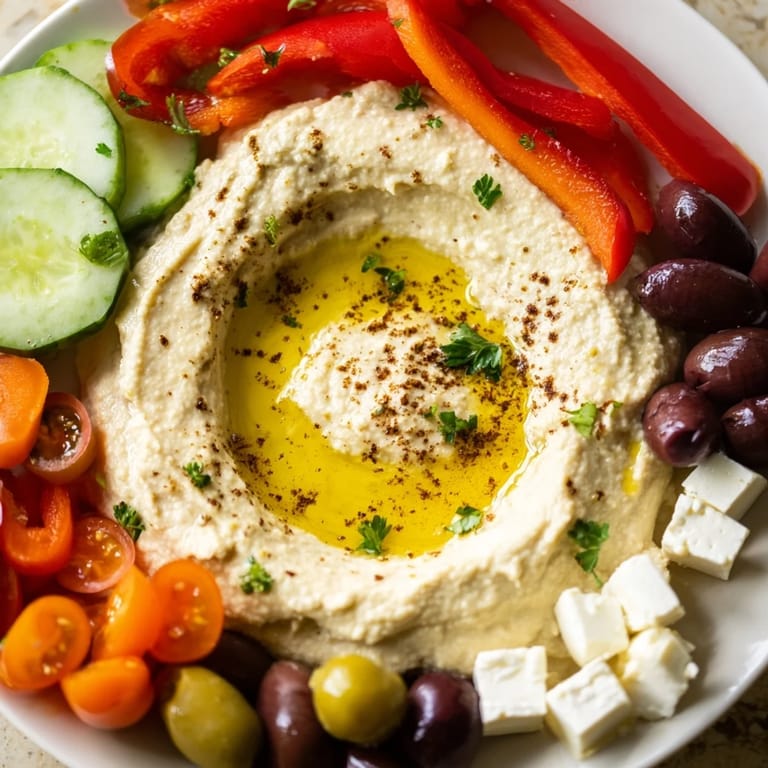
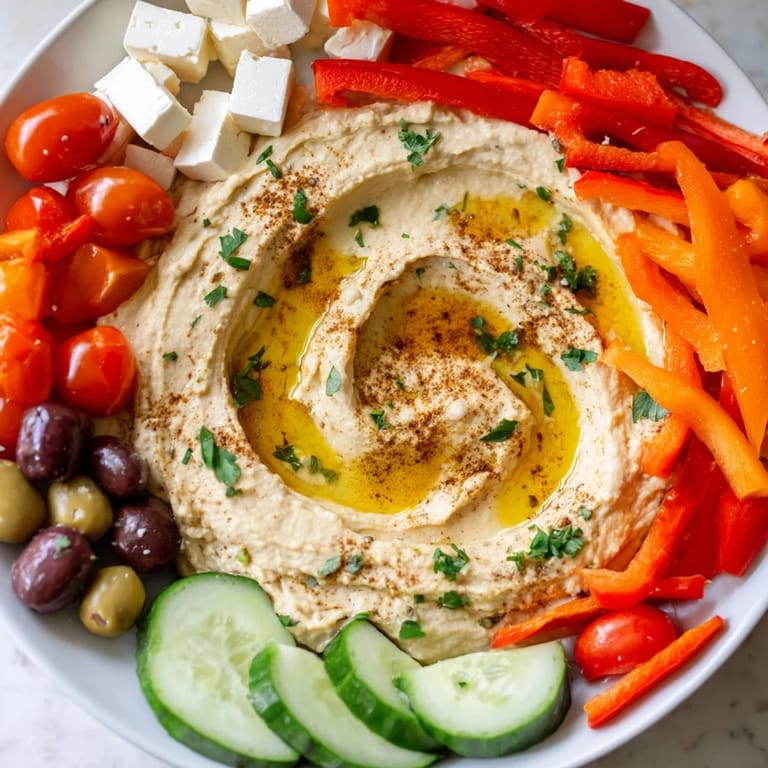
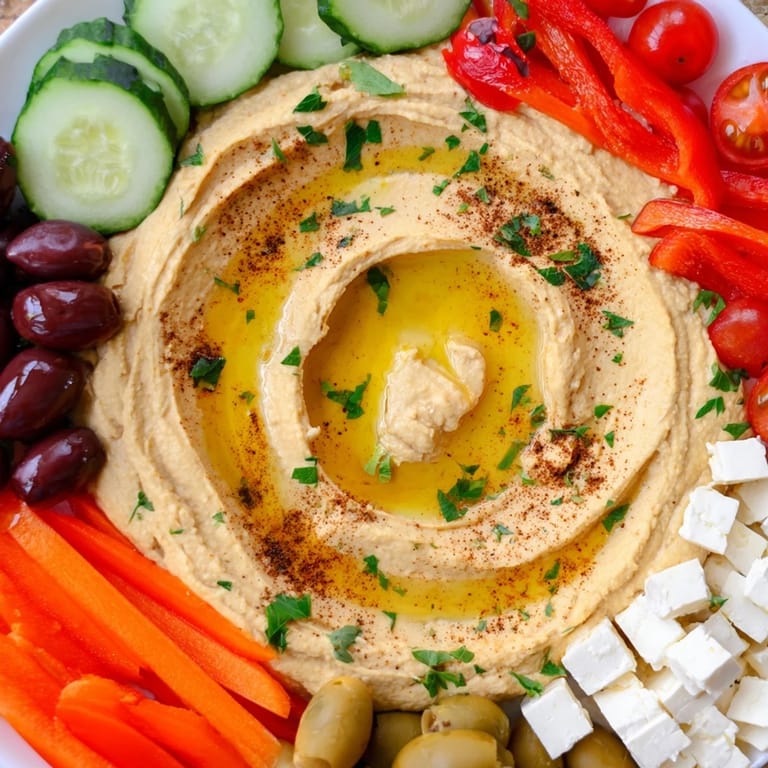
- Spread the hummus on your platter with the back of a spoon, creating valleys and ridges that will cradle olive oil like tiny golden pools. These indentations aren't just pretty—they deliver pockets of flavor in every scoop.
- Build your color palette:
- Arrange vegetables, olives, and feta in clusters around the hummus, alternating colors for visual appeal. I think of it like painting—the bright red tomatoes pop against cucumber green, while the purple-black olives create beautiful contrast.
- Warm the pita:
- Toast triangles until they're just warm with slightly crisp edges but still flexible enough to scoop. The gentle heat will release that intoxicating wheat aroma that signals to everyone that something good is coming.
- Add final touches:
- Sprinkle the entire arrangement with fresh herbs and a dusting of sumac or paprika. These little flecks of color aren't just garnish—they're surprise bursts of flavor that wake up your taste buds.
 Pin It
 My daughter's tenth birthday party took an unexpected turn when rain forced us inside, twenty children suddenly confined to our living room. Panicking, I quickly assembled an impromptu mezze platter, assuming kids would reject anything beyond the pita bread. To my amazement, these young critics gathered around, first tentatively dipping corners of bread, then returning for vegetables and even olives. The platter became the centerpiece of conversation as children compared favorite combinations and debated the perfect hummus-to-pita ratio with surprising seriousness.
Balancing Your Platter
A successful mezze platter needs contrast in every dimension—temperature, texture, flavor, and color. I learned this lesson after creating a monochromatic beige disaster early in my cooking adventures, featuring hummus, pita, and cauliflower. Now I ensure every platter includes something crisp, something soft, something tangy, something mild, something warm, and something cool. This approach creates a sensory journey that keeps everyone coming back for one more bite, then another, then realizing they've somehow eaten dinner without a formal meal.
Making It Ahead
The morning rush before hosting always left me frazzled until I discovered the preparation timeline that changed everything. Hummus can be made three days ahead and stored with plastic wrap pressed directly on its surface to prevent that unappetizing skin from forming. Vegetables can be cut the morning of and stored in cold water to maintain crispness. Even the platter itself can be arranged several hours ahead and refrigerated, simply allowing it to come to room temperature and adding the final olive oil drizzle just before serving—a revelation that transformed me from harried host to seemingly effortless entertainer.
Expanding Your Mezze Repertoire
What began as a simple platter evolved over years into an exploration of Middle Eastern flavors that changed how I approach cooking. Each component teaches something valuable—the patience of properly roasting eggplant for baba ganoush, the precision of rolling grape leaves, the satisfaction of watching falafel puff and brown in hot oil. The mezze platter becomes not just a meal but a collection of small cooking lessons, each component mastered separately before joining the whole.
- Experiment with different hummus variations like roasted red pepper, beet, or avocado—the basic technique remains the same while the flavor profile shifts dramatically.
- Fresh herbs aren't just garnish but essential components—try whole leaves of mint, cilantro, or dill scattered throughout the platter for guests to incorporate into their perfect bite.
- Consider temperature contrasts by including one warm element like freshly fried falafel or roasted cauliflower florets dusted with za'atar alongside the room temperature components.
 Pin It
 This mezze platter has become my living canvas, evolving with seasons and occasions, yet always remaining true to that first lesson from my grandmother. It reminds us that sometimes the most meaningful dining experiences aren't about elaborate techniques but simply bringing beautiful ingredients together with care.
Recipe Questions & Answers
- → Can I prepare the hummus in advance?
Yes, hummus can be made up to 3 days ahead and stored in an airtight container in the refrigerator. Simply drizzle with olive oil before serving and adjust consistency with a splash of water if needed.
- → What cheeses work best as feta alternatives?
Labneh offers a creamy tang similar to feta, while goat cheese provides a lighter option. Halloumi works well if you prefer a cheese that holds its shape, and ricotta salata offers a firmer, saltier alternative.
- → How do I warm the pita bread properly?
Wrap pita in foil and warm in a 350°F (175°C) oven for 5-8 minutes, or place directly over a gas flame for 10-15 seconds per side. This restores softness and makes them perfect for scooping hummus and vegetables.
- → Can I make this gluten-free?
Absolutely. Replace traditional pita with gluten-free pita bread, or serve the platter with gluten-free crackers, rice cakes, or simply use vegetables as scoops. All other components are naturally gluten-free, though always verify labels for cross-contamination.
- → What additions enhance this platter?
Roasted red peppers, tabbouleh, falafel, or stuffed grape leaves elevate the spread. A drizzle of tahini sauce or pomegranate molasses adds depth, while fresh herbs like mint and parsley brighten the flavors considerably.
- → How far in advance can I arrange the platter?
Arrange everything except delicate herbs 1-2 hours before serving. Keep the platter covered with plastic wrap at room temperature. Add fresh parsley and lemon wedges just before serving to maintain vibrant colors and texture.