 Pin It
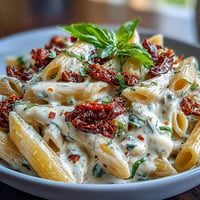
 There's something deeply satisfying about opening your pantry on a Tuesday evening and realizing you can pull together a full dinner without a shopping trip. This one-pot pasta taught me that constraint breeds creativity—I'd grabbed whatever vegetables were lingering in the crisper drawer, threw them into a pot with dried pasta and broth, and somehow ended up with something so comforting it became a regular rotation. The kitchen filled with that warm, tomatoey steam, and suddenly dinner felt less like a chore and more like an accident that turned out right.
I made this for my roommate once when she came home exhausted from a double shift, and watching her face soften when she smelled that garlic and tomato mixture was worth more than any compliment. She asked for the recipe three times that week, and now it's become her go-to when she's short on time and energy. That's when I knew this wasn't just budget-friendly—it was genuinely nourishing in ways that had nothing to do with the price tag.
Ingredients
- Dried penne or fusilli (350 g): The shape matters more than you'd think—these catch and hold the sauce beautifully rather than sliding off.
- Onion and garlic (1 medium onion, 2 cloves): This is your flavor foundation, and taking a full 2-3 minutes to get them golden and fragrant makes everything that follows taste richer.
- Zucchini and red bell pepper (1 medium, 1 pepper): I've learned these don't need to be perfect—slightly irregular chunks actually cook more evenly and add nice texture variation.
- Canned diced tomatoes with juices (400 g): Don't drain them; that liquid is liquid gold for building your sauce without adding water.
- Baby spinach (100 g): It wilts in seconds at the end, adding iron and brightness without any fuss or extra cooking time.
- Vegetable broth (700 ml): This is what transforms pasta into something creamy and cohesive—use good broth if you can, as it really does make a difference.
- Parmesan cheese (60 g plus extra): Freshly grated is worth the five extra minutes; pre-shredded versions won't melt as smoothly into the dish.
- Olive oil, Italian herbs, chili flakes, salt and pepper: These humble seasonings are your volume control—taste as you go and adjust boldly.
Tired of Takeout? 🥡
Get 10 meals you can make faster than delivery arrives. Seriously.
One email. No spam. Unsubscribe anytime.
Instructions
- Build your flavor base:
- Heat olive oil in a large pot over medium heat and add your chopped onion and minced garlic, letting them sizzle and soften for 2-3 minutes until they smell sweet and almost golden. You'll know you're there when you can barely see the raw onion pieces anymore and the kitchen smells like a proper dinner is happening.
- Welcome the vegetables:
- Stir in your diced zucchini and bell pepper, cooking for another 2-3 minutes so they start to soften slightly and release their own flavors into the oil. There's a moment where the vegetables go from raw-looking to glistening and tender—that's your signal to move forward.
- Bring it all together:
- Add your uncooked pasta directly to the pot along with the canned tomatoes (juice and all), vegetable broth, dried herbs, chili flakes if you're using them, and a good pinch of salt and pepper. Stir everything well so the pasta isn't clumped together, then bring it all to a boil.
- Let it simmer into submission:
- Once boiling, reduce the heat to a gentle simmer, cover the pot, and let it cook for 10-12 minutes, stirring every few minutes so nothing sticks to the bottom. You're aiming for that moment when the pasta is tender but still has a slight bite, and most of the liquid has been absorbed into something sauce-like.
- Finish with green and cheese:
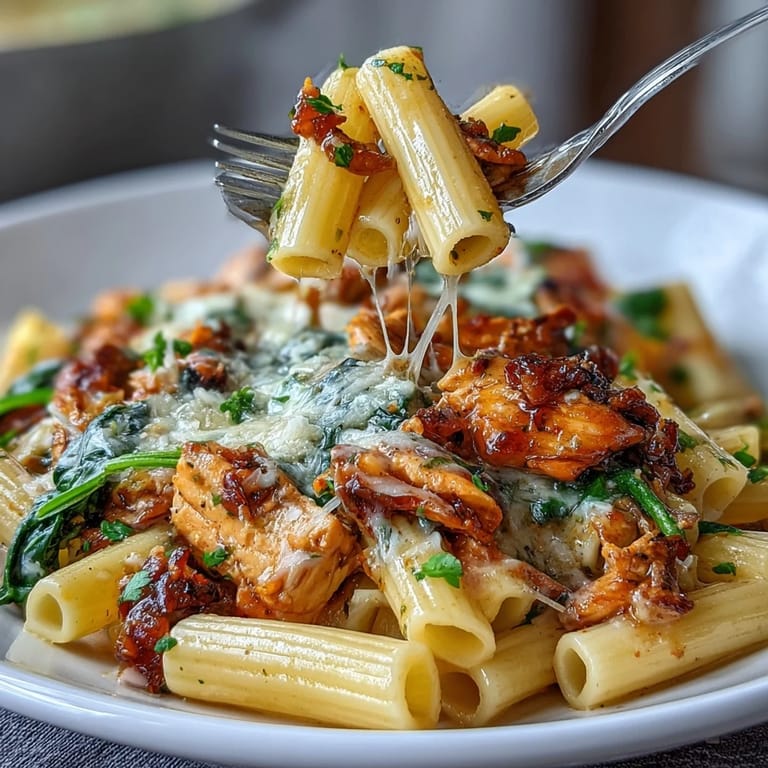
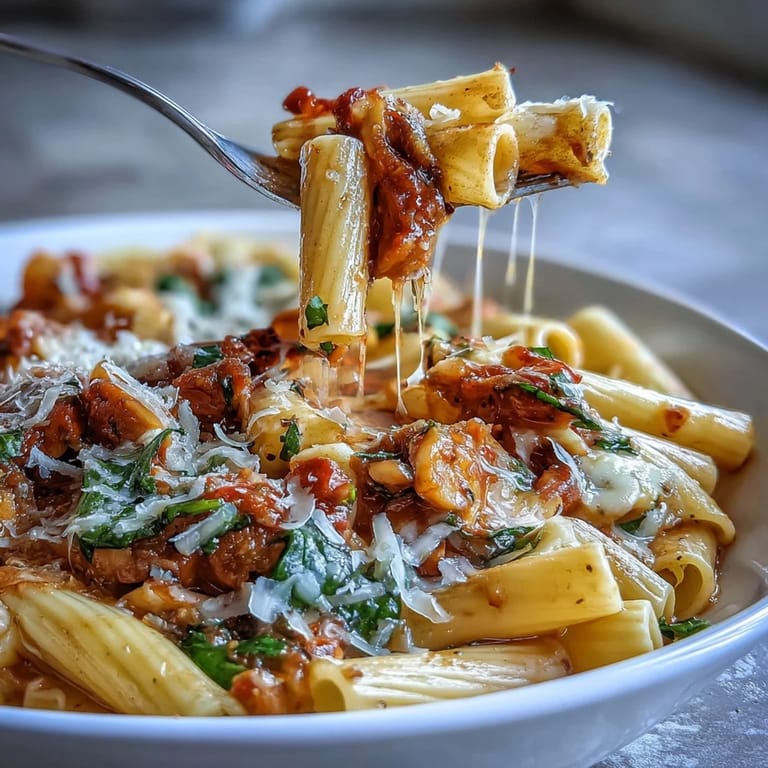
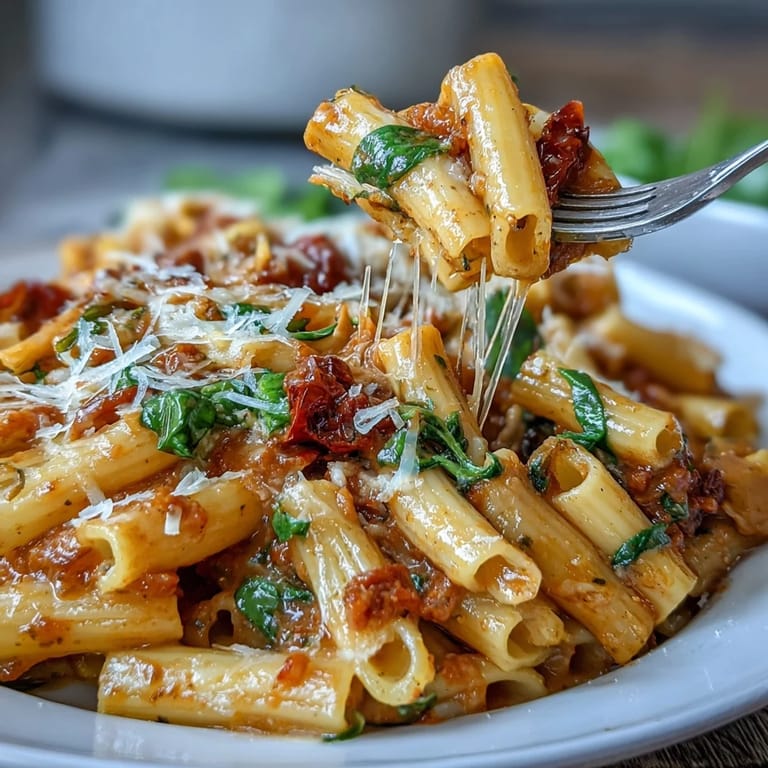
- Uncover the pot, stir in your baby spinach and grated Parmesan, and let everything cook together for just 1-2 minutes until the spinach is wilted and the cheese has melted into the warm pasta. Taste it now and adjust your seasoning—add more salt if it needs it, a pinch more chili flakes if you want heat.
 Pin It
 What I didn't expect was how this dish became a vehicle for teaching my younger cousin that cooking doesn't have to be intimidating or expensive. Watching her confidently chop vegetables and manage the pot herself, tasting and adjusting as she went, made me realize this isn't just easy—it's empowering. Sometimes the best recipes are the ones that make someone believe they can cook.
Why One Pot Actually Changes Everything
The magic of cooking pasta in its actual sauce rather than draining it separately is that every grain soaks up those tomato and herb flavors instead of just sitting on top of them. You lose some broth through absorption and evaporation, which means the pasta releases its starch into the liquid, creating this naturally creamy texture without any cream at all. It's one of those techniques that feels almost like cheating once you realize how much better it tastes.
Building Your Own Variations
The beauty of this recipe is that it's actually a template waiting for your own interpretation. I've made it with mushrooms instead of zucchini, added chickpeas for protein, swapped spinach for kale, and each version felt like a completely different dinner born from the same bones. Your vegetable drawer doesn't need to match mine—it just needs to be something you're excited to eat, and this dish will carry it beautifully.
Moving Beyond Basic
Once you've made this a few times, you'll start seeing opportunities to make it your own. A handful of fresh basil stirred in at the very end brings brightness, a splash of white wine added before the broth deepens everything, a generous pinch of red pepper flakes if you're craving heat. Even tiny additions start to feel like you're not just following a recipe but actually cooking, which is a feeling worth chasing.
- Keep a block of Parmesan in your fridge specifically for this—grating it fresh the day before means you can cook without thinking.
- If your broth is very salty, use less salt initially and taste before adjusting, as it concentrates as the liquid reduces.
- Leftovers taste even better the next day; store covered and reheat gently with a splash of water if it's dried out.
 Pin It
 This one-pot pasta has quietly become the meal I return to when life gets hectic, when I need to feed people without fanfare, or when I just want something that tastes like care without requiring hours in the kitchen. It's taught me that the best recipes aren't always complicated—sometimes they're just honest, affordable, and designed to nourish without demanding too much.
Recipe Questions & Answers
- → Can I use other pasta shapes?
Yes, penne or fusilli work best, but you can substitute with rigatoni, rotini, or small shells for similar results.
- → How can I make it vegan?
Simply omit the Parmesan or replace it with a plant-based cheese alternative before serving.
- → Is it possible to add protein?
Absolutely, adding cooked sausage, shredded chicken, or canned beans can increase the protein content.
- → What vegetables can I swap in?
Feel free to include mushrooms, peas, carrots, or any seasonal vegetables you prefer.
- → How do I avoid overcooked pasta?
Stir occasionally during simmering and check the pasta for al dente texture around 10-12 minutes to prevent overcooking.