 Pin It
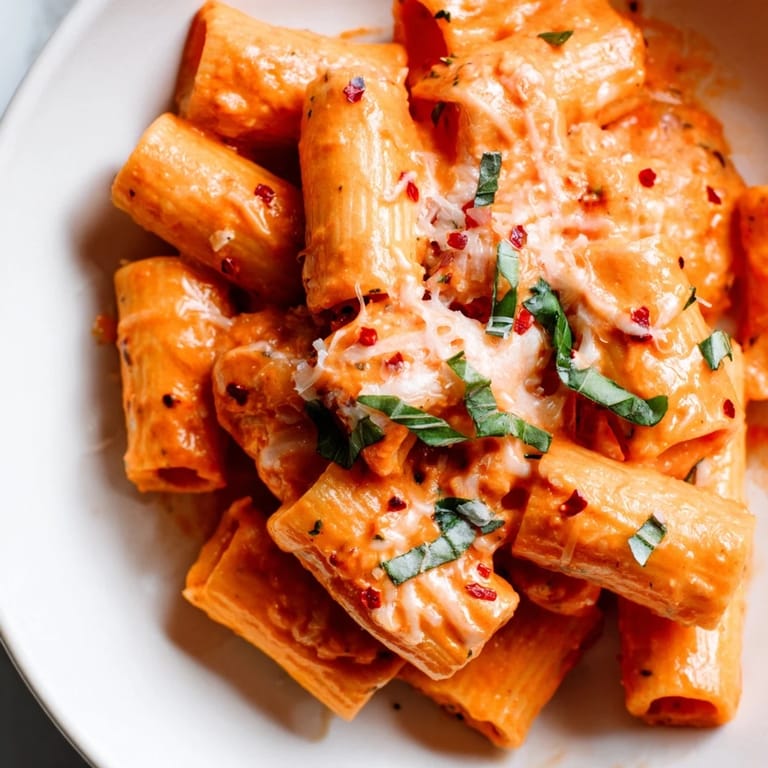
 The kitchen smelled like garlic and butter, and I was halfway through explaining something completely unrelated when my roommate interrupted me mid-sentence to ask what I was making. That's the power of this dish. It doesn't need an announcement. The scent of red pepper flakes blooming in olive oil does all the talking, pulling people into the kitchen before the first pot even boils. I wasn't trying to impress anyone that night, just using what I had in the pantry, but somehow this spicy rigatoni became the meal everyone still asks me to make.
I made this for a friend who claimed she didn't like spicy food, and I panicked halfway through cooking, convinced I'd added too much red pepper. She had three servings. Turns out, when heat is balanced with cream and Parmesan, it doesn't burn, it just wakes everything up. We sat at my tiny kitchen table with mismatched bowls, twirling pasta and talking until the pot was empty. That night taught me that good food doesn't need perfection, it just needs to feel generous.
Ingredients
- Rigatoni pasta: The wide tubes and ridges grab onto the sauce in a way smooth pasta never could, and they hold up beautifully without getting mushy.
- Olive oil: This is your flavor base, so use something you'd actually want to taste, not the dusty bottle in the back of the cupboard.
- Yellow onion: Finely chopped onion melts into the sauce and adds a subtle sweetness that balances the acidity of the tomatoes.
- Garlic: Fresh cloves are non-negotiable here, the jarred stuff just doesn't bloom the same way when it hits the hot oil.
- Crushed red pepper flakes: Start with less if you're nervous, you can always add more, but you can't take it back once it's in.
- Tomato paste: Cooking it for a couple of minutes deepens the flavor and takes away that raw, metallic edge.
- Canned crushed tomatoes: A good quality can makes all the difference, look for ones with minimal ingredients and no added sugar.
- Heavy cream: This is what transforms a sharp tomato sauce into something you want to soak up with bread.
- Parmesan cheese: Freshly grated melts into the sauce and adds a salty, nutty richness that pre-shredded cheese just can't match.
- Fresh basil: A handful of torn leaves at the end brings everything to life with a pop of color and herbal brightness.
Tired of Takeout? 🥡
Get 10 meals you can make faster than delivery arrives. Seriously.
One email. No spam. Unsubscribe anytime.
Instructions
- Boil the pasta:
- Bring a large pot of salted water to a rolling boil and cook the rigatoni until al dente, with just a little bite left in the center. Don't forget to save a mugful of that starchy pasta water before you drain, it's your secret weapon for a silky sauce.
- Sauté the aromatics:
- Heat olive oil in a large skillet over medium heat, then add the chopped onion and let it soften until it turns translucent and smells sweet. Toss in the garlic and red pepper flakes, stirring constantly for about a minute until the kitchen fills with that unmistakable fragrance.
- Build the tomato base:
- Stir in the tomato paste and let it cook for a couple of minutes, stirring often so it caramelizes slightly and deepens in color. Pour in the crushed tomatoes and let everything simmer gently for 8 to 10 minutes, stirring occasionally, until the sauce thickens and the raw tomato flavor mellows out.
- Make it creamy:
- Lower the heat and stir in the heavy cream and grated Parmesan, watching as the sauce turns glossy and rich. Season with salt and pepper, then let it simmer for a few more minutes until everything comes together in a velvety, spoonable consistency.
- Toss and serve:
- Add the drained rigatoni directly into the sauce and toss until every piece is coated, adding splashes of reserved pasta water if it feels too thick. Serve immediately in warm bowls, topped with fresh basil and an extra shower of Parmesan.
 Pin It
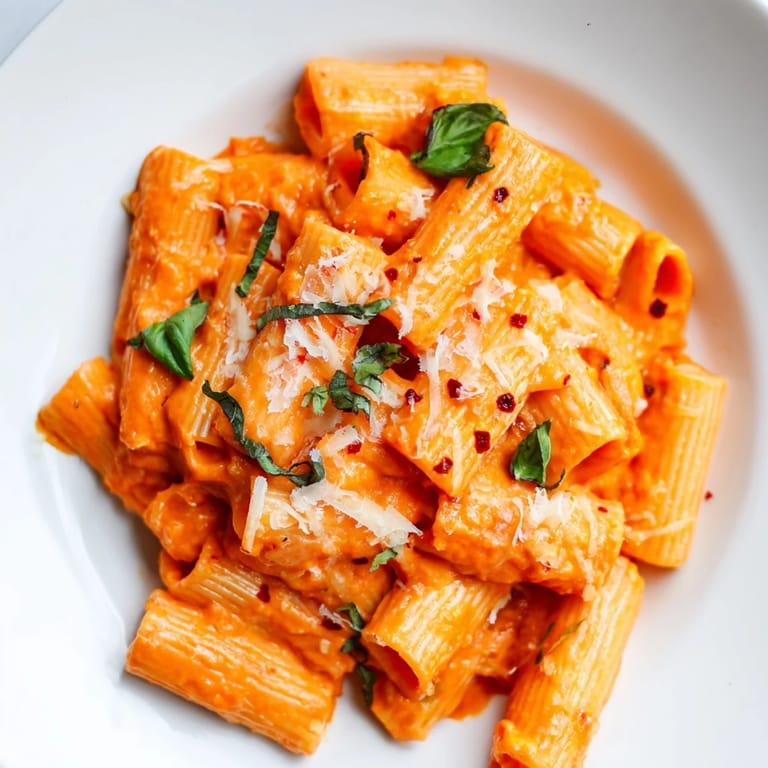
 There's a moment right before you toss the pasta into the sauce when everything smells perfect and you realize you've actually pulled it off. I remember standing there with a wooden spoon in one hand and a glass of wine in the other, feeling ridiculously proud of something so simple. That's what this dish gives you, a small victory that tastes like comfort and feels like home, no matter how many times you make it.
Adjusting the Heat
The first time I made this, I dumped in a full tablespoon of red pepper flakes and spent the entire meal gulping water between bites. Now I start with a teaspoon and taste the sauce before adding more. If you're cooking for a crowd, keep extra flakes on the table so people can customize their own heat level. The beauty of this recipe is that the cream tempers the spice just enough to keep it interesting without overwhelming, so even a little goes a long way.
What to Serve Alongside
This pasta is rich enough to be the star, but a simple arugula salad with lemon and olive oil cuts through the creaminess perfectly. I also love serving it with garlic bread, even though it's carbs on carbs, because there's always extra sauce clinging to the bowl that deserves to be scooped up. A crisp white wine like Pinot Grigio or even a light red works beautifully, something bright enough to balance the richness without competing with the spice.
Storage and Leftovers
Leftovers keep in the fridge for up to three days, though the pasta will soak up some of the sauce as it sits. When reheating, add a splash of water or cream to loosen everything back up, and warm it gently on the stove rather than the microwave for the best texture. I've also frozen individual portions in airtight containers, and they reheat surprisingly well, just let them thaw in the fridge overnight first.
- Stir in a little extra Parmesan when reheating to bring back that fresh, cheesy richness.
- If the sauce separates slightly after storing, a quick whisk over low heat will bring it back together.
- Don't add the fresh basil until right before serving, it wilts and loses its brightness if stored with the pasta.
 Pin It
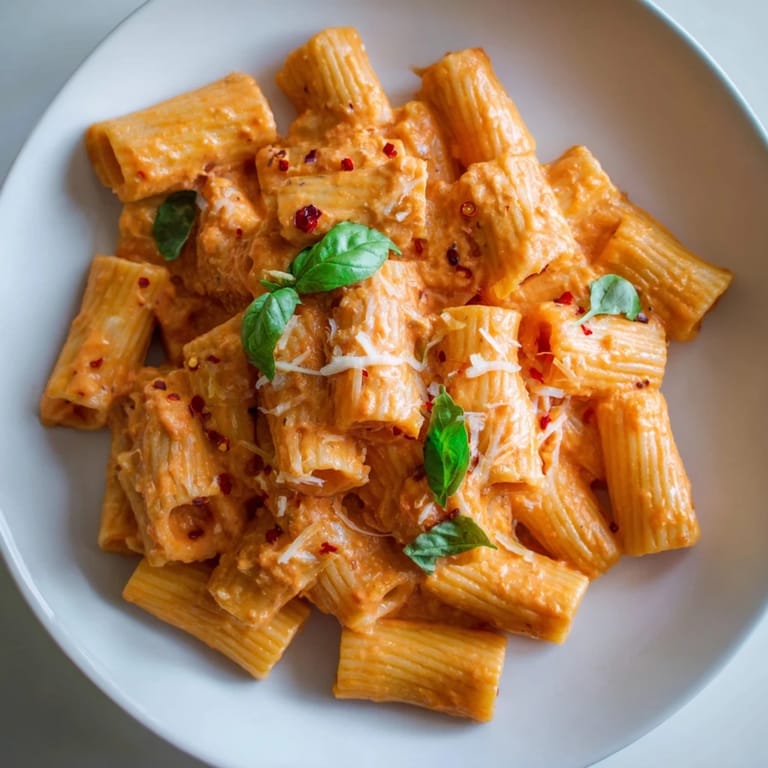
 This is the kind of recipe that gets better the more you make it, not because it changes, but because you start to know it by heart. You'll learn exactly how much heat you like, how thick the sauce should be, and when to stop stirring and just let it simmer.
Recipe Questions & Answers
- → Can I make this dish less spicy?
Yes, simply reduce or omit the red pepper flakes entirely. You can start with ½ teaspoon and adjust to taste as you cook the sauce.
- → How do I prevent the sauce from being too thick?
Reserve pasta water while draining the rigatoni. If your sauce thickens too much, add the reserved water a little at a time while tossing the pasta until you reach your desired consistency.
- → Can I add meat to this dish?
Absolutely. Sauté diced pancetta or crumbled Italian sausage with the onions in step 2 before adding garlic. This adds wonderful depth and richness to the sauce.
- → What pasta shapes work as substitutes?
Penne, ziti, or fusilli are excellent alternatives to rigatoni. Choose shapes with ridges or tubes to help the creamy sauce cling to the pasta.
- → Can I prepare the sauce ahead of time?
Yes, make the sauce up to step 6 and refrigerate for up to 2 days. Reheat gently over low heat, then toss with freshly cooked pasta and serve.
- → What wine pairs well with this dish?
A crisp white wine like Pinot Grigio complements the creamy, spicy flavors beautifully. The acidity cuts through the richness and balances the heat.