 Pin It
 My neighbor Marco showed up at my kitchen door one June afternoon with a basket of basil so fragrant it seemed to fill the entire hallway. He'd grown it himself and insisted I make something worthy of it that same day. I had pasta in the pantry, cherry tomatoes from the farmer's market getting softer by the hour, and suddenly the idea crystallized—a summer pasta salad that would let that basil sing without apology. What started as his challenge became my go-to dish for every warm-weather gathering after.
I brought this to my partner's family reunion one July, nervous about how a homemade pesto would land among relatives who grew up on more traditional fare. By the end of dinner, my mother-in-law asked for the recipe, and three people requested seconds. Her grandmother took a bite, closed her eyes, and said it reminded her of eating in a small garden in Liguria fifty years ago, which felt like the highest compliment I could receive.
Ingredients
- Short pasta (fusilli, penne, or farfalle), 300 g: The shape matters because it catches pesto in every curve and hollow, holding onto flavor in a way long noodles simply won't.
- Fresh basil leaves, 50 g: Pick them from the top of the plant where they're most tender, and don't wash them unless absolutely necessary—water bruises the delicate leaves and dilutes their essential oils.
- Pine nuts, 40 g, lightly toasted: Toasting them yourself wakes up their buttery richness, but if you're buying them pre-toasted, smell them first because they can go rancid surprisingly fast on grocery store shelves.
- Garlic clove, 1: One is plenty; I learned this the hard way after making a garlicky bomb that cleared the room faster than intended.
- Parmesan cheese, grated, 50 g: Freshly grated tastes incomparably better than the pre-grated stuff, and it melts into the pesto instead of staying grainy.
- Extra virgin olive oil, 100 ml: Use the good stuff here because there's nowhere for it to hide; it's half the flavor profile.
- Cherry tomatoes, halved, 250 g: Choose ones that smell sweet and feel slightly yielding—mealy tomatoes doom this dish before it even begins.
- Baby arugula (optional), 50 g: It adds a peppery bite that keeps the salad from feeling one-note, and it wilts slightly from the pesto warmth, which is exactly what you want.
- Parmesan shavings, 30 g, for garnish: Use a vegetable peeler to make thin ribbons that scatter across the top like edible confetti.
- Lemon zest, 1 lemon: The brightness at the end lifts everything and prevents the pesto from feeling heavy.
Tired of Takeout? 🥡
Get 10 meals you can make faster than delivery arrives. Seriously.
One email. No spam. Unsubscribe anytime.
Instructions
- Toast the pine nuts gently:
- Place them in a dry skillet over medium heat and listen for them to smell nutty—this takes about 3 minutes and changes everything about how they taste. Don't walk away; they burn in an instant.
- Boil the pasta until just tender:
- Fill a large pot with salted water (it should taste like the sea) and bring it to a rolling boil before adding pasta. Set a timer for two minutes under the package time so it stays al dente, then drain and run it under cold water until it stops steaming.
- Build the pesto while the pasta cools:
- Put basil, toasted pine nuts, garlic, and grated parmesan in a food processor and pulse until finely chopped but not yet a paste. Drizzle the olive oil slowly while the machine runs, watching it transform into something silky and bright. Taste it and season with salt and pepper.
- Assemble in layers:
- In a large bowl, combine your cooled pasta with the halved cherry tomatoes and arugula if you're using it. Pour the pesto over everything and toss with enough enthusiasm that every strand gets coated, scraping the bottom where pesto likes to hide.
- Finish with flourish:
- Transfer to a serving platter and scatter the parmesan shavings and lemon zest across the top right before serving. The timing matters here because lemon zest loses its perfume if it sits too long.
 Pin It
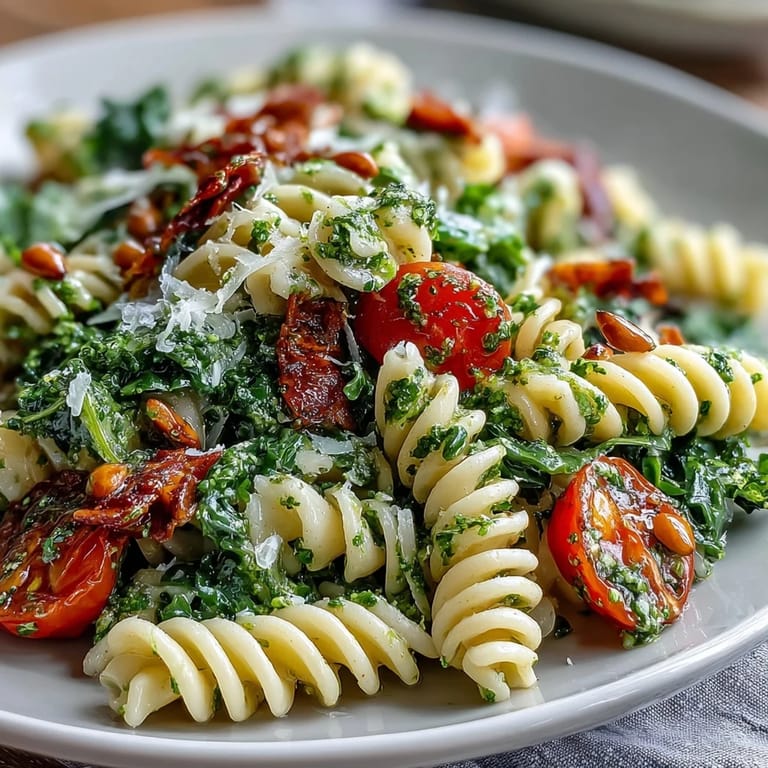
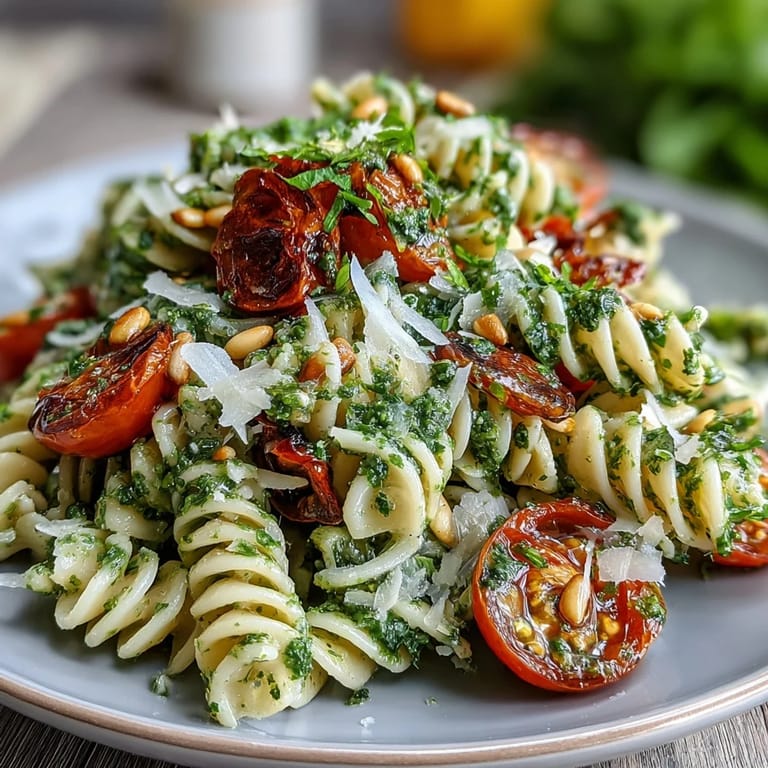
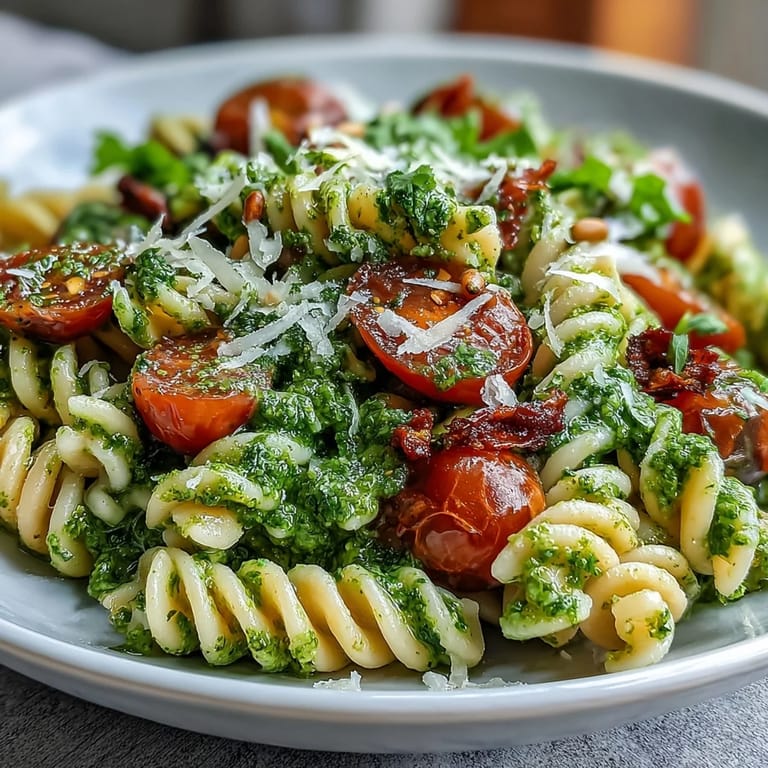
 There's a particular moment when you're tossing this salad and the pesto coats every piece of pasta, when the green becomes almost luminous under the kitchen light. It's when you realize you're not just feeding people—you're offering them something alive and seasonal and made with actual intention. That's the feeling that keeps me coming back to this recipe.
Making Pesto Without Remorse
People treat pesto like it requires a mortar and pestle and hushed reverence, but a food processor does the job in under five minutes with half the arm strain. The real trick is not overthinking it—pulse until it's finely chopped, add oil gradually so it emulsifies properly, and taste as you go. If you find yourself without a food processor, a blender works too, though it tends to turn things a little smoother and you might need slightly less oil.
Why Timing Matters More Than You'd Think
I once made this salad in the morning for an afternoon picnic, thinking I was being efficient. By the time we ate it, the pesto had separated slightly and the tomato juice had diluted everything into a mess. Now I make the pesto whenever I want and assemble the salad no more than an hour before eating, or chill the components separately and combine them just before serving. The pasta itself keeps fine for a day in the fridge, and the pesto actually tastes better after sitting, but combine them too far in advance and the magic fades.
Variations That Actually Work
The beauty of this salad is that it invites improvisation without losing its soul. I've added grilled zucchini when I had it on hand, tossed in black olives when the tomatoes seemed too mild, and even swapped walnuts for pine nuts when I ran out (they're earthier but entirely good). The one thing I don't skip is the lemon zest at the end—it's what prevents the whole thing from feeling heavy and anchors all the other flavors where they belong.
- Roasted zucchini adds sweetness and substance without overwhelming the pesto.
- Grilled chicken turns this into a complete meal if you need more protein than the cheese provides.
- Toasted sunflower seeds work perfectly if someone's allergic to tree nuts, and they bring a different kind of crunch.
 Pin It
 This salad has become my answer to summer itself—a way to capture the season in a bowl and serve it to people I care about. It's simple enough that anyone can make it, but thoughtful enough that it feels special.
Recipe Questions & Answers
- → How do I make the pesto sauce?
Blend fresh basil leaves, toasted pine nuts, garlic, grated parmesan, and olive oil until smooth, seasoning with salt and pepper to taste.
- → Can I use different pasta types?
Yes, short pasta varieties like fusilli, penne, or farfalle work best to hold the pesto and mix well with the other ingredients.
- → How should the pasta be cooked?
Cook pasta in salted boiling water until al dente, then drain and rinse under cold water to stop cooking and cool for the salad.
- → Are there suitable substitutions for pine nuts?
Walnuts or almonds can replace pine nuts, and for allergies, toasted sunflower seeds offer a nut-free alternative.
- → What are some optional additions to enhance the dish?
Add grilled chicken, roasted zucchini, or black olives to boost flavor and texture according to preference.