 Pin It
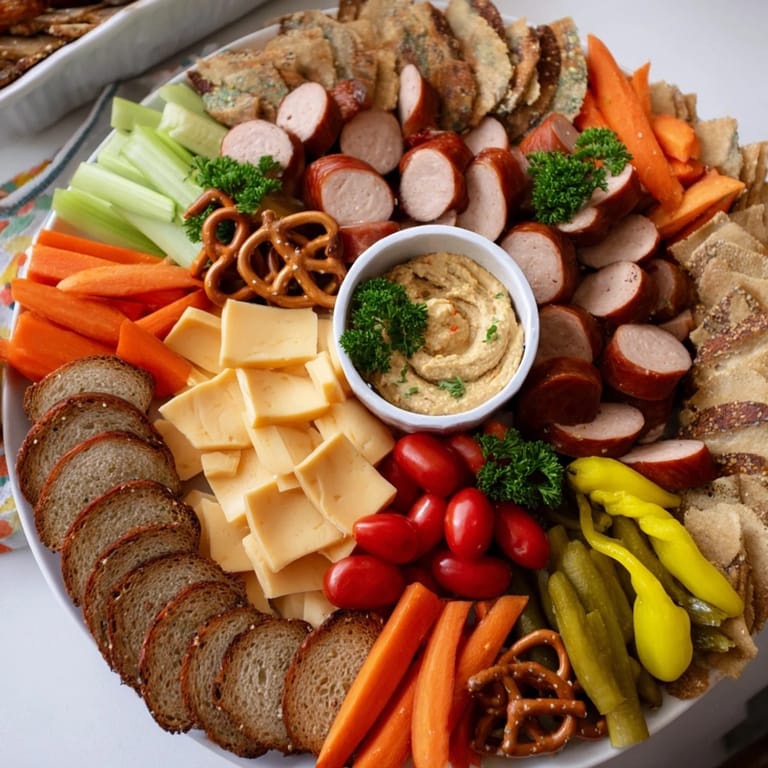
 I'll never forget the first time I built one of these power stacks at a tailgate—it was chaos in the best way possible. My friends were circling like hawks before I'd even finished arranging the last slice of sausage, and I realized right then that this wasn't just a platter, it was a centerpiece that could feed a crowd without anyone having to sit down or use two hands. Something about layering hearty proteins and bold flavors into a tower that practically begged to be grabbed made people linger longer and eat more intentionally. That's when I knew I'd stumbled onto something special.
I made this for my brother's football party three seasons ago, and it became the thing everyone asked about at every gathering after. One of my friends actually asked if I'd catered it—that's when I knew the stacking strategy was working. The confidence of presenting something that looks this intentional and tastes this good never gets old.
Ingredients
- Smoked sausage, 12 oz sliced: This is your backbone—the smoky flavor carries the whole board. I've learned to slice it thick enough to grab but thin enough to stack neatly. Always buy quality; cheap sausage disappears into the background.
- Roasted turkey breast, 8 oz sliced: The gentler protein that balances the sausage's boldness. Deli counter turkey works beautifully here and saves you cooking time.
- Sharp cheddar cheese, 8 oz cubed: Sharp matters more than mild—you want flavor that stands up to salty meats and pickles. Cut into bite-sized cubes so people can grab one-handed.
- Pepper jack cheese, 8 oz cubed: This adds heat and personality. The peppers inside catch light and make the board look alive.
- Crusty baguette, 1 large loaf sliced: Toasting it first changes everything—no sogginess, just crisp canvas for the dips. I learned this the hard way after my first soggy attempt.
- Sturdy pretzel chips, 2 cups: These hold their crunch through the entire party, unlike regular pretzels. They're structural integrity wrapped in salt.
- Pita chips, 2 cups: They add textural variety and are sturdy enough to scoop the heavier dips without breaking.
- Baby carrots, 1 cup: The sweet crunch that keeps things balanced. They're also the easiest vegetable to grab while standing and talking.
- Celery sticks, 1 cup: The cooling element that your mouth needs between bites of rich cheese and meat. Cut them into sticks long enough to be substantial.
- Cherry tomatoes, 1 cup: These add brightness and break up the salty-savory monotony. Choose ripe ones—they should have a little give.
- Dill pickle spears, 1 cup: The secret weapon for cutting through richness. Half-sour tastes better than full-sour here.
- Pickled banana peppers, 1 cup: They're vinegary, colorful, and add a gentle heat that sneaks up on you. I always underestimate how many people will reach for these.
- Ranch dip, 1 cup: The crowd-pleaser that needs no introduction. It's your safety net for people uncertain about the other flavors.
- Spicy mustard, 1 cup: For the people who want their food to talk back. A good spicy mustard transforms something ordinary into memorable.
- Roasted red pepper hummus, 1 cup: This is the sophisticated friend in the group—it adds depth and works especially well with the vegetables.
- Fresh parsley, ½ cup chopped: Don't skip this. Green scattered across everything signals fresh and intentional, not just thrown together.
- Mixed nuts, ½ cup: The final textural element that keeps things interesting through the last bites. Adds richness and catches in your teeth in the best way.
Tired of Takeout? 🥡
Get 10 meals you can make faster than delivery arrives. Seriously.
One email. No spam. Unsubscribe anytime.
Instructions
- Toast your base:
- Preheat your oven to 350°F and arrange those baguette slices on a baking sheet. Give them 8-10 minutes until they're golden and crisp—you'll hear them crackle when you bend one. The smell that fills your kitchen is your first sign you're doing this right. Cool them while you prep everything else.
- Lay the foundation:
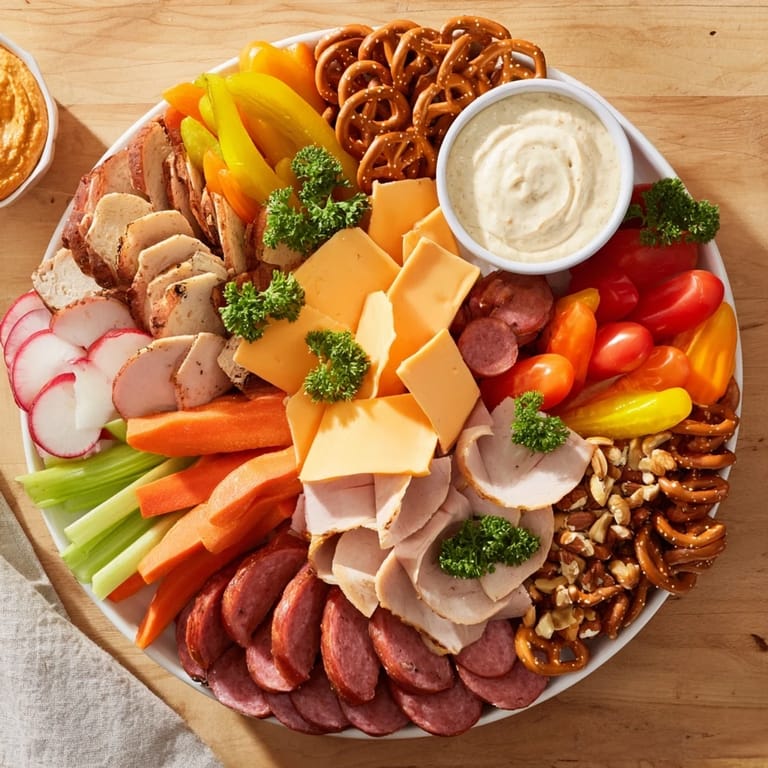
- Find your sturdiest board or platter—this matters more than you'd think. Start scattering pretzel chips, pita chips, and those toasted baguette slices as your base layer. This isn't random; you're creating pockets and height variations so nothing rolls around in the car.
- Build your protein tower:
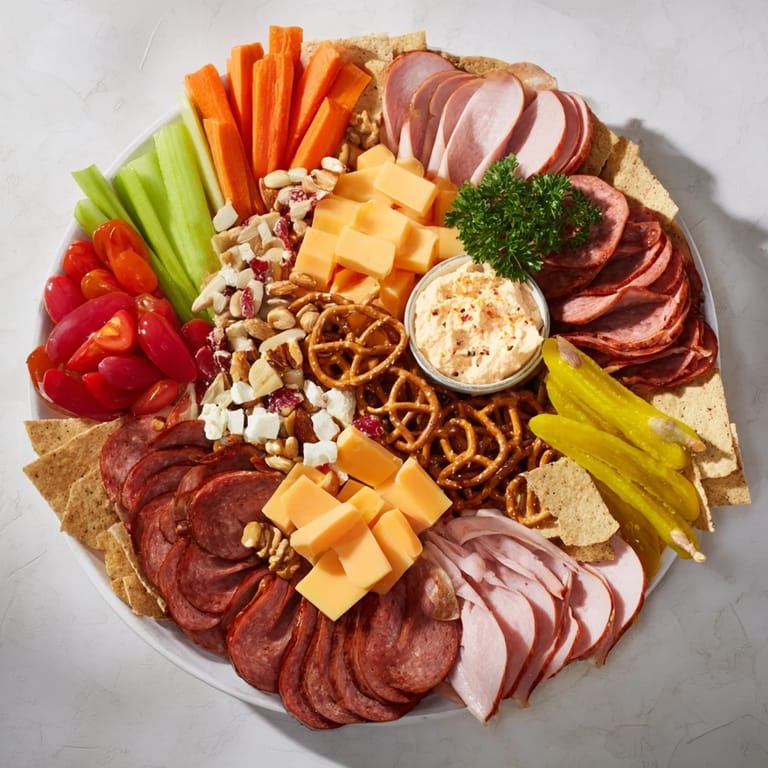
- Now comes the fun part. Stack your smoked sausage, turkey slices, cheddar cubes, and pepper jack in alternating layers. Lean them, overlap them, let them tumble slightly. This isn't about perfection; it's about abundance and ease of grabbing. Stand back and squint—does it look like something people will want to eat? Good.
- Tuck in the vegetables:
- Fill the gaps between protein stacks with carrots, celery, cherry tomatoes, pickles, and banana peppers. This is where you're thinking about color balance and making sure every reach toward the board hits something different. No sad empty corners.
- Nestle your dips:
- Pour ranch, mustard, and hummus into separate small bowls and position them firmly among the stacks—not at the edge where they'll slide. They should look like they've always been part of the arrangement, not an afterthought.
- Finish with personality:
- Scatter that chopped parsley across everything and sprinkle mixed nuts into the crevices. This step takes thirty seconds but makes people think you spent hours. It's the difference between a platter and a presentation.
- Serve and sustain:
- Bring this straight to the party ready to eat. As things get grabbed, you'll notice gaps form. Don't panic—that's part of the magic. Just refresh the dips and replenish layers of what disappeared first. It'll keep looking abundant as long as you're feeding people.
 Pin It
 Someone once told me that the best food at a party is the food that lets people stay in conversation—they don't have to leave to eat, they don't have to balance a plate, they just reach and keep talking. That's when I understood why this board works. It's not about fancy ingredients; it's about understanding how people actually want to eat when they're having fun.
Why Stacking Over Spreading Matters
I used to arrange boards flat and organized, everything neatly sectioned like I was running a museum exhibit. Then I realized nobody actually moves through a board methodically—they attack it from all angles simultaneously. Stacking creates peaks and valleys that make it physically easier to grab, and it signals abundance in a way that flat arrangements never can. Your eye travels up instead of across, and somehow that makes the board feel more generous. There's also a practical element: when things are stacked, the weight keeps them from shifting in a car or when someone's reaching across to grab something on the other side.
The Dip Strategy That Saves Everything
I learned this through trial and error: three different dips serve completely different purposes, and they're doing more work than you'd realize. Ranch is the safe choice—people who aren't adventurous reach for it. Spicy mustard finds the bold eaters and becomes this conversation starter. Hummus is the sophisticated option that makes people feel like they're eating something intentional, not just party food. Together, they cover all the personalities in a crowd and give people reasons to try different combinations. The key is that each one needs its own bowl—I once tried to combine them thinking it would be efficient, and it just made everything taste muddy and indecisive.
Making It Travel Without Falling Apart
The magic of this board is that it's actually built for movement in ways that matter. The pretzel and pita chips at the base aren't just flavor—they're shock absorbers that keep everything from sliding around during transport. The way you stack proteins vertically means they're stable in ways that flat arrangements never are. If you're driving more than thirty minutes, I've learned to keep the dips covered and packed separately, then add them when you arrive. The vegetables can handle some jostling, and honestly, a little artistic disorder actually makes it look more abundant and real.
- Pack dips separately if you're traveling more than 20 minutes and ice is involved
- Use a board with raised edges or something that keeps things from rolling off sideways
- Drape plastic wrap loosely over the whole thing if you're nervous—it protects from air exposure without trapping humidity
 Pin It
 This board has become my answer to every gathering question. It feeds people without fussing, impresses without pretending, and somehow always feels like the right choice. Bring it to your next tailgate and watch it become the thing people remember.
Recipe Questions & Answers
- → How do I keep the stack stable during serving?
Layer heavier ingredients like meats and cheeses first, using sturdier bases such as toasted baguette and pretzel chips to support the layers. Arrange dips securely in small bowls to prevent spills.
- → Can I substitute the meats for vegetarian options?
Yes, omit smoked sausage and turkey, and add extra cheeses, roasted vegetables, or grilled tofu to maintain hearty texture and flavor.
- → What dips complement the platter best?
Ranch, spicy mustard, and roasted red pepper hummus provide creamy, tangy, and slightly spicy contrasts that enhance the various layers.
- → How long can this platter sit out safely?
Consume within 2 hours at room temperature to ensure freshness and food safety. Keep dips chilled until serving.
- → What beverages pair well with this platter?
Ice-cold beer, hard cider, or refreshing lemonade balance the savory and spicy flavors for a complete tailgate experience.