 Pin It
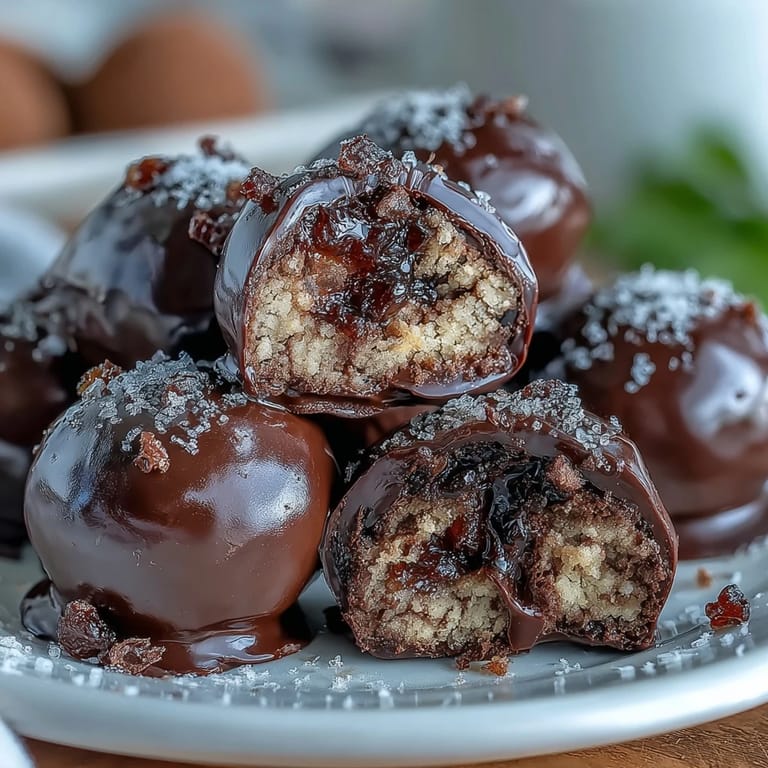
 One February afternoon, my kitchen filled with the smell of candied orange peel simmering on the stove, and I realized I'd finally figured out how to make something that tasted like a luxury shop but came from my own hands. These truffles started as an attempt to impress someone special, but they became something I made again and again because the process itself was meditative. Dark chocolate, bright citrus, a touch of butter—somehow these simple things transform into something that makes people pause mid-bite and ask for the recipe.
I'll never forget boxing these up in small paper cups for my sister's birthday, watching her open them at the kitchen table and close her eyes on the first bite. She asked if I'd bought them from that fancy chocolatier downtown, and when I said no, the look on her face made every careful step worth it. That's when I understood these weren't just truffles—they were edible proof that homemade can rival anything store-bought.
Ingredients
- High-quality dark chocolate (70% cocoa): The 70% level strikes a balance between intensity and sweetness, and it matters because cheaper chocolate seizes easily and tastes waxy.
- Heavy cream: Use the real stuff, not whipping cream—the fat content makes the ganache silky, and I learned this the hard way.
- Unsalted butter: It gives the ganache a subtle shine and helps it set to the perfect rolling consistency.
- Pure vanilla extract: Just a teaspoon, but it rounds out the chocolate flavor in a way that imitation extract never will.
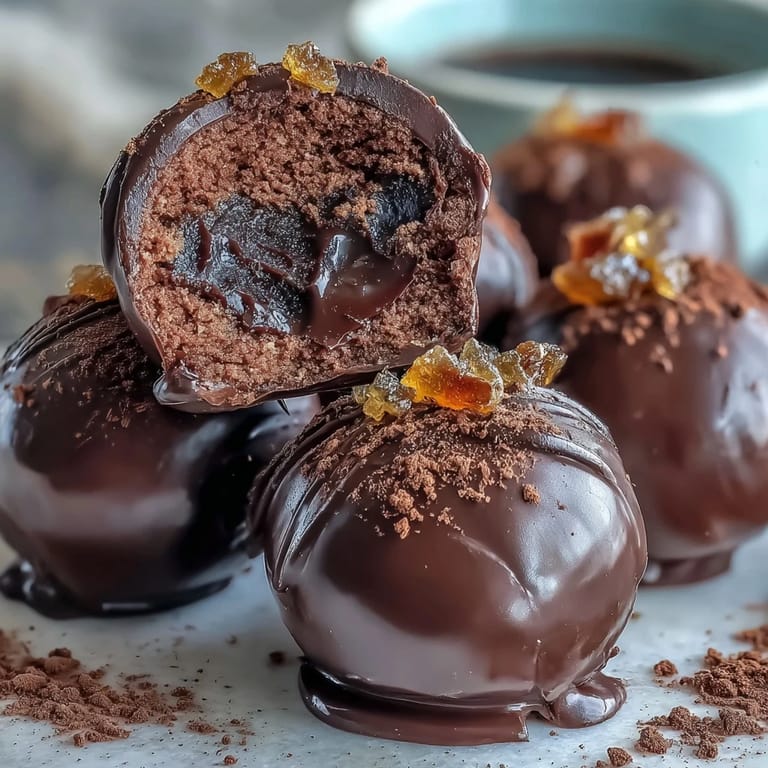
- Medium orange, zested and finely chopped: Fresh zest matters more than you'd think—the oils release brightness that dried zest simply can't match.
- Granulated sugar: This cooks down with the zest to create that glossy, jammy texture that makes each bite special.
- Water: Keeps the sugar from crystallizing as it simmers.
- Dark chocolate for coating: A slightly lower quality than your ganache chocolate works fine here since it's just a shell.
- Unsweetened cocoa powder (optional): A light dusting adds elegance and hides any imperfect dipping.
Tired of Takeout? 🥡
Get 10 meals you can make faster than delivery arrives. Seriously.
One email. No spam. Unsubscribe anytime.
Instructions
- Create your candied orange treasure:
- Combine orange zest, sugar, and water in a small saucepan and bring to a boil, then lower the heat to a gentle simmer. Watch for about 8 to 10 minutes until the zest turns translucent and the mixture becomes syrupy—it should look jewel-like. Drain it well on parchment paper and let it cool completely, which takes longer than you'd expect but is worth the wait.
- Build the ganache foundation:
- Chop your dark chocolate into small, even pieces and place them in a heatproof bowl. Heat your cream until tiny bubbles form around the edges, then pour it over the chocolate and let it sit undisturbed for exactly one minute—this is the hardest part because you want to stir immediately, but patience wins here.
- Blend until silky smooth:
- Stir the chocolate and cream together in one direction until no streaks remain, then add cubed butter and vanilla extract. The butter will melt into the warm ganache, creating that glossy finish that signals you've done it right.
- Marry the citrus and chocolate:
- Stir in your cooled candied orange zest gently so the pieces stay intact, then cover the bowl and refrigerate for 1 to 2 hours until the mixture is firm enough to scoop but still soft enough to roll.
- Shape with confidence:
- Use a small melon baller or teaspoon to scoop portions, rolling each one between your palms until it forms a smooth sphere. The warmth of your hands helps, so work quickly but not frantically—these should take on the shape of little gems.
- Dip into chocolate velvet:
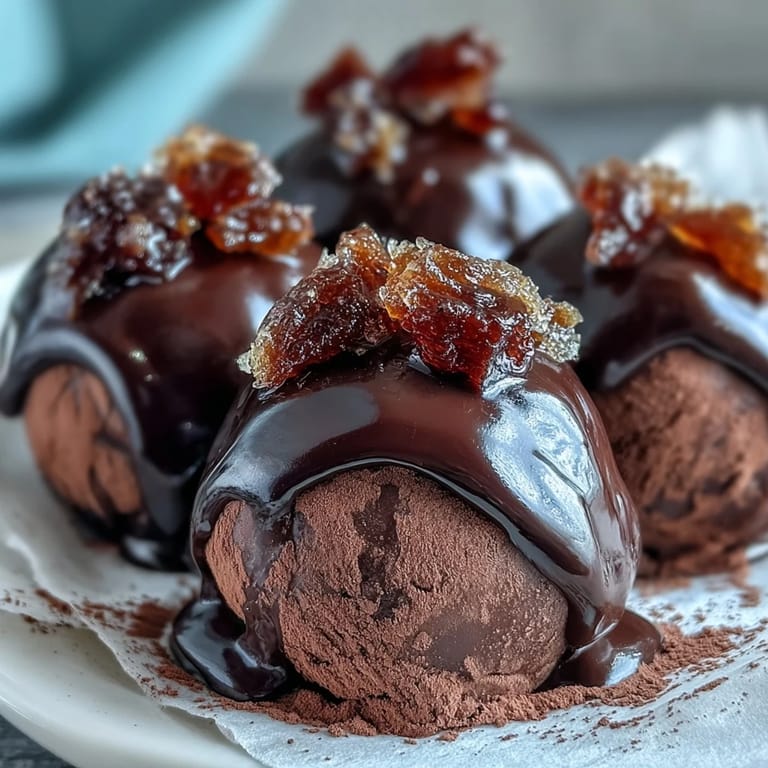
- Melt your coating chocolate over a bowl of barely simmering water, stirring occasionally until it's pourable and glossy. Using a fork, submerge each truffle, let the excess drip off back into the bowl, then transfer it to a parchment-lined tray with a little tap of the fork.
- Add the final flourish (optional):
- If you're dusting with cocoa powder, do it before the chocolate coating fully sets so the powder adheres beautifully.
- Let them set and harden:
- Leave the truffles at room temperature for a natural set, or refrigerate for 10 minutes if you're eager to taste one. Either way, the moment when they're ready and you can finally enjoy them is worth the wait.
 Pin It
 There was a moment last winter when I gave a box of these to someone who'd had a rough week, and they told me later that eating one truffle slowly, sitting by the window, made them feel cared for in a way store-bought candy never could. That's the real magic of these—they're an edible reminder that someone spent time thinking of you.
The Science of Emulsification
Ganache works because hot cream emulsifies the cocoa butter in chocolate, creating something that's neither melted nor solid but perfectly in between. The butter you add deepens this emulsion and keeps the truffles from being grainy once they set. Understanding this changed how I approach chocolate work entirely—it's not magic, it's chemistry that rewards precision and patience.
Candying Orange Peel at Home
Most people think candied citrus is something you have to buy, but honestly, watching the zest transform from opaque to glossy and translucent over a few minutes is one of those kitchen moments that feels like mild alchemy. The sugar syrup doesn't just coat the zest—it penetrates it, making it tender and intensely flavored while preserving that bright, sharp edge that cuts through chocolate. Once you taste homemade candied orange, the store-bought kind tastes flat by comparison.
Troubleshooting Your Truffle Journey
The most common problem I see is truffles that won't hold their shape, which usually means your ganache didn't chill long enough or your kitchen is too warm. The second most common is chocolate coating that cracks as it sets, which happens when you dip cold truffles into too-hot chocolate. A third mistake, one I made repeatedly, is being impatient and trying to dip before the ganache center is truly firm. These aren't failures—they're just lessons wearing expensive disguises.
- If ganache is too soft, refrigerate longer; if it's too hard to scoop, let it sit at room temperature for 10 minutes.
- Melt your coating chocolate slowly over barely simmering water, stirring often, and let it cool slightly before dipping.
- Always chill your shaped truffles for at least 30 minutes before coating so they stay intact through the dipping process.
 Pin It
 These truffles taught me that the most impressive gifts aren't always the most complicated—sometimes it's just the care you fold into each step. Make these for someone you love, or for yourself on a day when you need a little reminder that you deserve something beautiful.
Recipe Questions & Answers
- → How is the candied orange prepared?
Orange zest is simmered gently in sugar and water until translucent and syrupy, then cooled for use.
- → What type of chocolate is used for the ganache?
High-quality dark chocolate with at least 70% cocoa content is melted and combined with cream and butter.
- → How are the truffles shaped?
The chilled ganache is scooped using a teaspoon or melon baller and rolled into small balls by hand.
- → What is the coating process for the truffles?
Truffles are dipped into gently melted dark chocolate, then allowed to set, sometimes dusted with cocoa powder for finish.
- → Can these truffles be stored?
Yes, keep them in an airtight container in the fridge for up to two weeks to maintain freshness.
- → Are there any allergen considerations?
They contain dairy from cream and butter, and chocolate may have traces of soy or nuts; checking labels is advised.