 Pin It
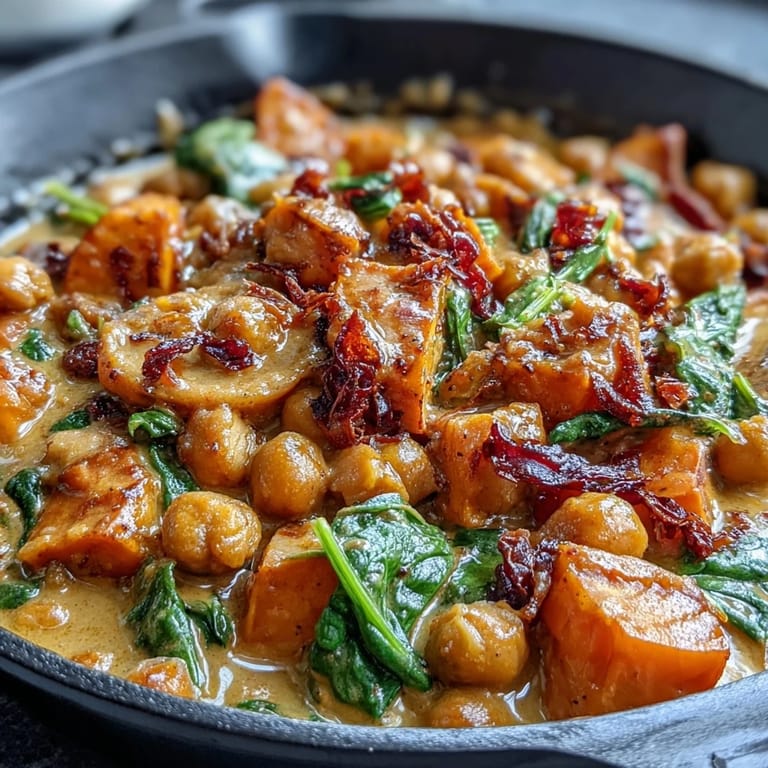
 There's a particular magic that happens when you're standing at the stove on a Tuesday evening, rain tapping against the kitchen window, and the whole apartment fills with the warm, golden smell of curry simmering away. That's when I discovered this chickpea skillet—not from a cookbook, but from necessity and whatever vegetables were lingering in my crisper drawer. One pan, thirty minutes, and suddenly dinner felt both comforting and exciting in equal measure.
I made this for my friend Maya on a night when she was convinced she'd burned out on weeknight cooking, that everything tasted the same. She watched the spinach wilt at the end and said something like, "Wait, this is actually happening in one skillet?" By the time we sat down with rice and those lime wedges, she was already planning to make it for her partner. That's when I knew this recipe had something real going for it.
Ingredients
- Sweet potato (1 large, peeled and cubed into 1/2-inch pieces): The foundation of texture here—it softens without turning to mush if you keep your heat at a gentle simmer and don't skip the lid.
- Yellow onion (1 medium, finely chopped): This becomes almost jammy after those first few minutes, which is exactly what you want for a deep, rounded flavor base.
- Fresh spinach (3 cups, roughly chopped): Add it at the very end so it stays bright and doesn't turn into dark, mushy sadness.
- Garlic and ginger (3 cloves minced, 1-inch piece grated): These two are non-negotiable—they're what make your kitchen smell like someone who actually knows what they're doing.
- Chickpeas (1 can, 15 oz, drained and rinsed): Don't skip the rinsing step, which removes the starchy liquid that can muddy your sauce.
- Full-fat coconut milk (1 can, 13.5 oz): The richness matters here—lite versions leave the sauce feeling thin and apologetic.
- Vegetable broth (1/2 cup): This prevents the curry from becoming too thick and allows the spices to bloom properly.
- Mild curry powder (2 tablespoons): Mild doesn't mean boring if you're layering it with cumin and turmeric for complexity.
- Cumin (1 teaspoon ground): This adds an earthy warmth that balances the sweetness of the potatoes.
- Turmeric (1/2 teaspoon): A small amount goes a long way toward that golden, authentic curry color.
- Cayenne pepper (1/4 teaspoon, optional): Only add if heat appeals to you—the dish is perfectly lovely without it.
- Fresh lime juice (1 tablespoon): This squeeze at the end wakes everything up and prevents the dish from feeling heavy.
- Coconut oil or vegetable oil (1 tablespoon): Coconut oil tastes better here, but vegetable oil works if that's what you have.
Tired of Takeout? 🥡
Get 10 meals you can make faster than delivery arrives. Seriously.
One email. No spam. Unsubscribe anytime.
Instructions
- Get the pan warm and invite the onions to soften:
- Heat your oil over medium heat until it shimmers slightly, then add the onion and let it cook for 3–4 minutes, stirring occasionally until it turns translucent and softens at the edges. You'll know it's ready when the kitchen smells noticeably sweeter.
- Wake up the aromatics:
- Stir in the garlic and ginger and give it just about a minute—you want them fragrant and golden, not browned or bitter. This small moment sets the entire tone for what comes next.
- Toast the spices and coat the sweet potato:
- Add the curry powder, cumin, turmeric, cayenne (if using), salt, and pepper directly to the pan with the sweet potato cubes, stirring so every piece gets coated in that fragrant spice mixture. You'll see the raw spice powder start to deepen in color as the heat blooms it.
- Build the sauce and simmer:
- Pour in the coconut milk and vegetable broth, mixing well until everything is combined, then bring the whole thing to a gentle simmer and cover the skillet. Let it bubble softly for 12–15 minutes, stirring every few minutes, until the sweet potatoes are fork-tender but still holding their shape.
- Welcome the chickpeas:
- Stir in the drained chickpeas and let them warm through for about 5 minutes, which also gives them time to absorb some of that coconut sauce. They should be heated all the way through but not falling apart.
- Finish with greens and brightness:
- Add the chopped spinach and cook for 2–3 minutes until it's wilted into the sauce, then remove from heat and stir in the lime juice. Taste it now and adjust the salt, pepper, or spices if something feels off.
- Serve and celebrate:
- Spoon it into bowls over rice, quinoa, or naan, and garnish with fresh cilantro and lime wedges if you have them. This is the moment where everything pays off.
 Pin It
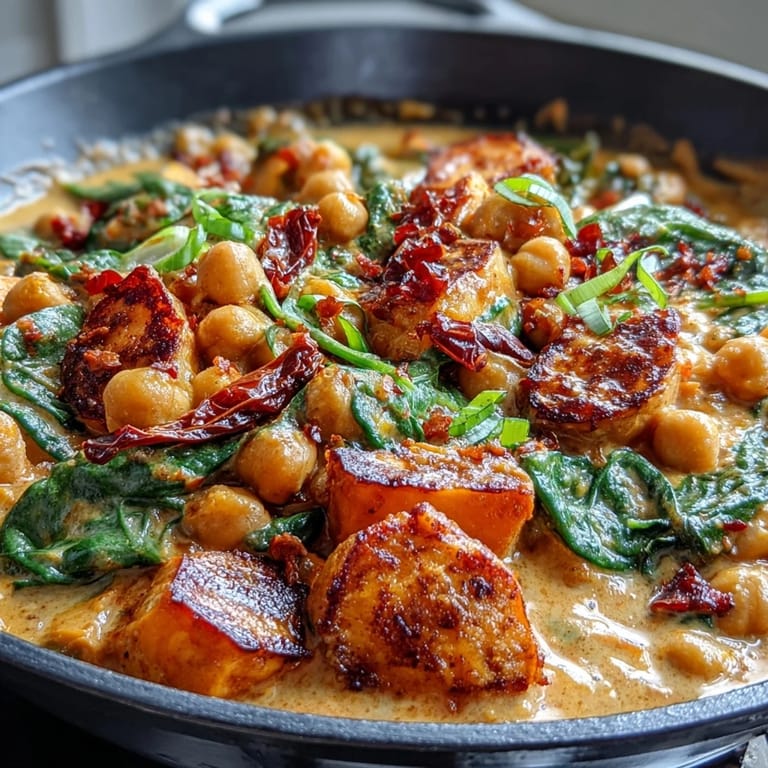
 There was a moment, about halfway through cooking this for the first time, when I almost added everything at once because I was impatient. I'm glad I didn't, because watching the sauce build slowly, watching the sweet potatoes gradually turn tender as the spices melted into the coconut milk—that's when it stopped being a recipe and started being something I actually wanted to feed people I cared about.
Why One Pan Changes Everything
The entire beauty of this curry is that it all happens in one skillet, which means you're not running between the stovetop and multiple burners, you're not staring at three different pans, and at the end you have one thing to clean instead of a kitchen that looks like a small explosion. It also means the flavors have nowhere to hide—everything builds on what came before it, and you're tasting the cumulative effect of each layer of seasoning as it hits the pan.
Temperature and Timing Matter More Than You Think
The first time I made this, I turned up the heat trying to speed things along, and the coconut milk separated into slicks of oil floating on top of watery sauce. Now I know that medium heat, a lid, and patience are the actual ingredients that make this work. The sweet potatoes need time to soften completely, and rushing them means they stay hard in the center while the outside disintegrates.
Making It Your Own (Without Breaking It)
The base of this recipe is solid, but it's also forgiving enough that you can play with it once you understand how it works. I've added cubed tofu for extra protein on nights when I'm extra hungry, swapped kale for spinach when that's what I had, even thrown in baby bok choy when I was feeling adventurous. The one thing I never skip is the lime juice at the end, because without it everything tastes like it's still waiting to be finished.
- Substitute any hardy green you like for the spinach—kale, Swiss chard, or even arugula added at the very end for a peppery edge.
- If you want more protein, add cubed tofu or tempeh at the same time as the chickpeas so it can warm through and absorb flavor.
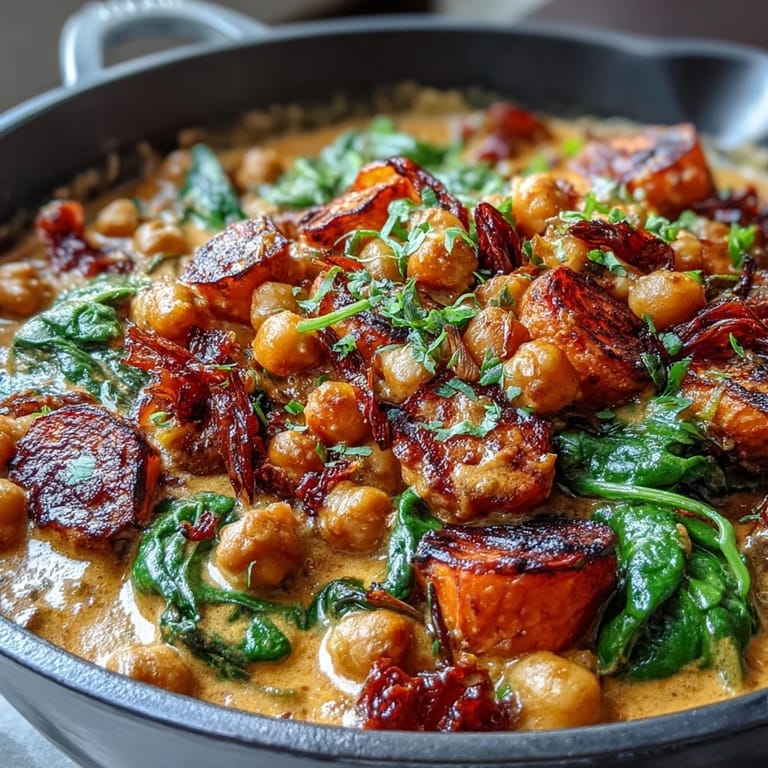
- Serve this over rice, quinoa, naan, or honestly even just with crusty bread to soak up that incredible sauce.
 Pin It
 This is the kind of recipe that makes weeknight cooking feel less like an obligation and more like something you're actually excited about. Once you make it once, you'll find yourself reaching for it again and again.
Recipe Questions & Answers
- → Can I substitute the spinach with other greens?
Yes, kale or Swiss chard work well as alternatives and bring their own unique textures and flavors to the dish.
- → How can I adjust the spice level?
Modify the amount of cayenne pepper or curry powder according to your heat preference. Omitting cayenne will make it milder.
- → Is this dish suitable for gluten-free diets?
Absolutely, all the ingredients are naturally gluten-free, making it a safe choice for gluten-sensitive individuals.
- → What can I serve alongside this skillet?
It pairs beautifully with basmati rice, quinoa, or flatbreads like naan to soak up the flavorful sauce.
- → Can I add extra protein to this dish?
Adding cubed tofu or tempeh increases the protein content and complements the existing flavors and textures well.