 Pin It
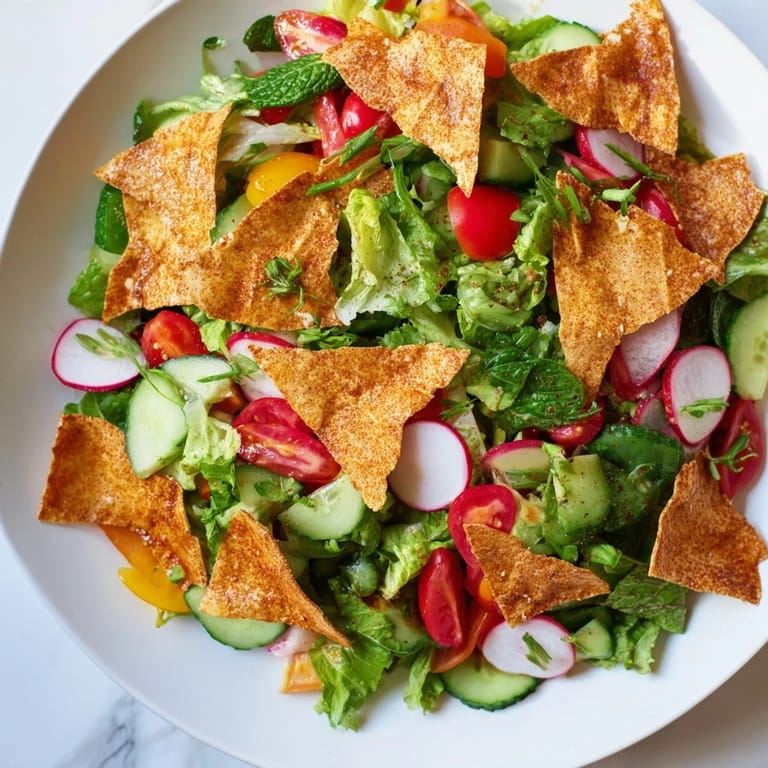
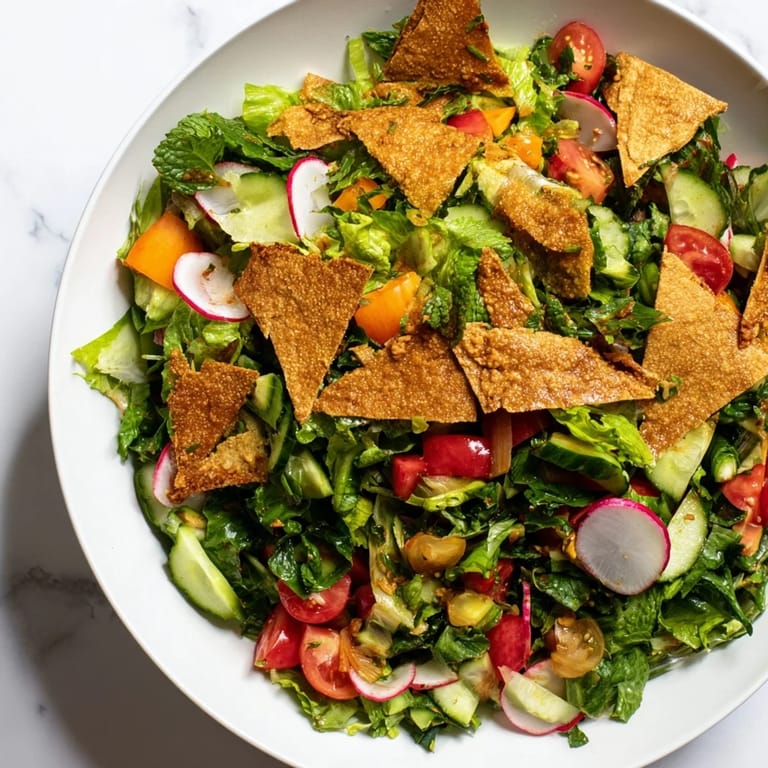
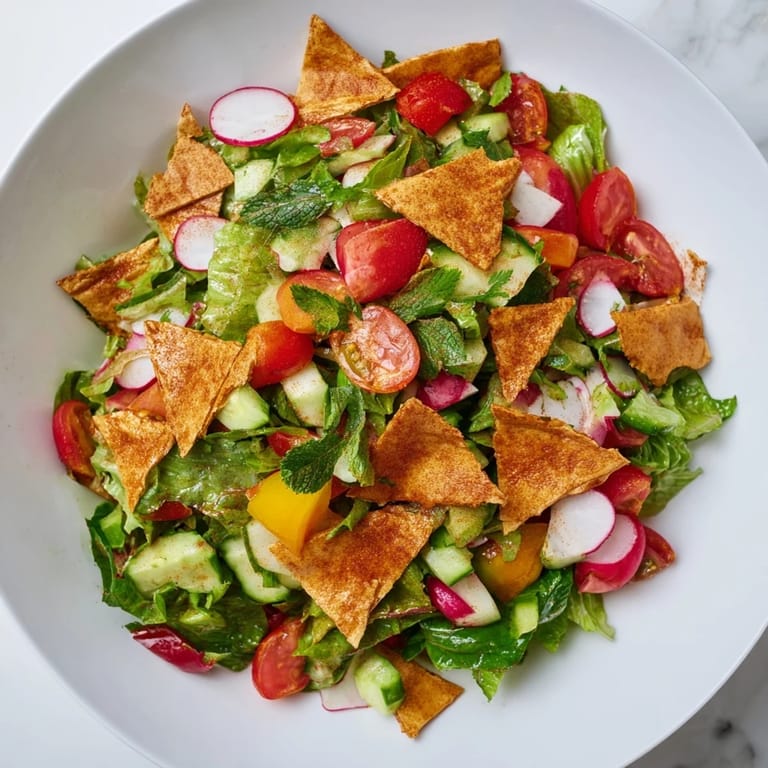
 I discovered fattoush at a little Lebanese restaurant tucked into a side street, where the owner's daughter was clearing plates with the kind of efficient grace that comes from growing up in a kitchen. She set down a salad so vibrant it looked almost unreal—emerald greens studded with jewel-toned tomatoes and radishes, finished with shards of toasted pita that glistened with sumac. One bite and I understood why this salad had survived centuries of Mediterranean cooking. It wasn't fancy or complicated, just brilliantly balanced between fresh, tangy, and satisfyingly crunchy.
I made this for a potluck on a sweltering July evening when everyone arrived wilted and exhausted, and watching people's faces light up as they took their first bite was pure magic. Someone said, "This tastes like summer," and another person immediately asked for the recipe before they'd even finished eating. That's when I knew I'd found something special—food that doesn't just fill your stomach but actually lifts your mood.
Ingredients
- Mixed greens: Use romaine if you want heartiness, arugula for peppery snap, or spinach for silky tenderness—I rotate depending on the season and what looks best at the market.
- Cherry tomatoes: These stay firmer than larger tomatoes when mixed with acidic dressing, keeping your salad from getting watery.
- Cucumber and bell pepper: The cold crispness of these is what makes fattoush refreshing rather than just another salad.
- Radishes: Don't skip these; they bring a peppery bite and visual punch that makes the whole dish feel more alive.
- Green onions, parsley, and mint: These fresh herbs are non-negotiable—they're what separate fattoush from a regular vegetable salad.
- Pita bread: Fresh is always better, but day-old pita actually makes crispier chips because it has less moisture.
- Ground sumac: This is the secret weapon that makes people ask what that mysterious tangy flavor is; it's lemony without being acidic.
- Extra-virgin olive oil: Don't cheap out here—it's the dressing's backbone and you'll taste every penny.
Tired of Takeout? 🥡
Get 10 meals you can make faster than delivery arrives. Seriously.
One email. No spam. Unsubscribe anytime.
Instructions
- Toast your pita to golden perfection:
- Preheat the oven to 375°F, toss your pita pieces with olive oil, sea salt, and sumac until they're evenly coated, then spread them on a baking sheet and let them toast for 8–10 minutes, stirring halfway through so they color evenly. You want them crackly and golden, not pale or burnt.
- Mix the dressing while the pita cooks:
- In a small bowl, whisk the olive oil, lemon juice, red wine vinegar, minced garlic, sumac, salt, and pepper together until they're emulsified and the flavors feel bright and balanced. Taste it and adjust the lemon juice or sumac to your preference—this is your moment to make it exactly right.
- Prep your vegetables with intention:
- Dice and slice everything into pieces that feel good to eat together, roughly the same size so nothing dominates your fork. This is calming work if you let it be.
- Combine greens and vegetables gently:
- Put all your greens, tomatoes, cucumber, bell pepper, radishes, green onions, parsley, and mint into a large bowl, but don't dress it yet—the greens will wilt if they sit wet.
- Dress and finish with timing in mind:
- Right before serving, drizzle the salad with dressing and toss gently until everything is coated, then crown it with those crispy pita chips so they stay crunchy and don't soften into the greens. This last-minute move is what makes the difference.
 Pin It
 There's something almost meditative about building this salad—the rhythm of chopping, the smell of toasting pita, the moment when you taste that first spoonful and all the flavors click into place. This is food that tastes like it belongs on a table surrounded by people you actually want to spend time with.
The Magic of Sumac
Sumac is what makes fattoush feel authentically Middle Eastern, and it's become one of my favorite seasonings to reach for beyond just this salad. It has this beautiful lemony tartness without any of the sourness you'd get from adding more vinegar, and it brings a subtle earthiness that makes vegetables taste more like themselves. Once you understand sumac, you'll want it on roasted vegetables, yogurt, grilled fish, and scattered over hummus.
Variations That Keep It Interesting
I've made this salad dozens of ways depending on what's in my kitchen and who I'm feeding. Sometimes I add crumbled feta cheese and olives for richness, sometimes I toss in chickpeas to make it a more substantial meal, and in late summer when fresh tomatoes are at their absolute peak, I use way more of them than the recipe calls for. The skeleton of fattoush is flexible enough to bend toward whatever your mood or pantry demands.
Serving and Storage Wisdom
This salad is best eaten immediately after assembly, while everything is at its peak crispness and freshness—don't try to make it ahead because the greens will soften and the pita will turn chewy. That said, you can prepare everything separately and assemble it within minutes of serving, which is perfect for busy weeknights or casual entertaining. The dressing actually tastes better the next day after the flavors have married together, so you can make it hours in advance and just keep it in a jar in the fridge until you're ready to dress and serve.
- Pita chips stay crispiest for about 4 hours in an airtight container, so make them fresh on the day you're serving if possible.
- Keep vegetables separate from dressing and pita until the last possible moment to preserve texture.
- Leftover vegetables without dressing or pita will keep for a couple of days, and you can always make fresh pita chips to serve alongside.
 Pin It
 Fattoush reminds me why I love cooking, which is never about following rules perfectly but about creating moments where people feel nourished and seen. Make this salad, share it with someone you care about, and watch how something so simple becomes a memory.
Recipe Questions & Answers
- → What gives the salad its crunch?
The crunchy texture comes from baked pita chips seasoned with olive oil and ground sumac, adding both crispness and a tangy flavor.
- → Can I substitute the pita chips for a gluten-free option?
Yes, gluten-free pita or similar crackers can be used, or you can omit the chips entirely for a gluten-free variation without compromising the salad's freshness.
- → How is sumac used in this salad?
Sumac is incorporated both in the baked pita chips and the dressing, providing a lemony, tangy spice that brightens the overall flavor.
- → Are there herbs in this salad to enhance flavor?
Fresh parsley and mint add aromatic depth and a herbaceous note complementing the crisp vegetables and zesty dressing.
- → What is the best way to keep the pita chips crunchy?
Serve the pita chips just before eating to maintain their crisp texture and prevent them from becoming soggy in the dressing.