 Pin It
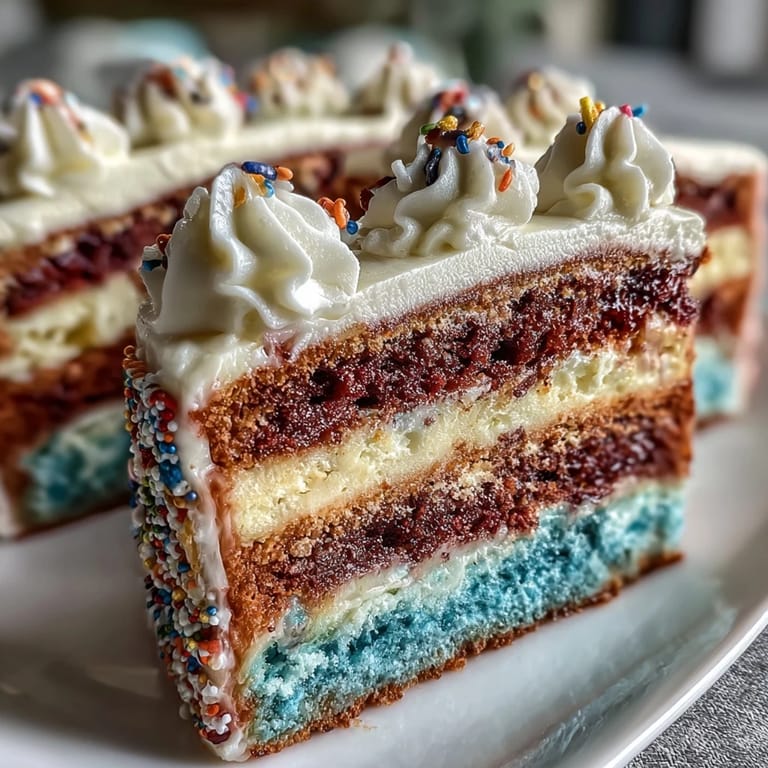
 My sister called me in a panic three days before her high school graduation, asking if I could bake her a cake that looked as special as the moment felt. She wanted something that showed all the colors of her journey—the blues of hard work, the golds of achievement, something that built toward brightness. I'd never tackled an ombre layer cake before, but standing in my kitchen at midnight with gel food coloring and four mixing bowls, I realized this wasn't just about baking anymore. It was about translating her excitement into something edible.
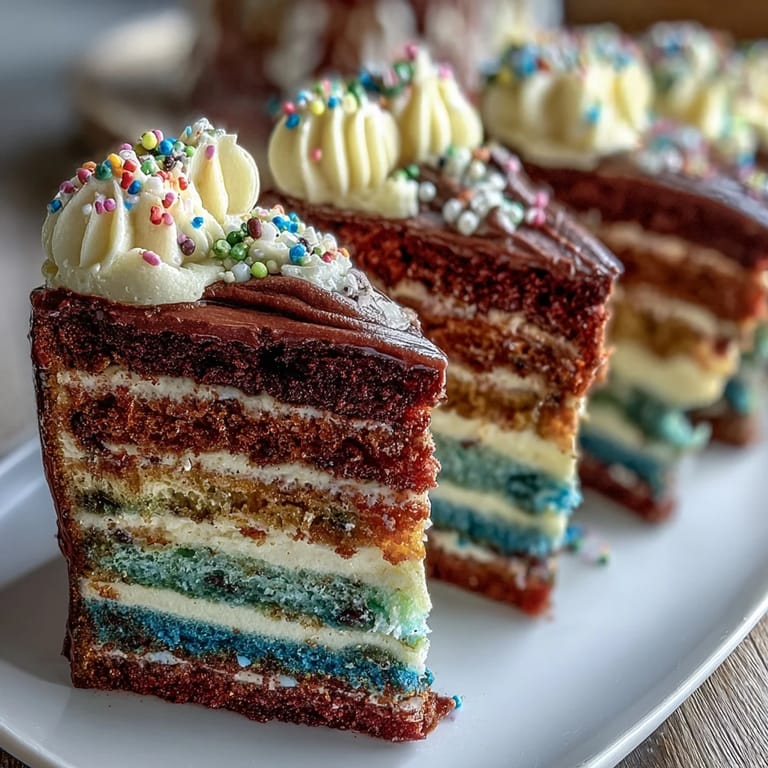
Watching my sister's face when she walked into the kitchen and saw those four layers arranged from deep to light blue was worth every moment of planning. She started crying, and my mom immediately grabbed her phone to take photos, which meant the cake got passed around for pictures before anyone could eat it. That's when I knew this recipe works—it becomes a memory before it becomes dessert.
Ingredients
- All-purpose flour (3 1/4 cups): This is your foundation, and room-temperature ingredients will help it incorporate smoothly without overmixing.
- Baking powder (2 1/2 tsp): Don't skip this or reduce it; the cake needs lift to stay tender and cloud-like between the layers.
- Salt (1/2 tsp): A tiny amount that makes all the other flavors shine without tasting salty.
- Unsalted butter (1 cup for cake): Softened means it should feel like clay when you press it—not cold, not melting.
- Granulated sugar (2 cups for cake): This creams with butter to create the fluffy crumb you're after.
- Large eggs (4), room temperature: Cold eggs won't emulsify properly; pull them from the fridge 30 minutes before starting.
- Vanilla extract (1 tbsp): Use real vanilla; the flavor carries through and rounds out the sweetness.
- Whole milk (1 1/4 cups), room temperature: Temperature matters here too, so don't grab it straight from the fridge.
- Gel food coloring: Gel is essential over liquid because it won't thin your batter or muddy your colors—buy it at baking supply stores or online.
- Egg whites (6 large) for buttercream: The base of Swiss meringue, which will be heated to 160°F for safety.
- Granulated sugar (1 1/2 cups for buttercream): This dissolves into the egg whites over gentle heat.
- Unsalted butter (1 1/2 cups), softened and cubed: Cubed and at room temperature so it incorporates smoothly into the meringue.
Tired of Takeout? 🥡
Get 10 meals you can make faster than delivery arrives. Seriously.
One email. No spam. Unsubscribe anytime.
Instructions
- Prepare your pans and preheat:
- Set your oven to 350°F and get four 8-inch round pans lined with parchment. This setup means you'll bake all four layers at once, so they'll be perfectly matched in texture and height.
- Mix the dry ingredients:
- Whisk flour, baking powder, and salt together in a bowl; this aerates them and prevents lumps later.
- Cream butter and sugar:
- Beat them together until the mixture is pale, fluffy, and takes about three minutes—this is where the cake's tender crumb begins. You're incorporating air into the butter, which expands during baking.
- Add eggs one at a time:
- Let each egg fully mix in before adding the next; this creates an emulsion that keeps your batter smooth and uniform.
- Mix in vanilla:
- Just one quick blend, then move forward.
- Alternate flour and milk:
- Start with flour, then milk, then flour again—always ending with flour. This prevents the batter from becoming too wet or breaking.
- Divide and color your batter:
- Split evenly into four bowls and add increasing amounts of gel coloring to each, creating a gradient from dark to light. The darker the first layer, the more dramatic your ombre.
- Distribute to pans:
- Pour each colored batter into its prepared pan and smooth gently with a spatula.
- Bake until golden:
- Watch from 20 minutes onward; they're done when a toothpick comes out clean and edges are just beginning to brown, around 22–25 minutes. Overbaking makes them dry, so don't leave them in longer than needed.
- Cool in pans, then turn out:
- Ten minutes in the pans lets them set without sticking, then turn them onto wire racks where they can cool completely without sweat.
- Make the Swiss meringue:
- Whisk egg whites and sugar over simmering water, stirring constantly until the sugar dissolves and the mixture reaches 160°F—this takes 5–8 minutes and you'll see it go from grainy to smooth.
- Whip until stiff peaks form:
- Transfer the warm mixture to a mixer and whip on high for about 10 minutes; the bowl should become cool to the touch and the mixture should be bright white and glossy.
- Add butter gradually:
- Add just a few cubes at a time, mixing well; if it looks broken or separated, keep mixing—it will come together. Add vanilla once the butter is fully incorporated.
- Color your buttercream:
- Divide and tint portions if you want ombre frosting, or keep it all one color to let the cake layers shine.
- Stack and crumb coat:
- Place the darkest layer on your cake stand, spread a thin layer of buttercream, repeat with remaining layers from darkest to lightest. Spread a thin layer all over the entire cake—this catches crumbs—then chill for 20 minutes.
- Final frosting:
- Apply the final buttercream coat, smoothing it into an ombre if desired by blending colors at the seams with your spatula.
- Decorate and chill:
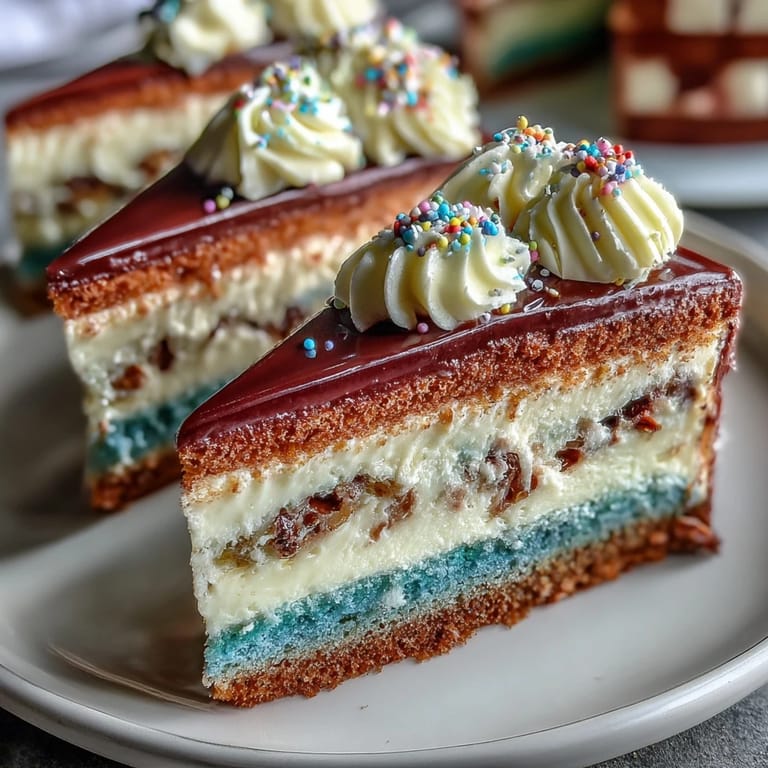
- Add pearls, toppers, or piped details, then refrigerate until set. Let it come to room temperature before serving so the buttercream softens to its silkiest texture.
 Pin It
 My sister's best friend asked for the recipe the moment she tasted it, which meant I ended up texting her a dozen clarifications over the next week. That's when I realized this cake isn't just for graduations—it's for anyone celebrating a milestone who wants something that looks like a masterpiece and tastes like pure joy.
Why This Cake Works for Celebrations
There's something about a layered cake that makes people feel celebrated. This particular design—the ombre effect—suggests intentionality and care without requiring you to be a trained pastry chef. The layers themselves are sturdy enough to handle stacking and decorating, but tender enough that they melt on your tongue. I've made this for quinceañeras, promotions, and anniversaries, and it transforms any table into something special.
The Swiss Meringue Secret
Swiss meringue buttercream terrified me the first time because I'd heard horror stories about it breaking or tasting eggy. Then I realized those stories came from people who either skipped the thermometer or added cold butter. The warmth and gradual butter integration are what make it work. Once you understand that, you become unstoppable—this buttercream is silkier, more elegant, and less cloyingly sweet than American buttercream, and it holds color beautifully for ombre effects.
Troubleshooting and Last-Minute Saves
I once forgot to cool the meringue properly before adding butter, and it split into a greasy, sad mess. I nearly threw it away until I remembered that warming it slightly over a bowl of warm water while whisking could bring it back together—and it did. Cakes can absorb minor imperfections, but understanding how to fix them means you can bake with confidence even when something goes sideways.
- If your buttercream looks separated or broken after adding butter, warm the bowl gently over hot water while whisking and it will emulsify again.
- If your cake layers domed too much on top, trim them level with a serrated knife before stacking so they sit flush against each other.
- Keep the cake refrigerated between steps so the buttercream stays firm and layers don't shift while you're working.
 Pin It
 This cake taught me that the best recipes aren't just about precision; they're about creating something beautiful enough to become a keepsake moment. Bake this for someone you're proud of.
Recipe Questions & Answers
- → How do I achieve the ombre effect in the layers?
Divide the batter evenly and add increasing amounts of gel food coloring to each portion before baking. This creates a smooth gradient from dark to light.
- → What is Swiss meringue buttercream?
It's a smooth, silky frosting made by gently heating egg whites and sugar, then whipping them with softened butter to create a light texture.
- → Can I prepare this cake ahead of time?
Yes, the layers and buttercream can be made in advance and refrigerated. Assemble and decorate the cake shortly before serving.
- → How do I ensure the layers bake evenly?
Use four 8-inch pans lined with parchment paper, fill each batter evenly, and bake at 350°F until a toothpick comes out clean.
- → What decorations work well with this cake?
Edible pearls, themed toppers like caps or diplomas, and piped buttercream details enhance the celebratory look.