 Pin It
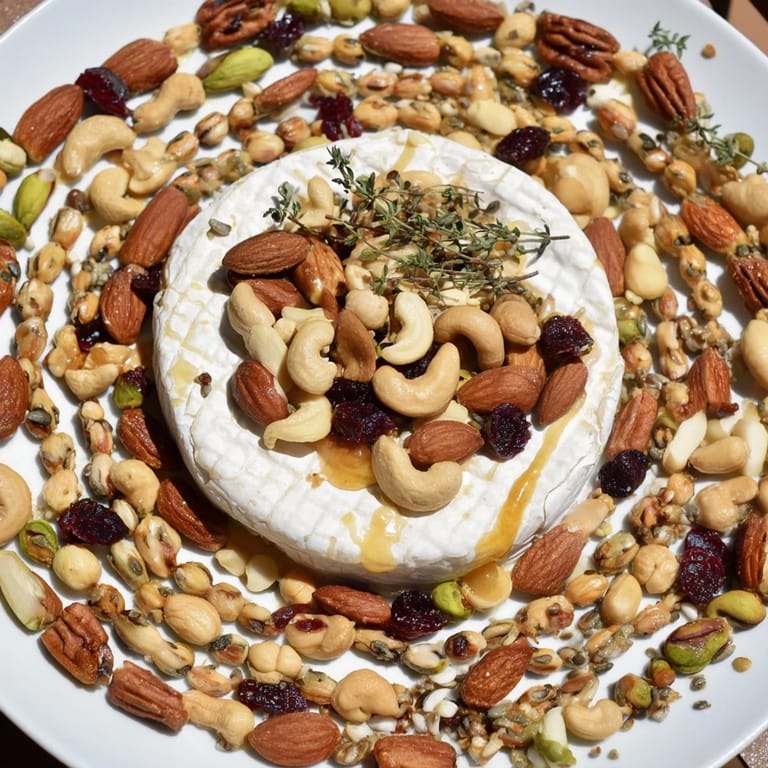
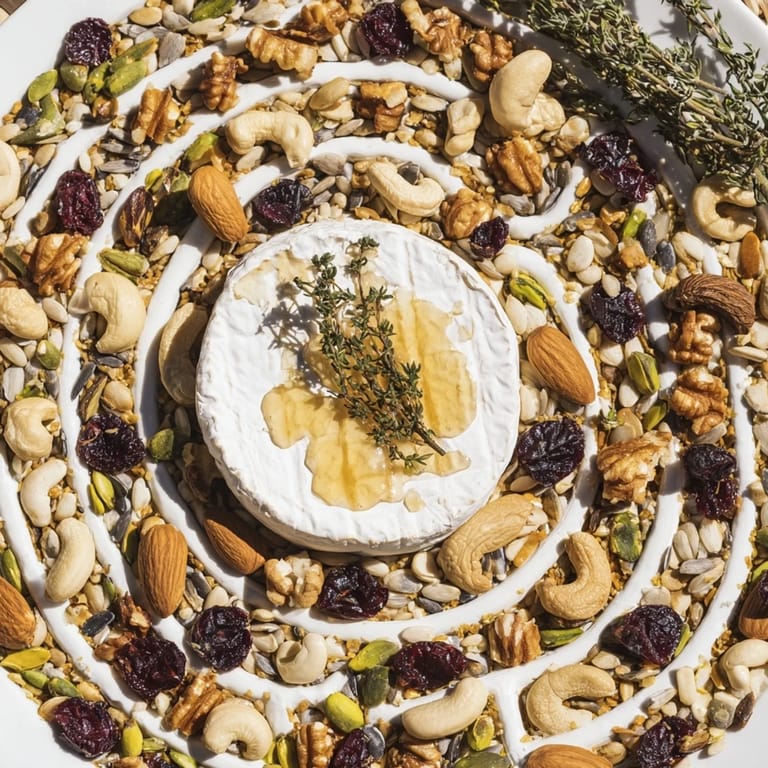
 I discovered The Labyrinth at a dinner party where the host had arranged nuts and seeds in an actual spiral pattern across a marble board, with a creamy Brie sitting smugly at the center. Everyone stopped mid-conversation to admire it before anyone dared to eat. What struck me wasn't just how it looked, but how people interacted with it—playfully tracing the path, debating which route to take, turning a simple appetizer into a moment of genuine joy.
The first time I made this for my book club, someone called it 'edible art' and I remember feeling oddly proud of something I'd spent only twenty minutes assembling. But what really happened was people lingered longer, talked more, and the cheese disappeared faster than I'd expected—which told me everything about how playful presentation can transform the eating experience.
Ingredients
- Raw almonds: Their subtle earthiness anchors the whole arrangement and provides a neutral base for your eyes to rest between more colorful elements.
- Roasted cashews: The richness from roasting makes them slightly sweeter than raw nuts, so position them to catch light and draw people in.
- Pistachios: Their natural green is your best friend for visual contrast; they practically glow against darker seeds.
- Pecan halves: Flat and elegant, they create smooth visual transitions between texture changes in your path.
- Hazelnuts: Smaller and rounder, they work brilliantly for tighter curves in your labyrinth design.
- Pumpkin seeds: Their pale green is visually striking and their slight saltiness keeps people reaching for more.
- Sunflower seeds: Pale and plump, they create a softer visual contrast than the darker sesame; use them to break up intensity.
- Black sesame seeds: These are your visual anchor—use them sparingly to emphasize curves and create shadow lines in your design.
- White sesame seeds: Position them next to darker elements; the contrast is what makes the whole design pop.
- Flaxseeds: Their deep brown works as both a neutral and an accent, and they add a slightly nutty finish to bites.
- Soft-ripened cheese wheel: This is the whole point, so choose something you'd actually want to eat; Brie and Camembert are forgiving, but even a good goat cheese works wonderfully.
- Dried cranberries or cherries: These fill gaps while adding pops of color that guide eyes around the board.
- Fresh herbs: Thyme feels herbaceous and sophisticated, while rosemary adds an almost piney drama to the cheese.
- Honey or agave: A light drizzle catches light and signals 'indulgence' before anyone takes a bite.
Tired of Takeout? 🥡
Get 10 meals you can make faster than delivery arrives. Seriously.
One email. No spam. Unsubscribe anytime.
Instructions
- Set your stage:
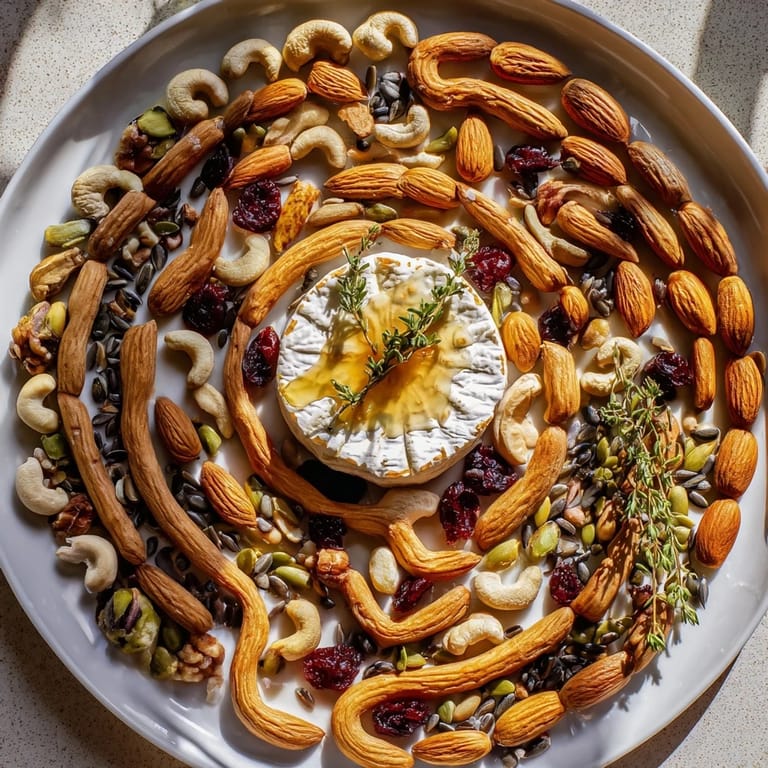
- Find your largest, flattest board or platter—the bigger the canvas, the more room for your design to breathe. If you want precision, lightly sketch your labyrinth path with pencil first, but honestly, a freehand spiral works beautifully too.
- Build the path in layers:
- Start at the outer edge and work inward, laying down single-file lines of nuts and seeds. Alternate types deliberately—raw almonds, then sunflower seeds, then pistachios—so your eye keeps moving as it follows the path.
- Honor the curves:
- Where your path turns tight, use smaller elements like hazelnuts or black sesame seeds. On wider stretches, let the larger cashews or pecan halves shine.
- Create visual rhythm:
- Repeat color patterns every few turns so the labyrinth feels intentional rather than random. A pattern of light-dark-light works beautifully and guides eyes naturally.
- Crown the center:
- Place your cheese wheel dead center like it's been waiting the whole time. This is the moment when everything clicks into place.
- Dress the prize:
- Scatter fresh herbs across the cheese and give it a gentle honey drizzle. This tells guests the journey was worth it.
- Fill the quiet spaces:
- Tuck dried cranberries or cherries into any gaps between the spirals. These act like hidden treasures along the path.
- Serve with ceremony:
- Provide small forks or picks and let people navigate their own route. Part of the fun is choosing where to start.
 Pin It
 What I didn't expect was watching my usually quiet neighbor trace the path with her finger before taking a bite, telling me it reminded her of mazes she'd draw as a kid. Food memories aren't always about taste—sometimes they're about how something makes you feel seen or playful again.
Design Secrets That Matter
The most successful labyrinths aren't perfectly symmetric—a few irregularities actually make the design more dynamic and interesting to follow. Think of it like a real maze: slight surprises keep you engaged. You want people to slow down, pause, and really look at what you've created before diving in.
Customizing for Your Crowd
I've made this vegetarian a hundred times, but once someone brought a vegan cheese alternative and it was genuinely beautiful—sometimes creamy white, sometimes a golden hue that photographs even better than traditional Brie. Allergies are always a practical concern, so swapping ingredients is completely natural; just keep your color contrast principle in mind when substituting.
Pairing and Presentation
Sauvignon Blanc or sparkling cider elevates this from appetizer to experience, though I've also seen it work beautifully with a crisp rosé or even a light beer. The beauty is that The Labyrinth doesn't demand anything fancy—it stands on its own, though it does love good company.
- Set out small crackers around the outer edge if you want extra crunch and substance.
- Provide small forks or picks so people feel guided without being bossy about how they approach it.
- Keep a cheese knife nearby for those who want to cut rather than pick.
 Pin It
 Making The Labyrinth taught me that sometimes the simplest recipes are the ones people remember longest—not because they're complicated, but because they made someone smile or sparked a moment of genuine connection. That's what this dish does.
Recipe Questions & Answers
- → Can I substitute different nuts and seeds?
Absolutely, feel free to swap nuts and seeds based on personal taste or allergies, maintaining a variety of textures and colors.
- → What types of cheese work best for the centerpiece?
Soft-ripened cheeses like Brie or Camembert work well, but vegan alternatives can be used to accommodate diets.
- → How do I keep the labyrinth design stable?
Arrange nuts and seeds in tight, single-file lines on a flat, stable platter and avoid moving it abruptly after assembly.
- → Are there any suggested garnishes to enhance flavor?
Fresh herbs such as thyme or rosemary and a drizzle of honey or agave add aromatic and sweet accents to complement the nuts and cheese.
- → Is this suitable for gluten-free diets?
Yes, using gluten-free nuts and seeds ensures the dish remains suitable for gluten-sensitive guests.