 Pin It
 Last spring, my neighbor showed up at my door with a still-warm lemon drizzle loaf, and I immediately understood why this British classic has survived generations of kitchen trends. The cake was impossibly light yet moist, with that distinctive sticky-sweet glaze pooling into tiny crevices across the golden top. I went home and made my own version that same afternoon, and somehow the smell of zesting fresh lemons transported me back to my grandmother's kitchen where she'd squeeze them straight into her batter without measuring. Now whenever I bake this, that tanginess hits different—it's become my go-to when I need something that feels both simple and special.
I'll never forget bringing this to a book club meeting where everyone was expecting store-bought brownies, only to watch the room go quiet the moment they bit into a slice. One friend actually closed her eyes, and another asked for the recipe before finishing hers. That's when I realized a loaf cake this simple could genuinely impress people, not because it's complicated, but because the flavors feel honest and the texture is so damn good.
Ingredients
- Unsalted butter (200 g), softened: Room temperature butter creams properly with sugar, trapping air that makes the cake rise and stay tender—cold butter won't incorporate the same way no matter how long you beat it.
- Caster sugar (200 g): Its fine crystals dissolve quickly into the butter, creating that pale fluffy base that's the foundation of everything to come.
- Large eggs (3), room temperature: Cold eggs don't mix smoothly and can cause the batter to curdle; warm eggs blend in seamlessly and add lift naturally.
- Fresh lemon zest (1 tbsp from 2 lemons): Microplane it finely so the oils distribute evenly throughout the cake—that's where the real lemon flavor lives, not just in the juice.
- Self-raising flour (200 g): It already contains baking powder, saving you a step, but check the tin date because old flour loses its lift.
- Baking powder (1/2 tsp): A tiny bit extra ensures the cake rises properly and stays tender in the middle.
- Salt (1/4 tsp): It balances the sweetness and amplifies the lemon flavor in a way you won't notice until it's gone.
- Whole milk (3 tbsp): This adds moisture without making the batter too thick, keeping the crumb delicate and light.
- Freshly squeezed lemon juice (2 tbsp): Bottled juice tastes flat by comparison; fresh juice adds that living tartness that makes people ask what your secret is.
- Icing sugar (80 g) for the drizzle: Sift it first or it'll clump and the glaze becomes gritty instead of smooth.
- Fresh lemon juice (3 tbsp) for the drizzle: The same fresh juice here is what makes the glaze taste bright rather than one-dimensional.
Tired of Takeout? 🥡
Get 10 meals you can make faster than delivery arrives. Seriously.
One email. No spam. Unsubscribe anytime.
Instructions
- Set up your workspace:
- Preheat the oven to 180°C and line your loaf tin with baking parchment, pressing it into the corners so it doesn't bunch up while baking. A little overhang on the sides helps you lift the finished cake out cleanly.
- Cream the butter and sugar:
- Beat softened butter with caster sugar until the mixture looks pale, almost white, and feels light under the beaters—this usually takes 3-4 minutes if you're using an electric mixer. You're literally whipping air into the fat, which is what makes the cake rise and stay spongy.
- Add the eggs slowly:
- Break each egg into the bowl one at a time, beating well after each addition so it emulsifies properly. If you dump all three in at once, the mixture can look broken or split, which means the eggs and fat aren't blending smoothly.
- Stir in the lemon zest:
- Add the finely grated zest to the creamed mixture and fold it through, distributing those bright flavor specks evenly.
- Fold in the dry ingredients gently:
- Sift the flour, baking powder, and salt together, then fold them into the wet mixture using a spatula with just enough movement to combine—overmixing at this stage develops gluten and makes the cake dense and tough. You want to stop folding the second you see no more white streaks of flour.
- Add the milk and lemon juice:
- Fold these in until the batter is smooth and falls easily from the spatula. The batter should feel like thick cake batter, not stiff dough.
- Transfer to the tin and bake:
- Pour the batter into your prepared loaf tin and smooth the top with a spatula so it bakes evenly. Bake for 45-50 minutes until a skewer inserted into the center comes out clean or with just a few moist crumbs clinging to it.
- Make the glaze while baking:
- While the cake's in the oven, whisk icing sugar with fresh lemon juice until you have a pourable consistency—it should be thicker than water but thin enough to drizzle. Too thick and it'll sit on top; too thin and it runs straight off.
- Poke and drizzle while warm:
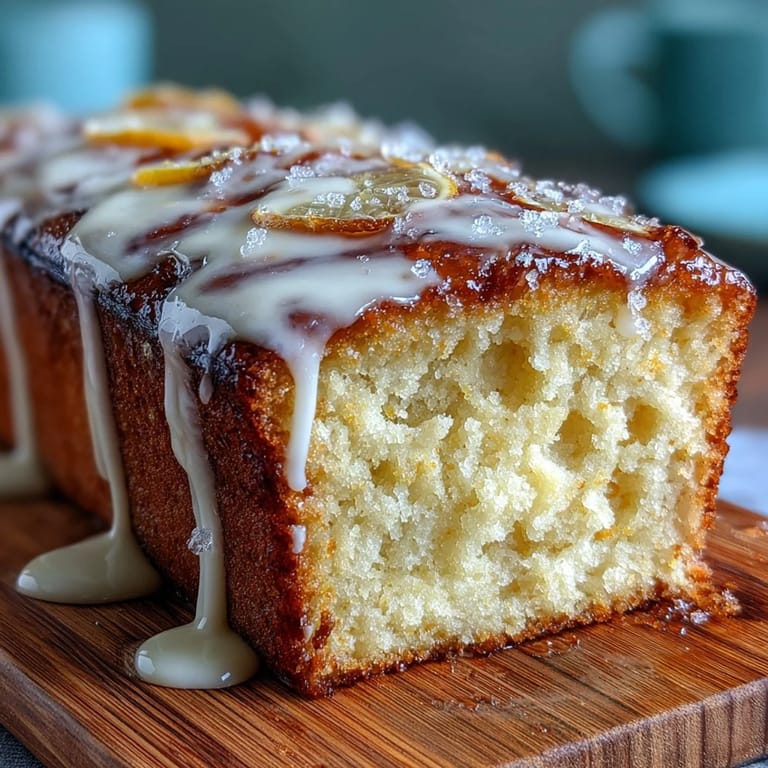
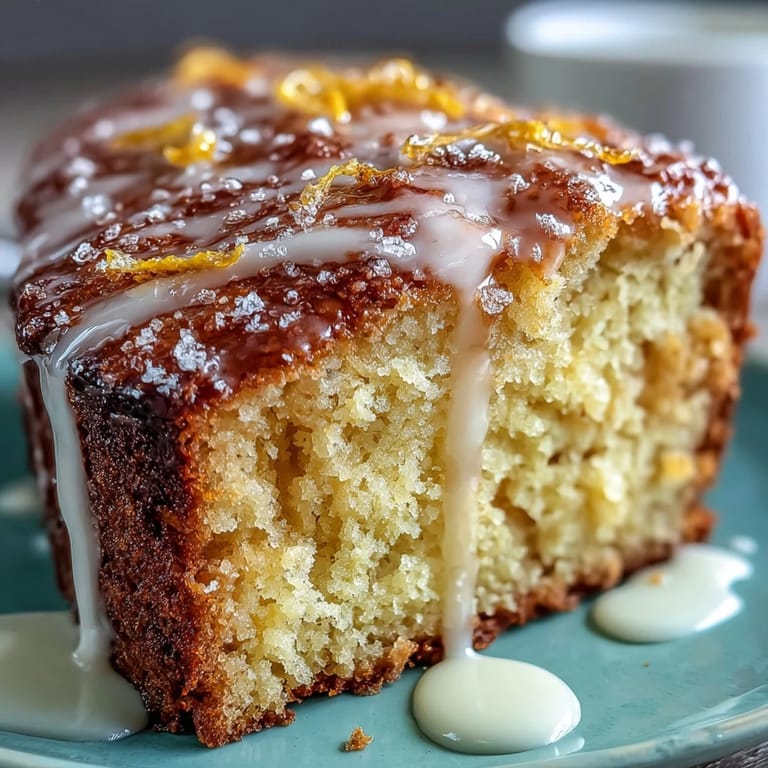
- As soon as the cake comes out of the oven, let it rest in the tin for 10 minutes, then use a skewer to poke tiny holes all over the warm top. Drizzle the glaze slowly over those holes so it soaks in and creates those sticky sweet pockets that keep the cake moist.
- Cool completely before turning out:
- Let the cake sit in the tin until it's completely cold so it holds together when you lift it out. Rushing this step can cause it to crack or crumble.
 Pin It
 My sister once made this cake on a random Tuesday and brought half of it to my house, and we sat at the kitchen table eating it straight from the tin while the rain came down outside. No fancy plates, no special occasion, just two people discovering that sometimes the simplest things—butter, sugar, eggs, and lemon—create a moment worth remembering. That's what this cake does; it becomes part of ordinary days and makes them feel less ordinary.
Why Fresh Lemon Really Matters
The difference between this cake made with bottled lemon juice and made with fresh squeezed is honestly dramatic in a way that surprises people who haven't paid attention before. Fresh juice has a living quality—bright, complex, with subtle notes that boxed juice has already lost to oxidation and preservation. When you squeeze the lemon yourself, you're capturing oils from the peel and the juice together, and that combination is what makes people say this tastes like springtime.
The Science of That Perfect Tender Crumb
A good lemon drizzle loaf stays moist for days because of that strategic glaze seeping into the warm cake, but it also stays tender because you folded the dry ingredients gently instead of beating them. Overmixing develops gluten strands, and gluten makes cake tough and chewy. The moment you see no more white flour streaks, you stop—that's the whole secret right there.
Serving and Storage Ideas
This cake is best served plain so the lemon flavor shines, but it also handles add-ons gracefully if you want to dress it up. Toast a slice and spread it with clotted cream, or serve it alongside fresh berries and whipped cream for something feel more like dessert. It keeps wrapped in foil at room temperature for 3-4 days, and it actually tastes better on day two once the flavors have settled and the cake has absorbed more of its own moisture.
- Add a handful of poppy seeds to the batter for subtle texture and a nod to traditional British baking.
- Substitute half the lemon juice in the glaze with limoncello if you want an adult-leaning version that tastes like a cocktail in cake form.
- If the cake dries out slightly, brush warm simple syrup over the top the next day to restore moisture and sweetness.
 Pin It
 This cake has become my answer to every spring gathering, every tea with a friend, every moment when I want to feel like I've given something small but genuine. Make it once and it becomes part of your rotation forever.
Recipe Questions & Answers
- → What makes the loaf moist and tender?
The combination of butter, eggs, and milk creates a soft and moist crumb, while careful folding of the flour prevents toughness.
- → How does the lemon drizzle enhance the loaf?
Drizzling lemon glaze while the loaf is warm allows the citrus syrup to soak in, adding tangy brightness and extra moisture.
- → Can I add any texture variations?
Yes, adding poppy seeds to the batter introduces a subtle crunch and nutty flavor without overpowering the citrus notes.
- → What is the purpose of poking holes before glazing?
Poking holes lets the lemon drizzle penetrate deeply into the loaf, intensifying the lemon flavor throughout.
- → How can I adjust the glaze for a more adult flavor?
Substitute half the lemon juice in the glaze with limoncello for a delicate, boozy twist that complements the citrus.