 Pin It
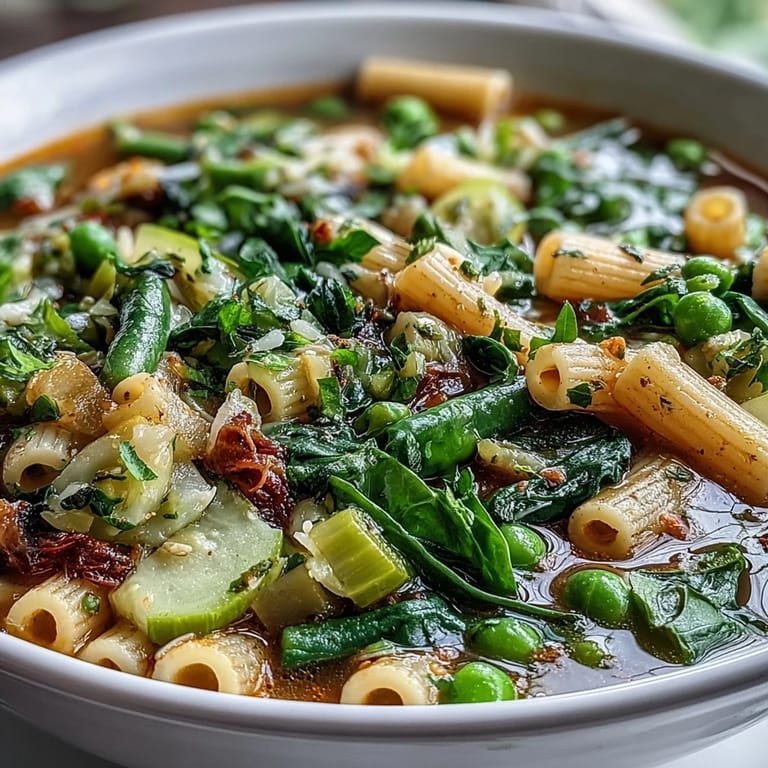
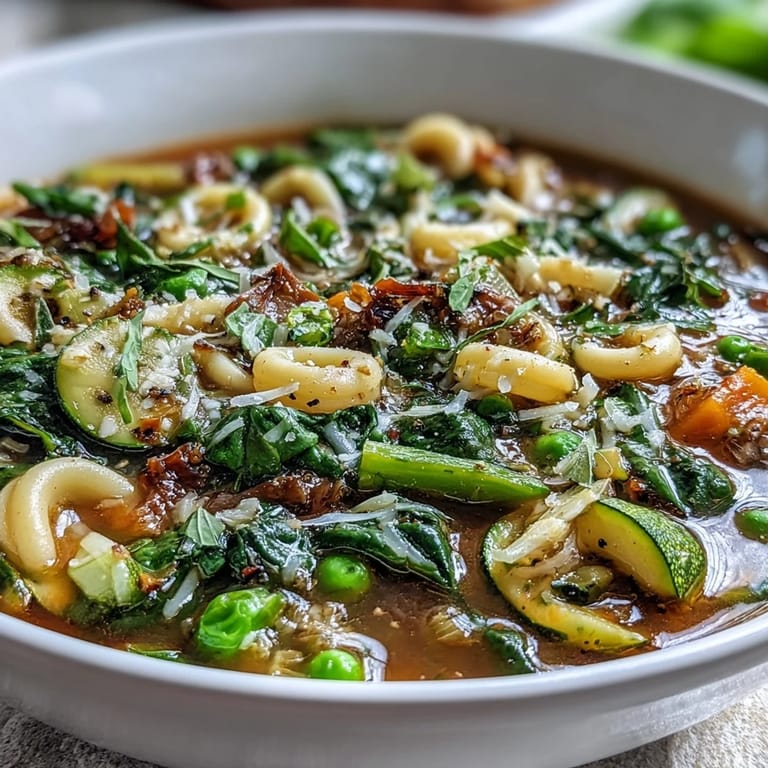
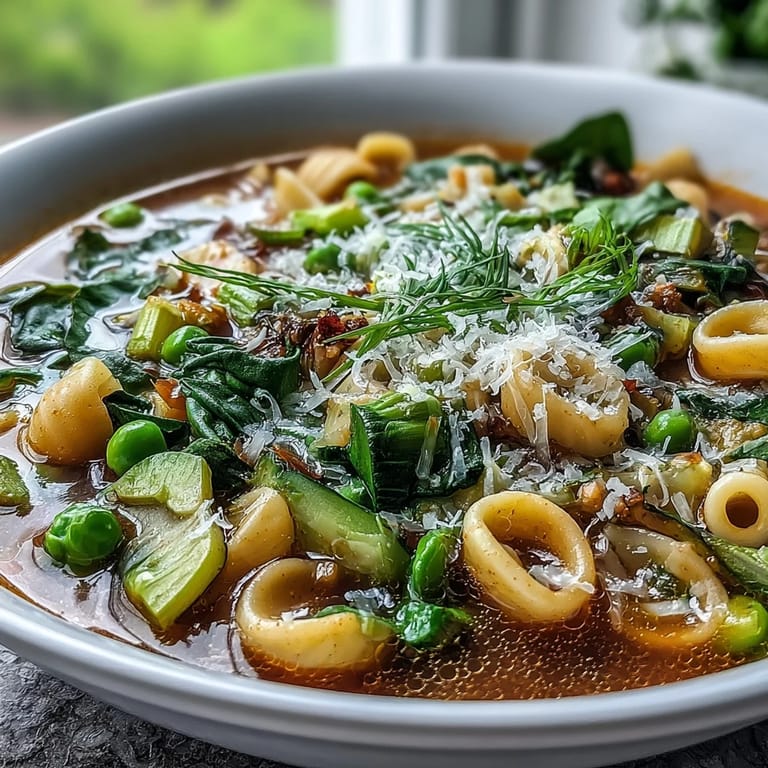
 Sunlight poured across the countertop the morning I decided to make Spring Minestrone, the scent of fresh parsley and cut vegetables swirling in the air. There was an almost playful energy to lining up all the vibrant ingredients, each one promising a burst of spring in every spoonful. That rhythmic chop chop of the knife and the subtle sizzle as olive oil hit the pan always feels like the start of something good. I never thought soup could capture a season, but this one gets close. Sometimes I make it just for the sound of the bubbling broth and the way the kitchen seems to wake up as it simmers.
One afternoon, my neighbor dropped by to return a borrowed book and we ended up cooking together, laughing as we tossed spinach in at the last minute and compared whose green beans had the best crunch. It turned into a spontaneous lunch surrounded by sun and stories, both bowls refilled more than once. The spring breeze through the window made every bite taste fresher. It’s funny how a simple pot of soup turns acquaintances into friends. I don’t think we ever discussed the book after that afternoon.
Ingredients
- Olive oil: Starting with good olive oil adds a smooth richness – I find it helps tie all those garden flavors together.
- Onion: Finely chopped lets it melt into the background, giving the soup subtle sweetness.
- Garlic: Just enough for a soft warmth rather than a punch – mince it well for even cooking.
- Carrots: They add color and a gentle sweetness, especially if you cut them into small, even pieces.
- Celery: Essential for earthy depth; don't skip it, even if you’re tempted.
- Zucchini: Toss in near the end for a soft but not mushy bite.
- Peas: Frozen work just as well as fresh, brightening things up right before serving.
- Spinach leaves: Stir these in at the last moment to keep them vibrantly green.
- Green beans: The crunch is half the fun – trim and cut evenly for the best texture.
- Vegetable broth: Low-sodium lets you control seasoning, and homemade is always a bonus.
- Bay leaf: Invisible but unmistakable – just don’t forget to fish it out before serving!
- Small pasta shapes: Ditalini, orzo, or anything similar – they should be bite-sized to scoop up with every spoonful.
- Parsley: Fresh is non-negotiable for that lively herbal finish.
- Salt and black pepper: Taste as you go; it truly makes a difference.
- Grated Parmesan cheese: For depth and umami – but totally optional if you want to keep it dairy-free.
- Fresh basil leaves: A handful on top wakes up the flavors just before serving.
- Extra olive oil: A final drizzle on each bowl adds a luxurious, silky touch.
Tired of Takeout? 🥡
Get 10 meals you can make faster than delivery arrives. Seriously.
One email. No spam. Unsubscribe anytime.
Instructions
- Sauté the base:
- Heat olive oil over medium in a big soup pot, listening for that soft sizzle as you tip in onions. Let them turn glassy before adding the garlic.
- Build the flavor:
- Add carrots and celery, and stir until everything softens and the kitchen starts to smell sweet and savory.
- Add the spring veggies:
- Mix in zucchini, green beans, and peas, watching the colors brighten as you toss them around for a couple of minutes.
- Simmer with broth:
- Pour in the broth and drop in the bay leaf – the sound alone is comforting. Bring everything to a gentle boil, then lower to a soft bubble.
- Pasta time:
- Stir in the pasta, letting it cook until just tender; taste often so you don’t lose track in conversation.
- Greens last:
- With two minutes left, toss in spinach and parsley, stirring until spinach wilts and turns emerald green.
- Finish and season:
- Scoop out the bay leaf, then season with salt and pepper, tasting one last time to get it just right.
- Serve and garnish:
- Ladle into bowls, then top with Parmesan, fresh basil, and a swirl of olive oil for good measure.
 Pin It
  Pin It
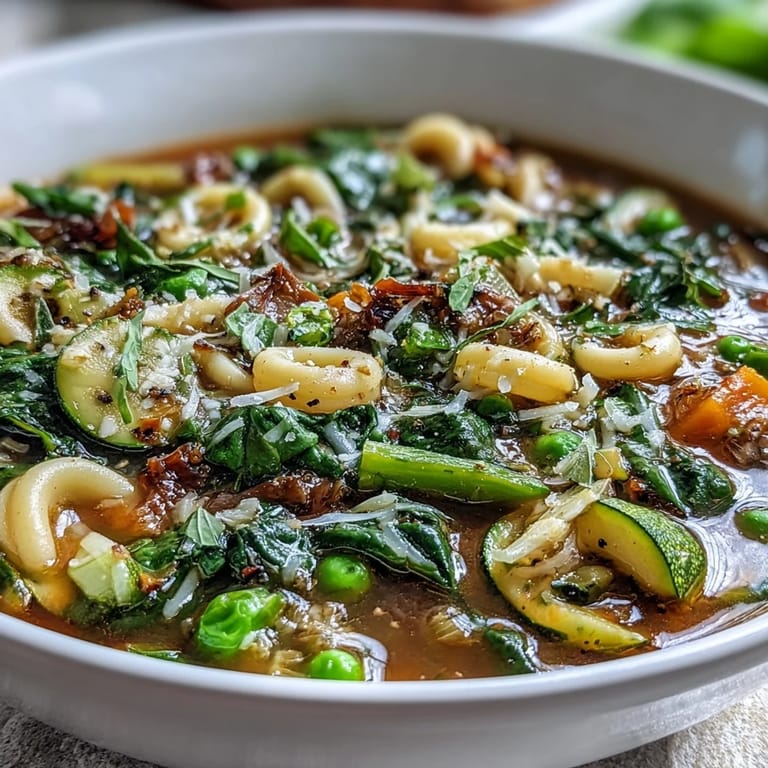
 One chilly evening, my partner came home with a bunch of wildflowers in one hand and a loaf of crusty bread in the other, and we ate this soup perched on stools by the counter, talking about everything except the gray sky outside. It was comfort that snuck up on us in the steam of the bowls and the soft, happy silence after.
Swapping in Seasonal Veggies
Sometimes I can’t resist slipping in sliced asparagus or a few fava beans if I spot them at the market. The soup is endlessly adaptable and always seems to welcome whatever’s fresh that week. Try to keep the vegetable cuts uniform so everything cooks evenly. It’s easy to underestimate how much a handful of snap peas can lift the entire pot. The more you make it, the more confident you'll get in choosing what spring has to offer.
Making it Vegan (or Gluten-Free) Without Missing Out
Skipping Parmesan is no loss if you swirl in a little extra olive oil and finish with more fresh herbs. Gluten-free pasta holds up fine if you undercook by a minute and let it finish in the hot broth off heat. I learned the hard way that dairy-free cheese can get stringy if you add it to the pot – keep it as a topping instead. A squeeze of lemon is another trick for brightness if you’re skipping cheese. No one’s ever noticed the difference in heartiness or flavor at my table.
Little Things That Make a Big Difference
If you have fresh basil, don’t be shy – tuck a small sprig into each bowl with a hot ladle of soup. I like to rub the basil leaves between my hands first to release their oils before garnishing. Slicing the carrots and celery thinly means each bite gets a little bit of everything. Even leftovers seem to taste better after a night in the fridge. Trust your taste buds – this is a recipe that rewards small adjustments.
- Always remove the bay leaf before serving.
- Leftovers thicken up, so have extra broth on hand for reheating.
- Don’t rush the simmer – slow and gentle means deeper flavor.
 Pin It
  Pin It
 Whatever time of year you ladle this soup into bowls, it brings a bit of spring to your table and the easy comfort of something made with care. I hope it fills your kitchen with warmth and a good story or two.
Recipe Questions & Answers
- → How do I prevent the pasta from overcooking?
Add the small pasta toward the end of the simmer so it finishes cooking in the broth. Aim for al dente and monitor the package time; reserve a splash of broth to loosen the soup if the pasta absorbs too much liquid.
- → Can this be made fully plant-based?
Yes. Omit the Parmesan or swap for a plant-based alternative and use a vegetable broth that contains no animal-derived ingredients. Check pasta labels for egg as well.
- → Which spring vegetables work best here?
Asparagus, fresh peas, young fava beans, tender zucchini, and baby spinach all shine. Add firmer vegetables earlier in the simmer and stir in delicate greens just before serving to keep their color and texture.
- → How can I make a gluten-free version?
Use gluten-free small pasta shapes or substitute with cooked rice or quick-cooking gluten-free grains. Adjust cooking time since alternative pastas can vary widely in texture.
- → What are the best storage and reheating tips?
Cool promptly and refrigerate in an airtight container for up to 3 days. Reheat gently on the stove, adding a little extra broth or water as the pasta will continue to absorb liquid.
- → How should I finish and season the bowl?
Taste toward the end and adjust salt and pepper gradually. Finish with chopped parsley or basil and a drizzle of good olive oil; a little grated cheese or a squeeze of lemon will brighten the flavors.