 Pin It
 There's something about the steam rising from a bowl of curry ramen that makes everything else fade away. I discovered this version on a rainy Thursday when my usual takeout place was closed, and I found myself rummaging through my pantry with that familiar kitchen urgency. Coconut milk, curry paste, a handful of mushrooms—suddenly I was building layers of flavor instead of accepting disappointment. That first bowl taught me that the best recipes often come from small moments of resourcefulness, not elaborate planning.
I made this for my sister during a particularly stressful week, and watching her face soften with that first spoonful reminded me why cooking for people matters. She came back for seconds and asked if I'd learned to cook Thai food without telling her. The honest answer was no, just that sometimes combining the right ingredients with good intention creates something that feels far more sophisticated than the effort required.
Ingredients
- Coconut oil: This is your fat base and it carries flavor better than neutral oil; it also helps the curry paste bloom and release all its hidden depths.
- Yellow onion: The foundation of every good broth—it sweetens as it cooks and provides the backbone that lets spices shine.
- Garlic and fresh ginger: These two are what make your kitchen smell like a restaurant; never skip them or use the jarred versions if you can help it.
- Red curry paste: Check that it's vegan because some brands sneak in shrimp paste; this ingredient is where most of your flavor comes from, so quality matters.
- Ground turmeric: Beyond adding color, it brings earthiness and a gentle warmth that rounds out the curry heat.
- Vegetable broth: Use something with real flavor; the low-sodium stuff can taste like salty water and will disappoint you.
- Full-fat coconut milk: Never the light version—you need that richness and the cream that separates slightly creates pockets of concentrated flavor.
- Soy sauce or tamari: This adds umami depth; it's the ingredient that makes people ask what you did to make it taste so complete.
- Maple syrup: A small amount balances the heat and salt with subtle sweetness that shouldn't be detectable but absolutely should be felt.
- Sesame oil: Just a teaspoon adds a toasty complexity that ties everything together in ways you can't quite name.
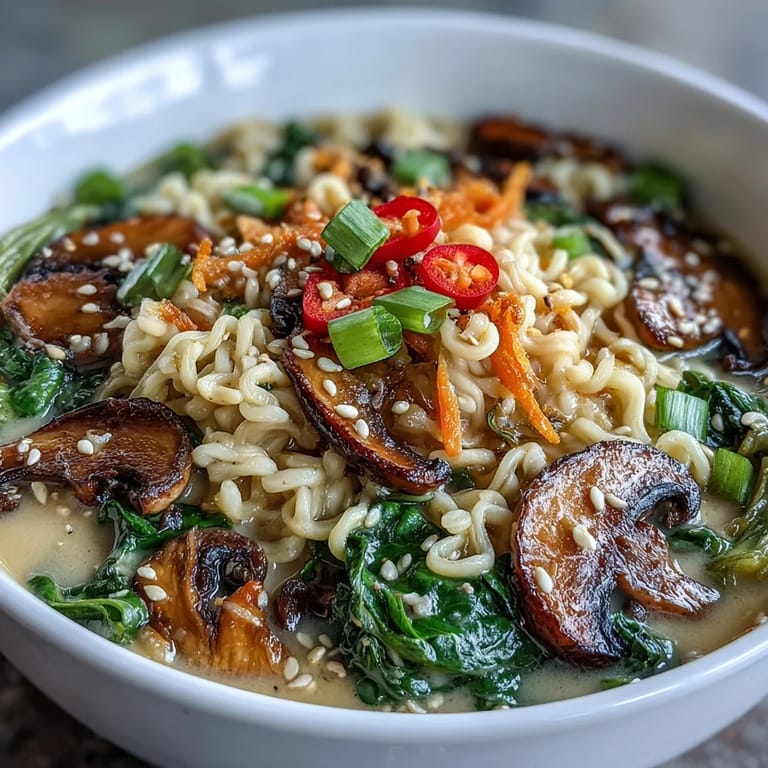
- Cremini or shiitake mushrooms: They add body and earthiness; if you can only find button mushrooms, slice them thin so they cook evenly.
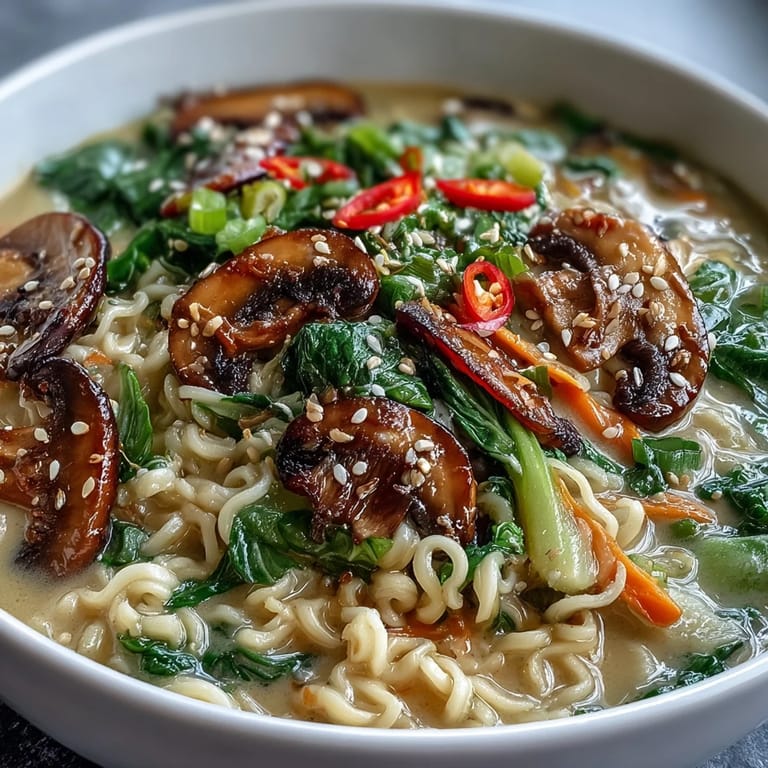
- Baby bok choy: It's tender enough to wilt in seconds but sturdy enough not to become slime; quarter it lengthwise so it looks intentional in the bowl.
- Ramen noodles: Dried works perfectly fine and costs less; fresh noodles are silkier but require careful timing so they don't turn to mush.
- Carrot: Julienne it thin so it cooks quickly and adds visual brightness without overwhelming the other flavors.
- Scallions, sesame seeds, red chili, and cilantro: These are your finishing touches; they transform a good bowl into one that feels intentional and alive.
Tired of Takeout? 🥡
Get 10 meals you can make faster than delivery arrives. Seriously.
One email. No spam. Unsubscribe anytime.
Instructions
- Build your flavor base:
- Heat the coconut oil over medium heat and watch it melt into a slight shimmer. Add your chopped onion and let it soften for a few minutes until it becomes translucent and sweet-smelling; this is the moment where patience pays off because rushing it makes the broth taste thin.
- Wake up the aromatics:
- Stir in garlic and ginger and cook for just one minute—you want them fragrant but not brown, as burnt aromatics taste bitter and sour. The smell that fills your kitchen at this moment is basically the promise of what's coming.
- Toast the spices:
- Add the curry paste and turmeric, stirring constantly for about a minute so the spices lose their raw edge and their oils bloom into the oil. You'll notice the color deepens and the aroma shifts from raw to toasted; that's your signal you're doing it right.
- Bring in the liquid:
- Pour in your vegetable broth slowly, letting it create a smooth consistency with the paste rather than clumpy spots. Add the coconut milk, soy sauce, maple syrup, and sesame oil, stirring well until everything is evenly distributed and you have a unified broth.
- Simmer the mushrooms:
- Bring everything to a gentle simmer and add the sliced mushrooms, letting them cook for 8 to 10 minutes until they're tender and have absorbed some of the broth's color. They'll release their moisture and add umami that deepens the entire bowl.
- Cook the noodles separately:
- While the broth works, bring a separate pot of salted water to a boil and cook your ramen according to package directions. Drain them well and set aside; keeping them separate prevents them from getting soggy if the broth sits.
- Add the greens at the last moment:
- Stir the bok choy and carrots into the simmering broth and cook for just 2 to 3 minutes so the bok choy stays bright green and crisp-tender. If you cook it longer, it turns khaki and tastes dull instead of fresh.
- Taste and adjust:
- Season with salt and black pepper, tasting as you go because the broth is already salty from the soy sauce and you don't want to overshoot. Remember that the garnishes will add brightness, so don't oversalt at this stage.
- Assemble your bowls:
- Divide the cooked noodles among four bowls and carefully ladle the hot broth and vegetables over them, making sure everyone gets a fair share of mushrooms and bok choy. The heat from the broth will warm the noodles further and meld everything together.
- Finish with flair:
- Top each bowl with scallions, toasted sesame seeds, sliced red chili for those who want heat, fresh cilantro for brightness, and a lime wedge to squeeze in. These finishing touches are what elevate a bowl from good to the kind you remember.
 Pin It
  Pin It
 I've made this ramen enough times now that I know my sister will text asking for it the week before she visits, and that's become its own kind of love language. The bowl that started as a rainy day improvisation has turned into something I make with intention, knowing exactly how to get every element right.
The Magic of Layered Spices
What transforms this from a simple vegetable soup into something that tastes restaurant-worthy is the way the spices build on each other. The turmeric adds earthiness and visual warmth, the curry paste brings heat and complexity, and the small additions of soy sauce, maple syrup, and sesame oil create depth that no single ingredient could accomplish alone. I learned this the hard way by once trying to make curry ramen with just coconut milk and curry paste, and while it wasn't terrible, it tasted one-dimensional and needed something I couldn't quite identify.
Why Fresh Ginger and Garlic Matter Here
Using fresh ginger and garlic instead of their powdered counterparts changes everything because their oils and compounds are more volatile and alive. When you mince fresh garlic and grate fresh ginger, you're breaking down cell walls and releasing compounds that powdered versions can never quite replicate. The first time I rushed through with old powdered garlic, the broth tasted like something was missing, and it took me two batches to realize what I'd substituted away.
Timing Your Vegetables for Perfect Texture
The vegetables have different cooking times, which is why they go in at different stages rather than all at once. Mushrooms need the most time to become tender and absorb flavor, so they go in first with the broth. Bok choy and carrots are faster and more delicate, so they arrive near the end when just a few minutes of heat gives them tenderness without destroying their integrity.
- Add mushrooms when you first bring the broth to a simmer so they have 8 to 10 minutes to become deeply tender.
- Wait until the last 2 to 3 minutes to add bok choy and carrots so they stay vibrant and don't turn into mushy shadows of themselves.
- Always taste the broth right before serving and adjust the salt, because the final seasoning makes the difference between good and unforgettable.
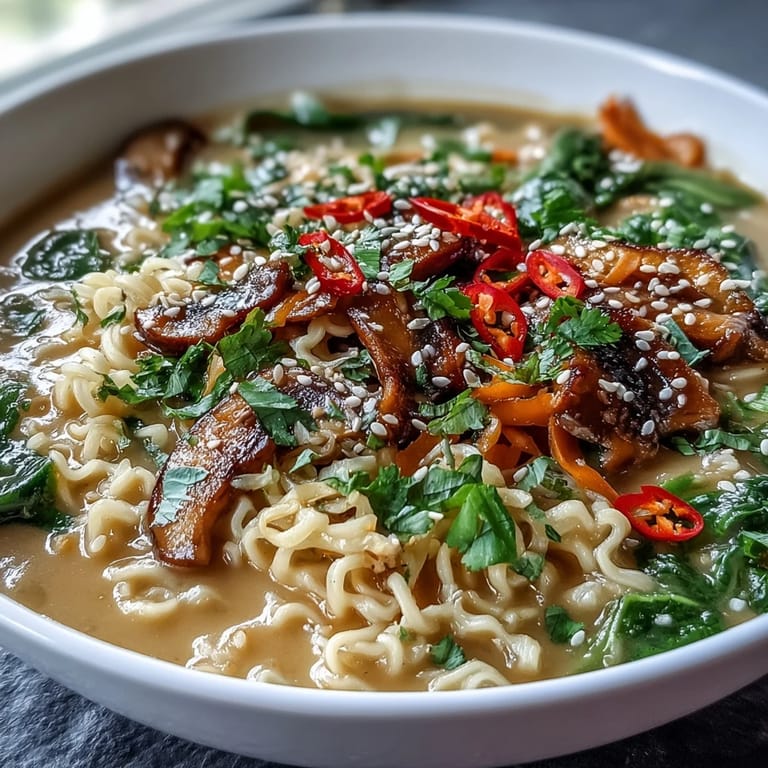 Pin It
 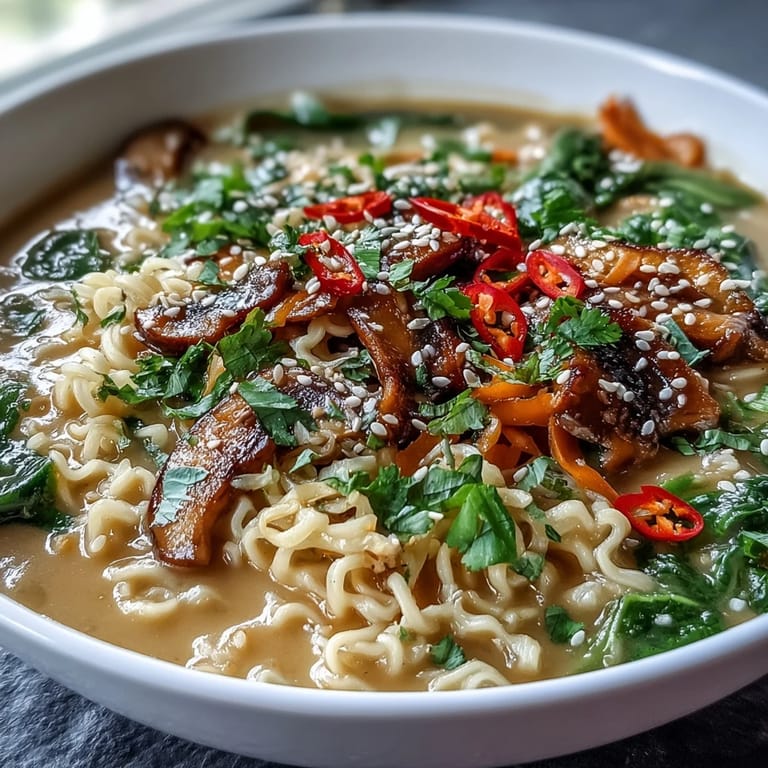 Pin It
 Every time I serve this bowl, I'm reminded that cooking doesn't need to be complicated to be meaningful. This ramen is proof that thoughtful combinations and good timing can create something that feels both nourishing and special.
Recipe Questions & Answers
- → Can I make this curry ramen gluten-free?
Yes, simply use tamari instead of soy sauce and choose certified gluten-free ramen noodles. Most curry pastes are naturally gluten-free, but always check labels to confirm.
- → How can I add more protein to this dish?
Cubed firm tofu works beautifully when added during the last 5 minutes of simmering. Edamame, chickpeas, or baked tempeh are excellent options for plant-based protein without altering the flavor profile.
- → What vegetables can I substitute for bok choy?
Spinach, kale, or Swiss chard wilt nicely in the hot broth. Napa cabbage adds crunch while maintaining Asian flavors. Add leafy greens during the final 2-3 minutes of cooking to preserve texture.
- → How spicy is this curry ramen?
Red curry paste provides moderate heat. For a milder version, reduce to 1 tablespoon. Add sriracha, chili garlic sauce, or sliced fresh chilies as garnish to customize spice level after cooking.
- → Can I prepare this curry ramen in advance?
The broth actually improves after a day in the refrigerator as flavors meld. Store broth and vegetables separately from cooked noodles to prevent sogginess. Reheat gently and combine when ready to serve.
- → Is this dish freezer-friendly?
The curry broth freezes beautifully for up to 3 months. Avoid freezing noodles or bok choy as texture suffers. Freeze broth in portions, then cook fresh noodles and add greens when reheating.