 Pin It
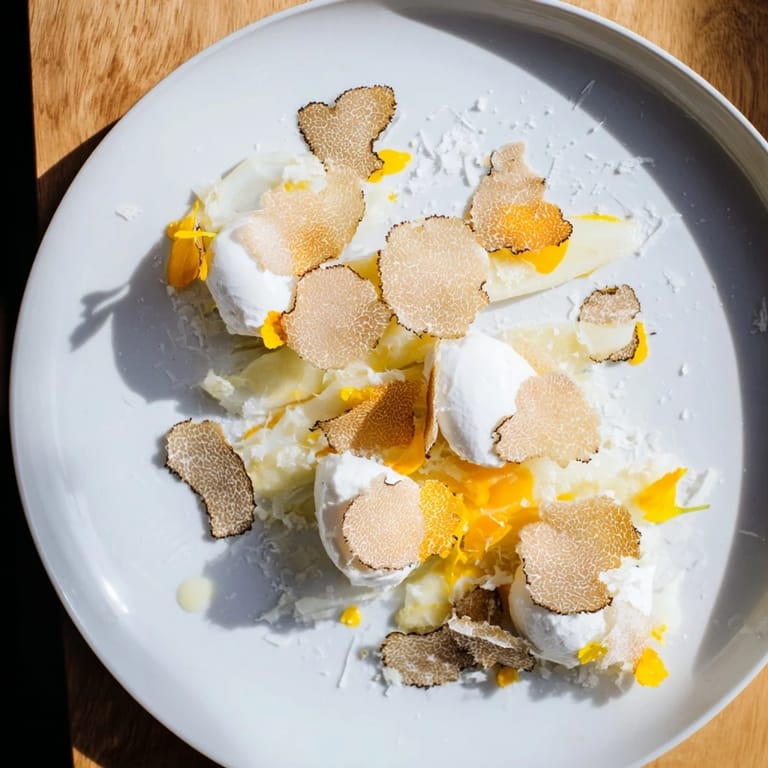
 The first time I served this dish, my guest set down their fork mid-bite and just stared at the plate. There's something about white asparagus that feels like a secret—so pale and delicate compared to the green stalks most people know. Adding those dark truffle shavings felt like drawing pen strokes across silk. That quiet moment of appreciation taught me that some of the best dishes don't need to shout; they whisper.
I remember peeling white asparagus for the first time and being surprised by how fragile the skin was—you had to pay attention or the spears would snap. My mother watched me work and said it was like handling something that mattered. Making this dish for four people on a spring evening, I understood exactly what she meant. The care you put into preparation becomes part of what people taste.
Ingredients
- White asparagus, 500 g trimmed and peeled: Buy them as thick as your thumb if you can—thinner ones are harder to work with and cook too fast, losing that tender snap.
- Burrata or buffalo mozzarella, 75 g drained: The burrata's creamy center melts just slightly against the warm asparagus, so don't skip the draining step or your plate gets wet.
- Aged Comté cheese, 75 g thinly shaved: Use a vegetable peeler to shave it, which gives you those elegant ribbons instead of crumbles.
- Parmigiano-Reggiano, 50 g finely grated: This adds a sharp finish that keeps everything from feeling too soft and rich.
- Fresh black truffle, 15 g or 1–2 tbsp truffle paste: If fresh truffle is out of reach, the paste does the job beautifully and costs less than half as much.
- Extra-virgin olive oil, 2 tbsp: Use one you actually like tasting on its own—it's not hidden here.
- Fresh lemon juice, 1 tbsp: This cuts through the richness and keeps everything feeling bright.
- Flaky sea salt and freshly ground white pepper: The white pepper doesn't darken the plate like black pepper would, which matters when you're after elegance.
- Microgreens or chervil for garnish (optional): A scattered handful adds color and a whisper of freshness.
Tired of Takeout? 🥡
Get 10 meals you can make faster than delivery arrives. Seriously.
One email. No spam. Unsubscribe anytime.
Instructions
- Simmer the asparagus gently:
- Bring salted water to a gentle simmer and slide in the white asparagus. After 8 to 10 minutes, they should bend slightly but still have a little resistance when you test them with a knife. The moment you lift them out, transfer them straight to ice water—this stops the cooking and keeps them bright.
- Prepare your canvas:
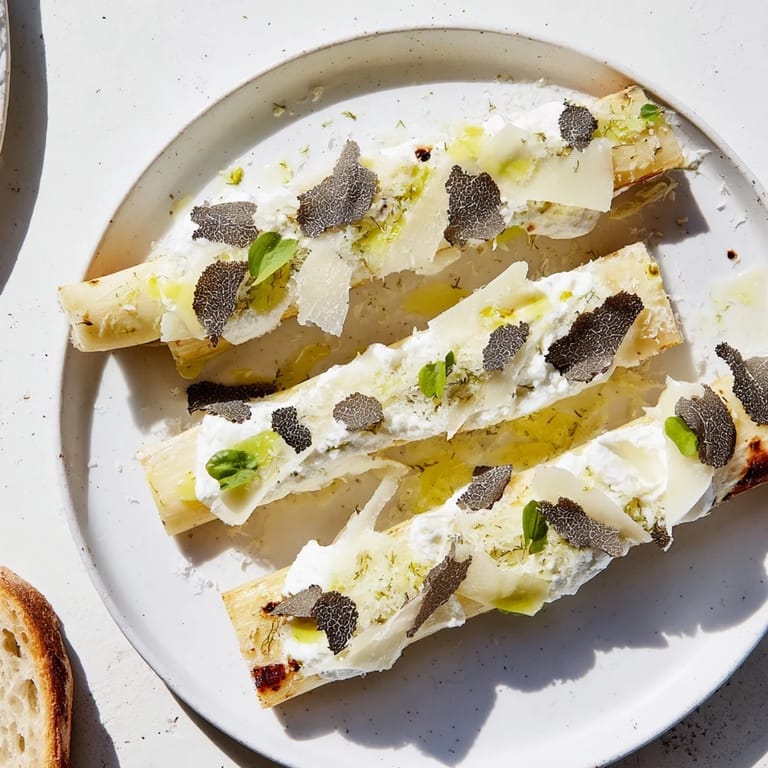
- Once cooled and dried (use kitchen towels to be thorough), lay each spear lengthwise on your chilled plate. This is where the visual story begins.
- Layer the cheeses:
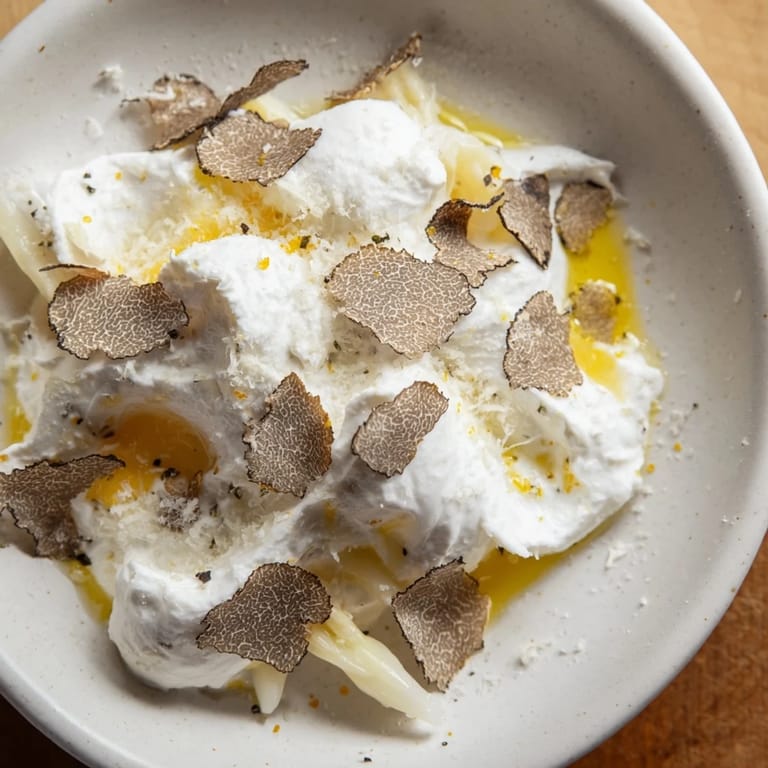
- Tear the burrata into pieces and distribute it along the asparagus. Add your Comté shavings next, then a fine shower of Parmigiano-Reggiano across everything.
- Add the truffle:
- If using fresh truffle, hold the slicer nearly parallel to the spear and let thin shavings fall like stripes. With paste, use a small spoon to drizzle fine lines—less is always more.
- Dress and finish:
- Whisk the olive oil with lemon juice and salt until they combine. A crack of white pepper, then drizzle this mixture evenly across the plate.
- Serve right away:
- Add a small handful of microgreens if you have them, and bring it to the table while everything is still at that perfect temperature.
 Pin It
 There was an evening when someone asked me why I bothered making something so simple look so careful. I didn't have a good answer until I watched them take that first bite and pause. It's the kind of dish that reminds you why you cook—not to show off, but to give someone a moment where everything tastes exactly as good as it looks.
The White Asparagus Question
If you've never bought white asparagus before, you might wonder what the difference is. White asparagus grows underground, shielded from sunlight, so it stays pale and tender without developing the fiber that green asparagus gets. The flavor is subtler, almost buttery, and it doesn't need anything bold to shine. For this dish, that mildness is exactly what you want—it lets the cheese and truffle step forward without fighting.
Cheese Selection and Substitutions
The three cheeses serve different purposes: burrata brings creaminess, Comté adds a gentle nuttiness, and Parmigiano-Reggiano provides the sharp anchor. If you can't find Comté, Gruyère works beautifully and costs less. A mild goat cheese is another path if that's what you have. The one thing I'd never skip is something sharp at the end—that final pepper of hard cheese is what keeps the whole plate from tasting one-note.
Making It Your Own
Once you understand how these elements balance, you can play. A few drops of truffle oil whisked into the dressing deepens everything. Crispy breadcrumbs scattered over the top add texture if you want it. I've made this with spring peas mixed in when asparagus season overlaps with pea season. The structure stays the same; the details shift with what looks good at the market.
- If white asparagus isn't available, thick green asparagus works in a pinch—just cut the cooking time by a minute or two.
- Chill your serving plates before plating; it keeps everything at the right temperature longer.
- Assemble this as close to serving time as possible, because the dressing will soften the cheese if it sits.
 Pin It
 This is the kind of dish that shows up when you want to cook something that feels like an occasion without spending all day in the kitchen. Serve it with a cold glass of Sancerre and watch what happens.
Recipe Questions & Answers
- → What is the best way to cook white asparagus for this dish?
Simmer the asparagus in salted water for 8–10 minutes until tender but still firm, then immediately cool in an ice bath to preserve texture.
- → Can I substitute the cheeses if I don't have Comté?
Yes, Gruyère or a mild goat cheese work well as alternatives, maintaining the dish’s delicate cheese profile.
- → How should black truffle be prepared for this plate?
Use a truffle slicer or sharp vegetable peeler to create thin stripes of fresh truffle, or drizzle truffle paste in fine lines across the assembled dish.
- → What dressing complements this combination of ingredients?
A simple dressing of extra-virgin olive oil, fresh lemon juice, flaky sea salt, and white pepper enhances the freshness without overpowering flavors.
- → Are there any suggested garnishes to finish the dish?
Optional microgreens or chervil add a fresh herbaceous note and a subtle aesthetic touch to the final presentation.