 Pin It
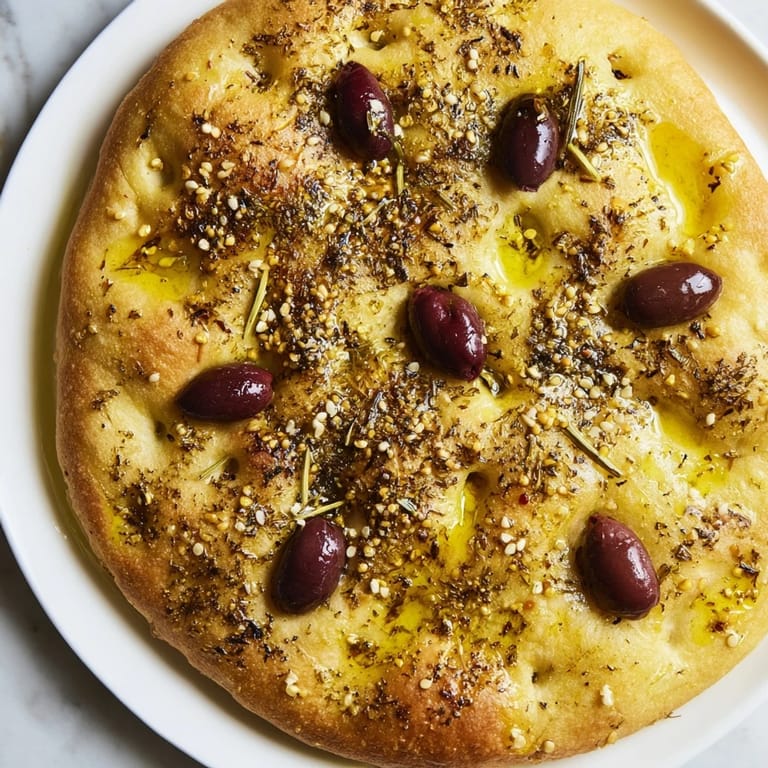
 The first time I made zaatar focaccia, I was standing in a Mediterranean market in my mind, surrounded by the smell of olive oil and warm spices. My neighbor had just returned from Lebanon and left a small tin of zaatar on my doorstep with a note that said just cook with this. I didn't have a grand recipe plan, just curiosity and flour, so I started with a basic focaccia dough and began experimenting. By the time it came out of the oven golden and fragrant, I understood why she'd been so insistent.
I made this for a small dinner party on a Wednesday night, and what struck me most was how people tore into it with their hands before I'd even finished slicing. Someone asked if it was from a bakery, and I pretended to be offended in that way that secretly felt wonderful. The bread was still warm, the olive oil was glistening, and for a moment the kitchen smelled like somewhere far away and deeply comforting.
Ingredients
- Bread flour (500 g): The structure of your focaccia depends on this, so don't swap it for all-purpose unless you're prepared for a denser result.
- Active dry yeast (7 g): Dissolve it in warm water first—it needs that moment to wake up and become foamy, or your dough will stay stubborn and dense.
- Fine sea salt (1½ tsp for dough): This goes into the flour before the yeast mixture, which keeps the salt from killing the yeast's enthusiasm.
- Warm water (325 ml): Around 40°C is the sweet spot—too hot and you'll scald the yeast, too cool and it'll just sit there looking lonely.
- Extra virgin olive oil (60 ml for dough, 2 tbsp for topping): This is where flavor lives, so use one you actually enjoy tasting on its own.
- Zaatar spice blend (2 tbsp): This is the star, so buy it from a place that has good turnover and the blend looks vibrant, not dusty.
- Kalamata olives (100 g, halved): Pit them fresh if you can—jarred ones work but sometimes taste a bit too vinegary for this bread.
- Flaky sea salt (1 tsp): This goes on top and adds textural contrast that regular salt can't deliver.
Tired of Takeout? 🥡
Get 10 meals you can make faster than delivery arrives. Seriously.
One email. No spam. Unsubscribe anytime.
Instructions
- Mix your dry foundation:
- In a large bowl, combine bread flour and fine sea salt, then set aside. This keeps them evenly distributed before the yeast even arrives.
- Activate the yeast:
- Dissolve the yeast in warm water and wait 5 minutes until it looks foamy and alive. If it doesn't foam, your yeast is past its prime and you'll want to start over.
- Bring it together:
- Pour the yeast mixture and olive oil into the flour and mix until you have a shaggy, rough dough. Don't overthink it—shaggy is exactly what you want right now.
- Knead until silky:
- On a lightly floured surface or in a stand mixer with a dough hook, knead for 8–10 minutes until the dough becomes smooth and elastic. You'll feel the transformation under your hands or hear it shift in the mixer.
- First rise:
- Place the dough in an oiled bowl, cover with a kitchen towel or plastic wrap, and let it rise in a warm spot for 1 hour or until it's doubled. A turned-off oven with the light on works beautifully.
- Shape and second rise:
- Oil your baking sheet, punch down the dough gently, and press it evenly into the pan. Cover again and let it rise for 30 minutes, which gives it a chance to puff without becoming too airy.
- Dimple and dress:
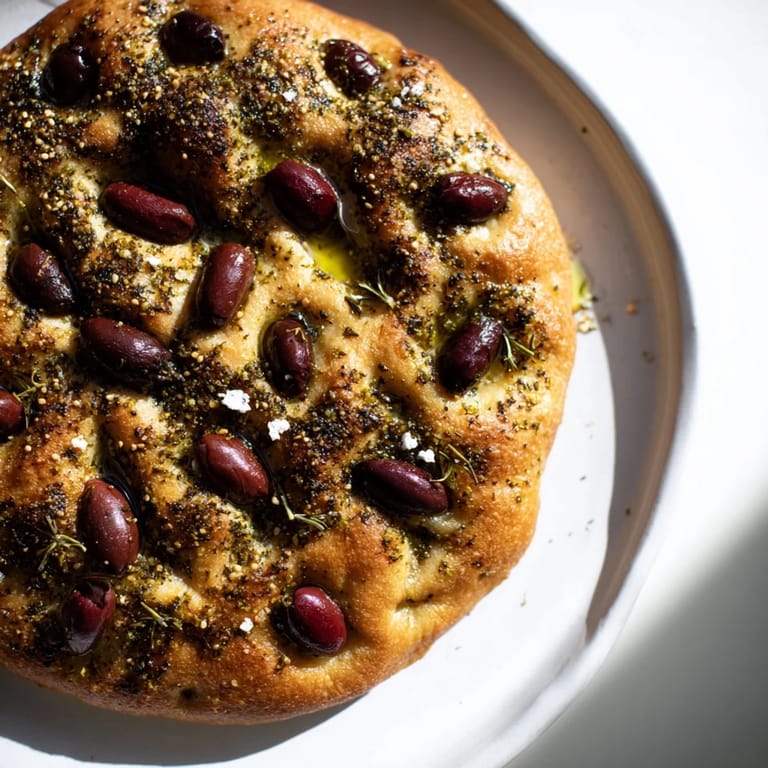
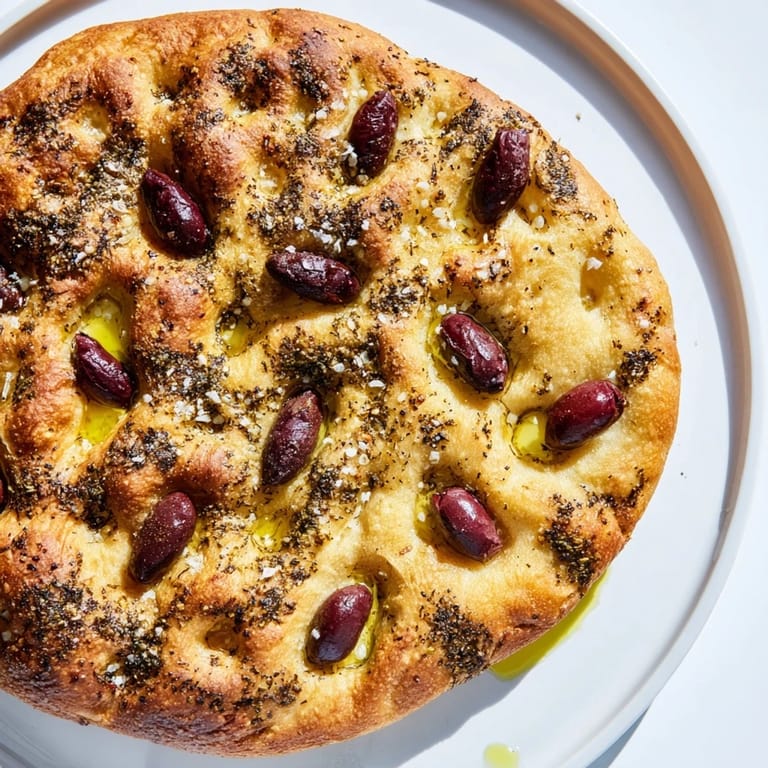
- Heat your oven to 220°C. Using your fingertips, press deep dimples all over the dough—this isn't just for show, it prevents huge air pockets and helps the toppings settle in. Drizzle with olive oil, scatter zaatar generously, then add your olives and flaky sea salt.
- Bake until golden:
- Bake for 20–25 minutes until the edges are crisp and the top is a deep golden brown. The kitchen will smell like every good memory you have of bread baking.
- Cool and serve:
- Let it rest for a few minutes, then slice and serve warm or at room temperature. It's beautiful either way.
 Pin It
 What I love most about this bread is how it manages to be both humble and show-stopping, the kind of thing you can make on a Tuesday and feel proud of without any pretense. It's become my go-to when I need something warm and comforting to share, something that says I was thinking of you without making it weird.
The Magic of Zaatar
Zaatar isn't just a spice blend, it's a flavor story that tastes like sun-dried thyme, toasty sesame, and something ancient and welcoming all at once. When it hits hot olive oil on top of this bread, something miraculous happens—the flavors deepen and bloom in a way that makes you want to eat the whole thing in one sitting. I've learned that quality matters here more than anywhere else in this recipe, so source your zaatar thoughtfully and store it in a cool, dark place where it won't fade.
Variations That Work
This focaccia is a canvas, and I've experimented with everything from sun-dried tomatoes folded into the dough to roasted garlic scattered across the top. Some nights I skip the olives entirely and add crispy fried onions for crunch, other times I mix fresh rosemary into the dimples just before baking. Each version tastes like it was always meant to be, which is the sign of a recipe that's flexible enough to adapt but structured enough to always succeed.
Serving and Storage
This bread is best the day it's made when every layer is at its peak, but it keeps beautifully for a day or two wrapped in paper. Warm it gently in a low oven before serving again, which brings back the crispness and makes the olive oil fragrant all over again. Serve it with hummus, labneh, or just a small bowl of good olive oil for dipping, and watch people's faces light up.
- Wrap cooled focaccia in parchment paper and store at room temperature for up to 2 days.
- Refresh it in a 160°C oven for 10 minutes before serving to restore crispness and warmth.
- You can also freeze it for up to a month, then thaw and reheat when you're ready to share it again.
 Pin It
 Every time I pull this focaccia from the oven, I'm reminded that some of the most meaningful food comes from simple ingredients treated with attention and care. It's a bread that feels like a small gift you're giving to yourself and anyone lucky enough to share it with you.
Recipe Questions & Answers
- → What type of flour is best for this bread?
Bread flour is ideal for its higher protein content, which helps develop gluten for a chewy and airy texture.
- → How does zaatar influence the flavor?
Zaatar adds a herby, tangy, and slightly nutty flavor that complements the olive oil and olives beautifully.
- → Can I substitute Kalamata olives with other olives?
Yes, green olives provide a milder taste, while black olives maintain the briny notes but slightly alter the flavor profile.
- → Why is the dough allowed to rise twice?
Two rises develop flavor and create a light, airy texture with a tender crumb by allowing the yeast to fully activate and relax the dough.
- → What is the best way to serve this focaccia?
Serve warm or at room temperature alongside dips like hummus or labneh, or enjoy it as a side to Mediterranean dishes.